
Wearable Tech for Everyday Life: A Complete Overview
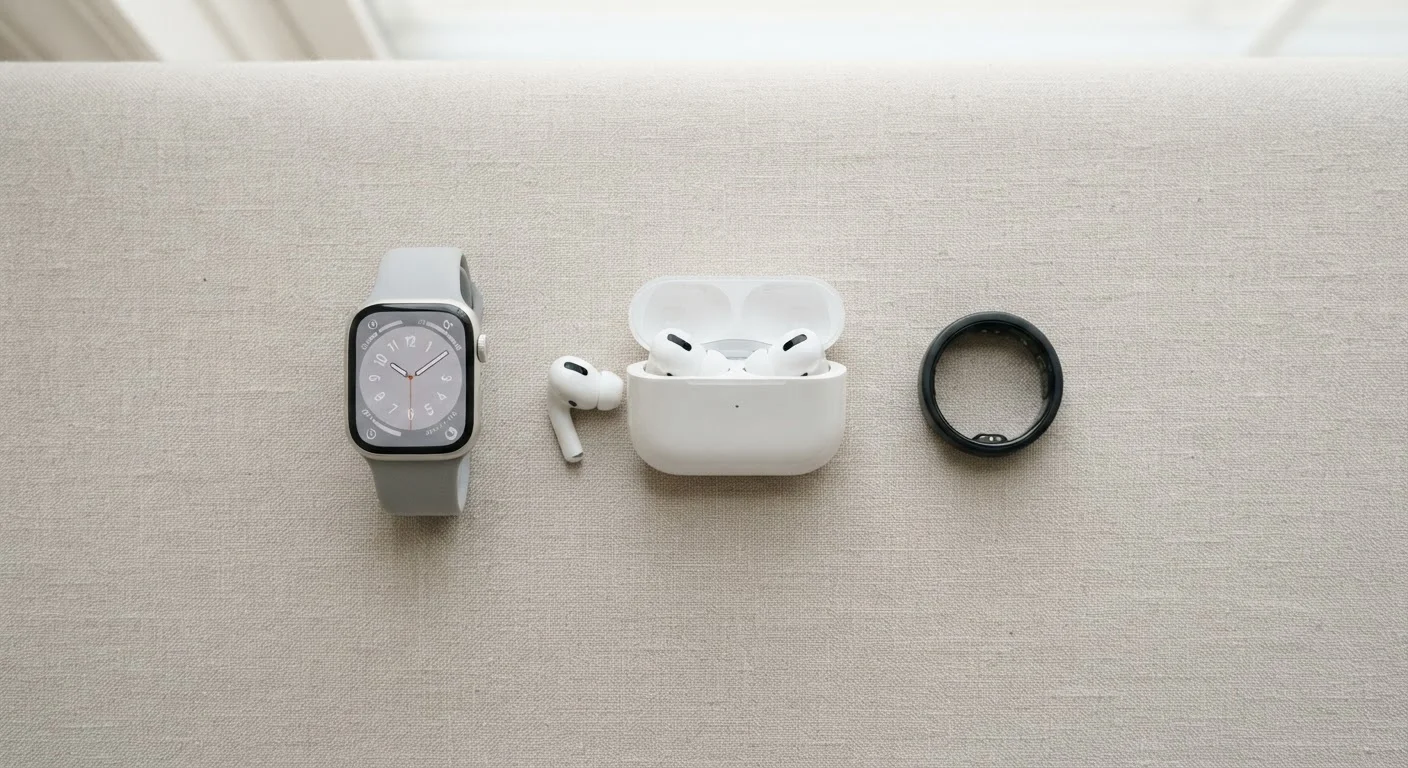
Photo credit: GadgetLite.net | All Things Tech
In this article
From smartwatches and earbuds to smart rings and GPS trackers, this end-to-end guide covers what wearables exist and how people actually use them.
Key Takeaways
- Wearables span a wide range — from smartwatches and earbuds to rings, patches, and GPS trackers.
- The most useful wearable is the one that fits your daily habits, not the one with the most features.
- Health data collected by wearables varies in medical accuracy — treat most metrics as trends, not diagnoses.
- Privacy controls in companion apps matter as much as the device hardware itself.
- Consistency in wearing and reviewing your data determines long-term value.
What Counts as a Wearable?
A wearable is any electronic device designed to be worn on the body — either continuously or for extended periods — that collects data, delivers information, or both. The category is broader than most people realize. For a deeper look at how the segment evolved from basic pedometers to today's sophisticated sensors, see how wearables evolved over the decades.
Today's wearables fall into a few functional roles:
- Notification mirrors — relay alerts from your phone to your wrist or ears.
- Health monitors — track metrics like heart rate, sleep stages, blood oxygen (SpO2), and activity.
- Navigation and safety tools — GPS trackers for kids, pets, or personal location sharing.
- Audio companions — wireless earbuds with noise cancellation and, increasingly, hearing-health features.
Understanding which role you actually need is the fastest shortcut to a useful purchase decision. If you're brand new to the category, this beginner's introduction to wearable tech is a good place to start.
The Major Categories and What They Actually Do
Not all wearables do the same job. Here's how the main types break down in practical terms:
1 in 4
US adults owns a smartwatch or fitness tracker
According to Pew Research Center survey data on wearable tech adoption among American adults.
7–14 days
Typical battery life of a smart ring
Most consumer smart rings on the market advertise between one and two weeks of use per charge under normal conditions.
30%+
Users who abandon wearables within six months
Industry research has consistently found that a significant share of wearable owners stop using devices within the first six months.
Smartwatches
The most versatile category. A smartwatch handles notifications, fitness tracking, contactless payments, and — depending on the model — cellular calls without a phone nearby. Battery life typically ranges from one to seven days depending on features enabled.
Fitness Bands
Stripped-down devices focused on step counting, heart rate, and sleep. Lower price point, lighter form factor, and longer battery life than full smartwatches. Ideal for users who want data without distraction.
Smart Rings
Discreet, lightweight, and increasingly capable. Smart rings prioritize passive health monitoring — resting heart rate, sleep quality, readiness scores — over active screen interaction. Battery life is generally two to seven days.
Wireless Earbuds
Beyond audio, modern earbuds detect ear fit, monitor heart rate through the ear canal, and some offer real-time hearing protection features. Noise cancellation (ANC) quality varies widely by price tier.
GPS Trackers and Patches
GPS clip-on trackers serve a safety function for children, older adults, and pets. Continuous glucose monitoring (CGM) patches — worn on the arm — are now available to consumers for metabolic awareness, though they require a prescription for clinical use in the US. For a comprehensive look at every category with clear definitions, see the complete picture of wearable device categories.
Real-World Use Cases: Who Benefits Most
Wearables deliver the most value when they slot into existing behavior — not when they demand new habits. Here's how different user profiles typically benefit:
Before you buy, wear your current phone on your non-dominant wrist for a week using a band case. If you stop noticing it, you're a good candidate for a smartwatch. If it bothers you constantly, consider an earbud or ring instead.
Form factor comfort is the single biggest predictor of whether someone sticks with a wearable long-term — yet most buyers skip this self-assessment entirely.
Turn off all notification categories except calendar and messages for the first two weeks. Add others only when you feel you're missing something. Most people find they need far fewer alerts than they expected.
Notification overload is a leading reason people stop wearing smartwatches. Starting minimal and adding deliberately preserves the value of glanceable alerts.
- Commuters and office workers — Glanceable notifications reduce phone pickups. Silent alarms and meeting reminders help manage back-to-back schedules.
- Fitness enthusiasts — Workout detection, GPS route mapping, and recovery metrics make it easier to train with structure without carrying a phone.
- People managing chronic conditions — Heart rate irregularity alerts and blood oxygen trends can prompt timely check-ins with a doctor, though wearables are not medical devices for diagnosis.
- Parents and caregivers — GPS trackers give location awareness without a smartphone in a child's hand. Some devices include an SOS button for emergencies.
- Light sleepers and poor sleepers — Sleep stage tracking over weeks reveals patterns (late caffeine, irregular bedtimes) that are hard to notice otherwise.
The full breakdown of what wearable devices actually do goes deeper on how individual sensors translate into the metrics you see in an app.
Privacy and Data: What Your Device Knows About You
Every wearable generates a stream of personal data — and most of it flows to a cloud server managed by the manufacturer. Before committing to a device, it's worth understanding the data trade-off.
Wearable Health Data Is Not a Medical Diagnosis
Metrics like heart rate variability, blood oxygen, and sleep stages from consumer wearables are wellness indicators, not clinical readings. Sensor accuracy varies by device, skin tone, movement, and fit. Do not use wearable readings to make medical decisions — consult a licensed healthcare provider for any health concerns.
Key questions to ask before buying:
- Where is data stored?
- On-device only, or synced to a cloud platform? Cloud-based systems offer richer analytics but expose data to third-party access and breach risk.
- Is health data shared with insurers or advertisers?
- Privacy policies vary. In the US, most wearable health data is not covered by HIPAA unless collected by a covered health provider.
- Can you export or delete your data?
- Look for platforms that offer data export and account deletion — these are signs of better privacy posture.
For a thorough walkthrough of what wearables collect and how to manage it, this guide on wearable data and privacy covers the topic end to end.
Choosing and Sticking With a Wearable
The two most common wearable failures are choosing the wrong device for your lifestyle and abandoning the habit within a month. Both are avoidable.
How to choose
- Identify your primary use case — health tracking, notifications, audio, or safety.
- Match battery expectations to your charging tolerance. If you charge your phone nightly, a daily-charge smartwatch is manageable; if not, a week-long battery ring or band suits better.
- Check ecosystem compatibility — most wearables work best paired with the same platform (iOS or Android) as your phone.
- Look up the companion app experience, not just the hardware. A confusing app undermines even the best sensor data.
How to stick with it
Data without review is noise. Set a weekly habit of glancing at your trends — sleep averages, resting heart rate over time, step consistency. These practical habits for long-term wearable use offer concrete routines that prevent the device from becoming a drawer item. For unfamiliar terms you'll encounter while researching, the wearable tech glossary explains specs like IP ratings, SpO2, and latency in plain language.
Wearables work best as a layer on top of existing healthy habits — not a substitute for them. Start simple, wear it consistently, and let the data inform rather than dictate your decisions.

Author
Gadgets Editorial Team
Gadgets Editorial Team is the collective byline for our editorial team and contributor network. Articles published under this byline or an editorial pen name are researched, written, and reviewed according to our editorial standards for clarity, consistency, and independence before publication.
View all articles →