
Flagship, Mid-Range, or Budget: Where the Real Differences Actually Live
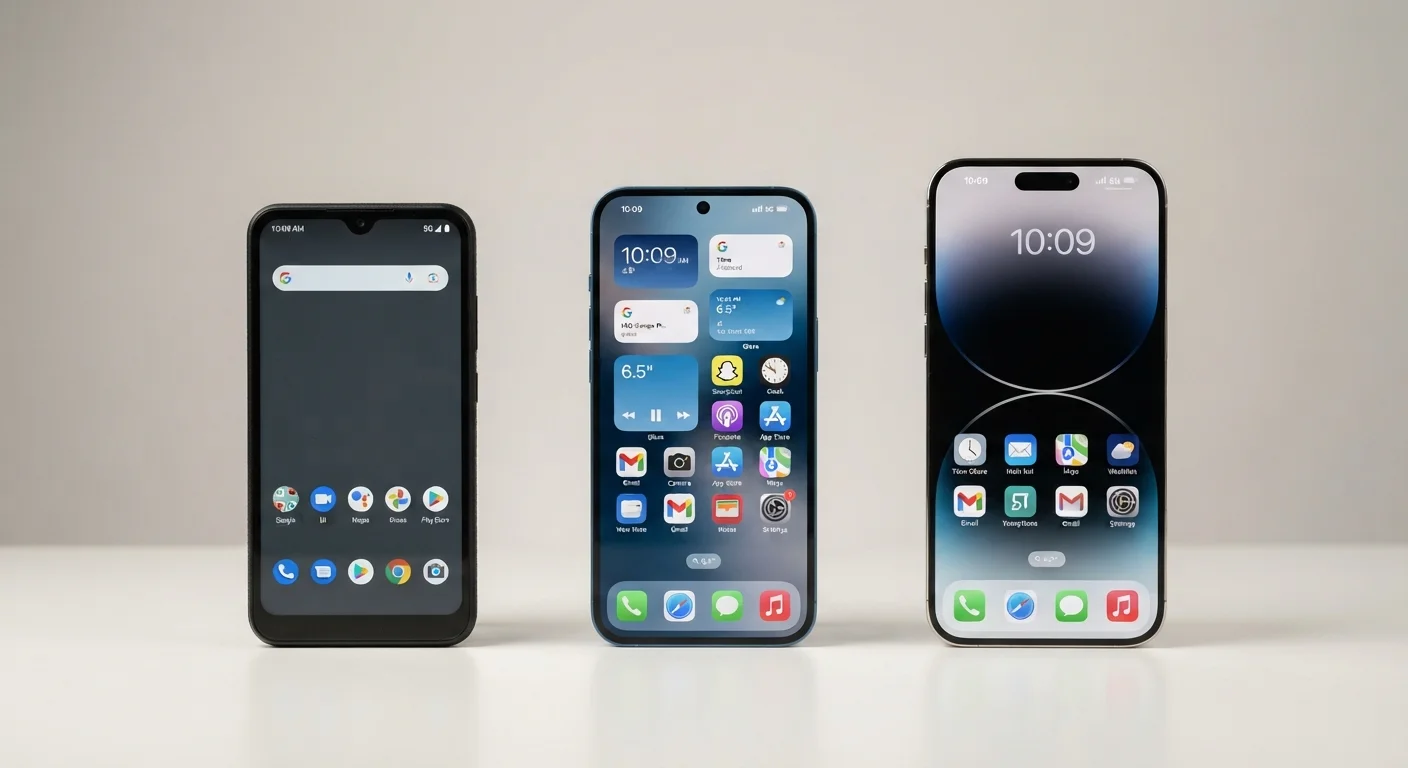
Photo credit: GadgetLite.net | All Things Tech
In this article
The price gap between phone tiers is obvious. The performance gap is more nuanced — here's an honest breakdown of what you gain and lose.
Key Takeaways
- Camera hardware is the most significant real-world difference between phone tiers.
- Mid-range chips handle everyday tasks — streaming, browsing, social apps — without noticeable lag.
- Flagship phones justify their price primarily for power users, photographers, and longevity seekers.
- Budget phones have improved dramatically; their trade-offs are now more specific and predictable.
- Software support duration is an overlooked but critical factor when comparing tiers.
The Tier System, Briefly Explained
Smartphone pricing broadly sorts into three tiers: budget (roughly under $300), mid-range ($300–$600), and flagship (above $600, sometimes well above $1,000). These aren't rigid industry categories — manufacturers draw the lines differently — but they reliably reflect where compromises get made and where money gets spent.
The challenge for buyers is that launch-day marketing obscures those trade-offs. Every tier gets camera upgrades and sleek designs. Every tier now ships with 5G. So where do the differences actually land? See our plain-language tour of flagship hardware for context on what high-end phones include — then read on to see what the lower tiers quietly leave out.
Processing Power: Where Tiers Matter Less Than You'd Think
Chipset performance is the number manufacturers use to justify price gaps, yet for most daily tasks it's also the least consequential difference. Browsing, streaming, messaging, and social apps run comfortably on mid-range processors — the gap only becomes noticeable under sustained load: extended gaming sessions, 4K video editing, or processing large photo batches.
Budget chips introduce more visible stuttering in multitasking and can throttle under heat. But a mid-range chip released in the past two years will handle 90% of daily workloads without hesitation. Our breakdown of what specs actually mean for daily use goes deeper on this.
~90%
Daily tasks handled by mid-range chips
Industry benchmarks consistently show mid-range processors handle common workloads — browsing, streaming, social apps — with minimal real-world performance difference versus flagships.
5–7 years
Flagship OS update commitment (leading manufacturers)
Several major manufacturers have extended software support windows on flagship lines to five to seven years, compared to two or fewer for many budget devices.
Flagship chips do matter for longevity — a more powerful processor stays relevant longer as apps grow heavier over time.
Camera: The Tier Gap You'll Actually Feel
This is where phone tiers create the most meaningful real-world differences. Flagship cameras benefit from larger image sensors, wider apertures, more sophisticated optical zoom (often 5x or 10x periscope-style lenses), and advanced computational photography — the software that processes images using dedicated hardware.
Mid-range cameras have closed the gap substantially in daylight shooting. Low-light performance and optical zoom are where they still fall short. Budget phones typically carry smaller sensors with limited zoom and noticeably weaker low-light results. If photography matters to you, this is the single most important axis to evaluate.
| Criterion | Budget | Mid-Range | Flagship | |
|---|---|---|---|---|
| Everyday performance | Adequate for basic tasks | Smooth for most use cases | Best-in-class, future-proof | |
| Camera quality | Limited low-light, basic zoom | Good daylight, weak zoom | Excellent across conditions | |
| Display quality | 60Hz, basic brightness | 90–120Hz, capable | 120Hz+, peak brightness | |
| Build & water resistance | Plastic, minimal IP rating | Mixed materials, IP53–67 | Premium glass/metal, IP68 | |
| Software update window | 1–2 years typical | 3–4 years typical | 5–7 years typical | |
| Battery life | Often long due to large cells | Varies by model | Varies; faster charging |
For a closer look at how the operating system affects your camera experience, the platform choice intersects with hardware in ways worth understanding.
Software Support: The Hidden Long-Term Cost
Flagship phones typically receive the longest software update windows — often five to seven years of OS and security updates. Mid-range devices have improved here, with many manufacturers now committing to three to four years of support. Budget phones frequently top out at two years or fewer, sometimes less.
This matters more than most buyers realize. A phone without security updates is a security risk. A phone that can't run the latest OS eventually loses access to app updates too. If you're planning to keep a device for four or more years, the update commitment of a budget phone may undermine its apparent value. The honest case for mid-range over flagship explores how this plays out across the ownership window.
Check the Update Promise Before You Buy
Before committing to any phone tier, look up the manufacturer's stated software support policy for that specific model — not just the brand's general reputation. A mid-range phone with a four-year update guarantee may serve you better long-term than a budget device that stops receiving security patches after eighteen months. This one detail often determines whether a lower price is genuinely good value.
Build Quality, Display, and Battery: Nuanced Trade-Offs
Flagships typically use premium materials — tougher glass, metal frames, higher-rated water resistance — and drive the best display technology: higher refresh rates (120Hz or more), brighter peak brightness, and more accurate color. Mid-range phones increasingly offer 90–120Hz screens and adequate water resistance, though usually at lower IP ratings. Budget phones tend toward plastic builds and 60Hz displays, which are functional but noticeably less polished.
Battery life doesn't follow a strict tier hierarchy. Some mid-range and budget phones offer larger batteries and more conservative processors, resulting in better all-day endurance than thinner flagships. Charging speed, however, tends to favor flagship devices. These differences are worth checking model by model rather than assuming tier alone determines them — much like the trade-offs explored in portability vs. capability decisions in laptops.
The bottom line: phone tiers signal where compromises were made, not whether a phone is worth buying. Knowing which trade-offs hit your actual usage is the only reliable way to spend wisely. For broader context on choosing between devices, explore the smartphones and tablets hub.

Author
Releases Editorial Team
Releases Editorial Team is the collective byline for our editorial team and contributor network. Articles published under this byline or an editorial pen name are researched, written, and reviewed according to our editorial standards for clarity, consistency, and independence before publication.
View all articles →