
Wearable Tech Explained: What These Devices Actually Do
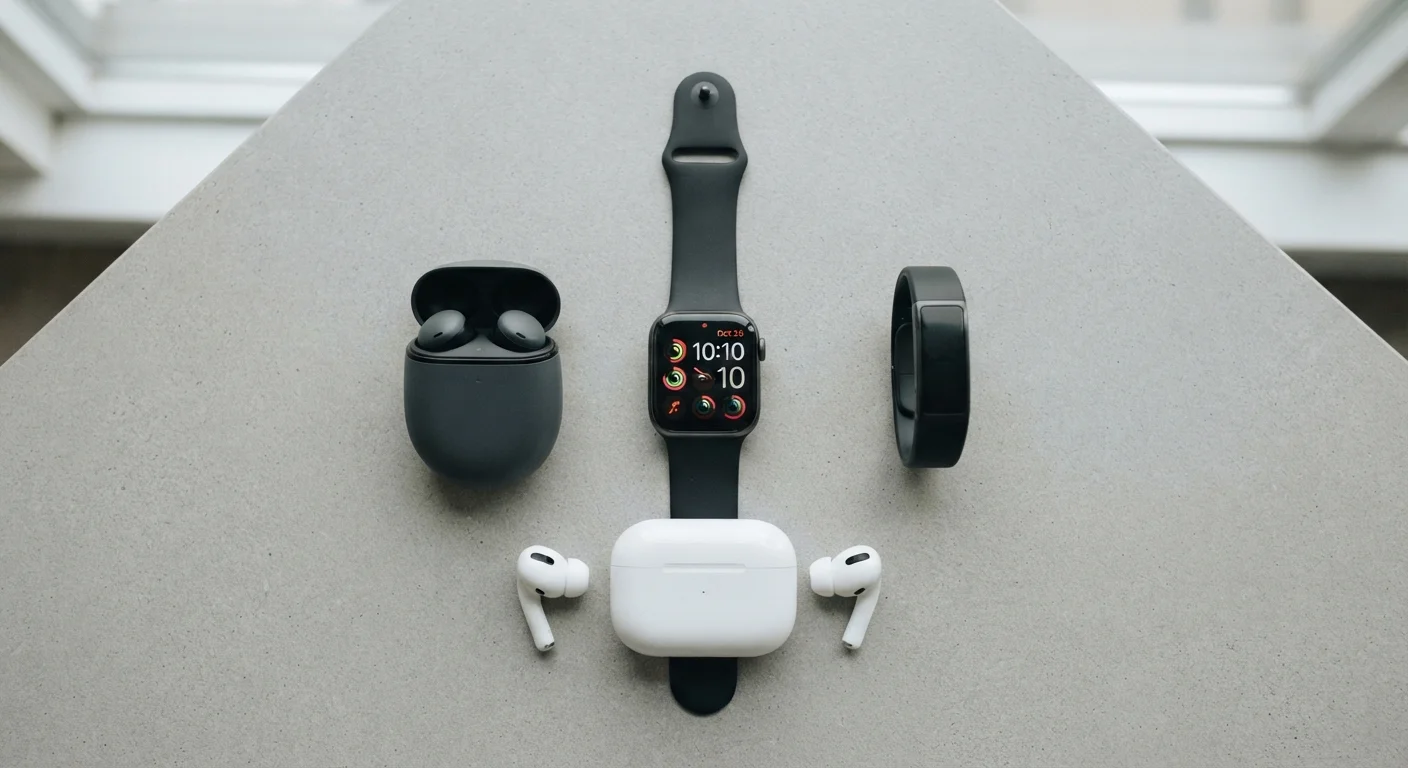
Photo credit: GadgetLite.net | All Things Tech
In this article
From smartwatches to fitness bands, here's a clear breakdown of what wearable devices are and how they work in everyday life.
Key Takeaways
- Wearables are body-worn electronics that track data and deliver it in real time.
- Sensors — not just screens — are what make wearables genuinely useful.
- Common categories include smartwatches, fitness bands, earbuds, and smart rings.
- Most wearables sync with a smartphone app to give context to the data they collect.
- Battery life and sensor accuracy are the two most meaningful specs to evaluate.
What Wearables Actually Are
Wearable devices are small computers you carry on your body rather than in your pocket. Unlike a smartphone, which you actively consult, a wearable operates passively — collecting data, processing it, and alerting you only when something is worth your attention.
The category is broader than most people realize. Smartwatches and fitness bands get the most attention, but wearables also include wireless earbuds with health sensors, smart rings that monitor sleep, GPS-equipped running watches, and even medical-adjacent patches that track hydration or glucose levels. For a comprehensive look at every major form factor, see the complete picture of wearable device categories.
What unites all of these is the sensor stack. Without sensors, a wearable would just be a tiny screen. The hardware inside — accelerometers, optical heart rate monitors, gyroscopes, and more — is what turns a bracelet or earbud into a genuinely useful tool.
Wearables Are Not Medical Devices
Consumer wearables can offer useful health trend data, but they are not regulated as medical instruments. Readings for heart rate, blood oxygen, and sleep stages are informational estimates — not clinical measurements. Always consult a qualified healthcare provider for any health concern, and avoid using wearable data as a substitute for professional diagnosis.
How the Technology Works
Most wearables collect raw data continuously, process it locally on a low-power chip, and then sync summarized results to a companion app on your phone. This architecture is deliberate: sending every raw data point over Bluetooth would drain a battery in hours.
Take a heart rate sensor as an example. It shines a small LED light through your skin and measures how much light bounces back — blood absorbs light differently depending on how much of it is present. That optical reading is converted into beats per minute through an algorithm running on the device itself.
~1 billion
Wearable devices in use globally
Industry analysts estimate over one billion wearable devices were in active use by the mid-2020s, spanning smartwatches, fitness bands, and hearables.
5–14 days
Typical fitness band battery life
Most dedicated fitness bands achieve between five and fourteen days per charge, compared to one to two days for full-featured smartwatches with always-on displays.
3+
Sensors in a typical consumer wearable
A standard consumer smartwatch typically includes an accelerometer, optical heart rate sensor, and gyroscope as a baseline — with premium models adding SpO2, skin temperature, and ECG sensors.
Connectivity is the other half of the equation. Bluetooth Low Energy (BLE) handles the constant, low-bandwidth sync to your phone. Some devices add Wi-Fi for faster data transfers or cellular radios for standalone use. Understanding how these pieces connect is explored in depth in wearable devices: the full story from sensors to ecosystems.
What Wearables Do in Daily Life
The practical value of a wearable shows up in small, repeated moments across your day. A wrist tap when your phone rings means you can decide whether to answer without reaching into your bag. A breathing reminder during a stressful afternoon meeting requires no app — just a gentle buzz. A sleep summary waiting on your phone when you wake up requires no effort at all.
For everyday users, the most meaningful functions tend to cluster around three categories: health awareness, notification filtering, and activity tracking. Not every wearable does all three equally well, and trade-offs between battery life, sensor depth, and screen size shape what each device is actually suited for.
If you're just beginning to explore this space, The Everyday Person's Introduction to Wearable Tech offers a practical starting point without assuming any prior experience.
Match the Device to Your Actual Habits
Before choosing a wearable, consider what you'll genuinely use it for day to day. A fitness band suits someone who wants health tracking with minimal fuss and longer battery life. A smartwatch fits someone who wants apps, notifications, and deeper integration with their phone. Buying for features you won't use adds cost and complexity without adding value.
Key Terms Worth Knowing
Wearable product listings and reviews come packed with abbreviations that can feel intimidating. A few of the most common ones worth understanding:
- SpO2 — Blood oxygen saturation level, measured through the skin using optical sensors.
- HRV — Heart rate variability, a metric used to assess recovery and stress. Higher variability generally signals better recovery.
- IP rating — A standardized measure of resistance to dust and water (e.g., IP68 means the device can withstand submersion up to a defined depth).
- Always-on display (AOD) — A screen mode that keeps basic information visible without a full wake gesture, at the cost of battery life.
For a fuller reference, the wearable tech glossary covers the specs and terms you'll encounter when shopping or reading reviews. Understanding this language makes it significantly easier to evaluate what a device actually offers versus what's just marketing language.
“The most powerful thing about wearables isn't what they measure — it's that they measure it continuously, without you having to remember to do anything.”
— Dr. Jessilyn Dunn, Biomedical Engineering Researcher, Duke University
Frequently Asked Questions

Author
Electronics Editorial Team
Electronics Editorial Team is the collective byline for our editorial team and contributor network. Articles published under this byline or an editorial pen name are researched, written, and reviewed according to our editorial standards for clarity, consistency, and independence before publication.
View all articles →