
Wearable Tech Glossary: Terms You'll Actually Encounter
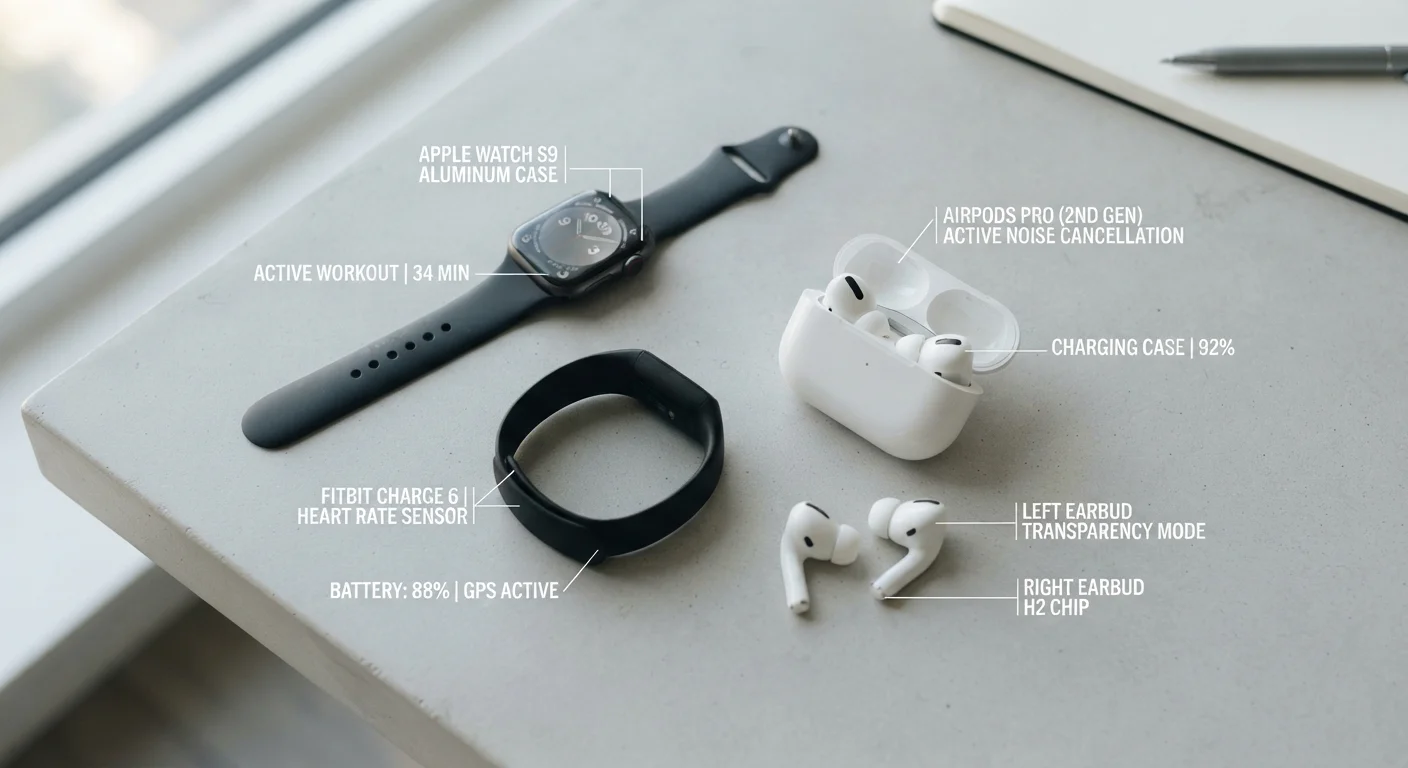
Photo credit: GadgetLite.net | All Things Tech
In this article
SpO2, latency, IP rating, always-on display — a plain-language reference for the specs and terms that show up when shopping or reading reviews.
Why Wearable Jargon Feels Like a Different Language
Shopping for a smartwatch or fitness band means wading through a wall of abbreviations and spec-sheet shorthand. SpO2, HRV, IP68, always-on display — these terms appear everywhere, yet most product pages never explain what they mean in plain language. This glossary covers the terms you're most likely to encounter, whether you're reading a review, comparing devices, or trying to make sense of a feature list.
For a broader orientation to what wearables are and what they can actually do in daily life, see our introduction to wearable tech before diving into the terminology here.
SpO2
A sensor-based estimate of blood oxygen saturation expressed as a percentage. On wearables, it uses optical light to approximate how well your blood is carrying oxygen. Results are indicative, not clinical.
HRV (Heart Rate Variability)
The variation in time between consecutive heartbeats, measured in milliseconds. Many wearables track this overnight as a proxy for recovery and stress levels.
ECG
Electrocardiogram — a reading of the heart's electrical activity. Single-lead ECG on wearables can detect certain irregular rhythms but is not equivalent to a full medical ECG.
IP Rating
Ingress Protection rating. A two-digit code that describes a device's resistance to dust and water. Higher numbers indicate greater protection — IP68 covers submersion beyond 1 meter in fresh water.
Always-On Display (AOD)
A screen mode that shows basic information at low brightness when the device is idle. Useful for quick glances but consumes more battery than raise-to-wake modes.
Codec
The format used to compress and transmit audio over Bluetooth. Common codecs include SBC, AAC, aptX, and LDAC. Both devices in a pair must support the same codec to use its benefits.
Latency
The time delay between an event happening and a device registering or outputting a response. In wireless audio, high latency causes audio to fall out of sync with video.
ATM (Atmospheres)
A water-resistance rating used mainly on traditional and hybrid watches. 5 ATM is generally suitable for swimming; 10 ATM or higher covers recreational diving.
AMOLED
Active Matrix Organic Light-Emitting Diode — a display technology where each pixel produces its own light. It enables true blacks, vivid color, and thinner screens compared to LCD panels.
Skin Temperature Sensor
Measures the surface temperature at your wrist to detect deviations from your personal baseline. Not designed to give absolute body temperature readings.
GPS Modes
Many wearables offer multiple GPS configurations that trade accuracy for battery life. Built-in GPS uses the device's own antenna; assisted or connected GPS borrows location data from a paired phone to save power.
NFC
Near Field Communication — a short-range wireless technology that enables contactless payments, pairing, and data transfer when two NFC-enabled devices are held close together.
Health and Sensor Terms
Wearables are increasingly marketed around health monitoring. Here's what the most common sensor-related terms actually measure and why they matter.
| SpO2 healthy resting range | 95–100% (General clinical reference range; individual results vary) |
| IP68 submersion depth (typical) | 1.5 meters / 30 minutes (IEC 60529 standard definition; manufacturer specs may vary) |
| Common Bluetooth audio codecs | SBC, AAC, aptX, LDAC |
| ECG leads on most wearables | 1 (single-lead) (Compared to 12-lead clinical standard) |
| AOD battery impact | Typically 10–30% reduction in battery life (Varies by device; manufacturer estimates differ) |
SpO2 — Short for blood oxygen saturation. The sensor on the back of a device shines light through your skin to estimate what percentage of your red blood cells are carrying oxygen. A healthy resting reading typically falls between 95–100%. Wearables give an estimate, not a clinical measurement — they're useful for spotting trends, not for diagnosing conditions.
HRV (Heart Rate Variability) — Measures the millisecond variation between consecutive heartbeats. Higher variability is generally associated with better recovery and lower stress, though individual baselines vary significantly. Most wearables capture HRV during sleep.
ECG / EKG — An electrocardiogram records the electrical activity of the heart. Some devices offer a single-lead ECG by having you touch a sensor with your fingertip to complete a circuit. It can flag irregular rhythms like atrial fibrillation, but is not a substitute for a medical-grade ECG with multiple leads.
Skin temperature sensor — Tracks surface temperature at the wrist, typically overnight. Useful for detecting deviations from a personal baseline rather than measuring absolute body temperature.
For a deeper look at how wearables handle these measurements in real-world use, the wearable tech explained guide covers the mechanics clearly.
Display, Connectivity, and Build Terms
Beyond health sensors, wearable spec sheets carry a second layer of technical terms related to the screen, wireless connections, and physical durability.
Always-On Display (AOD) — A mode that keeps the screen showing basic information (time, step count) at low brightness when your wrist is at rest. Convenient, but AOD draws more battery than a raise-to-wake screen that only activates on movement.
AMOLED / OLED — Display panel types that produce true blacks by switching off individual pixels entirely. They tend to deliver vivid colors and better outdoor visibility than older LCD panels. The consumer electronics glossary has a broader breakdown of display technology terms if you want the full picture.
IP Rating — Stands for Ingress Protection. The two-digit code tells you how well a device resists solids (first digit) and liquids (second digit). IP68 means the device can be submerged in fresh water beyond 1 meter for a defined period. ATM (atmospheres) is an alternative water-resistance scale used by some watch brands — 5 ATM generally means safe for swimming.
Latency — The delay between an action occurring and a device registering or responding to it. In audio wearables like wireless earbuds, latency affects how well sound syncs with video. Lower is better.
Codec — The audio compression format used to transmit sound over Bluetooth. Common options include SBC (standard), AAC (better for Apple devices), and aptX or LDAC (higher audio fidelity on supported hardware). Both the earbuds and the source device need to support the same codec to benefit from it.
Health Readings Are Estimates, Not Diagnoses
SpO2, ECG, and HRV data from consumer wearables are designed to identify personal trends over time, not to provide clinical measurements. Regulatory bodies in the US generally classify these as wellness features rather than medical devices. If a reading concerns you, consult a qualified healthcare professional rather than relying solely on wearable data.
If reading spec sheets still feels daunting, the guide to reading wearable spec sheets walks through how these numbers fit together in practice.

Author
Gadgets Editorial Team
Gadgets Editorial Team is the collective byline for our editorial team and contributor network. Articles published under this byline or an editorial pen name are researched, written, and reviewed according to our editorial standards for clarity, consistency, and independence before publication.
View all articles →