
Wearable Tech Through the Years: How We Got From Pedometers to Smart Rings
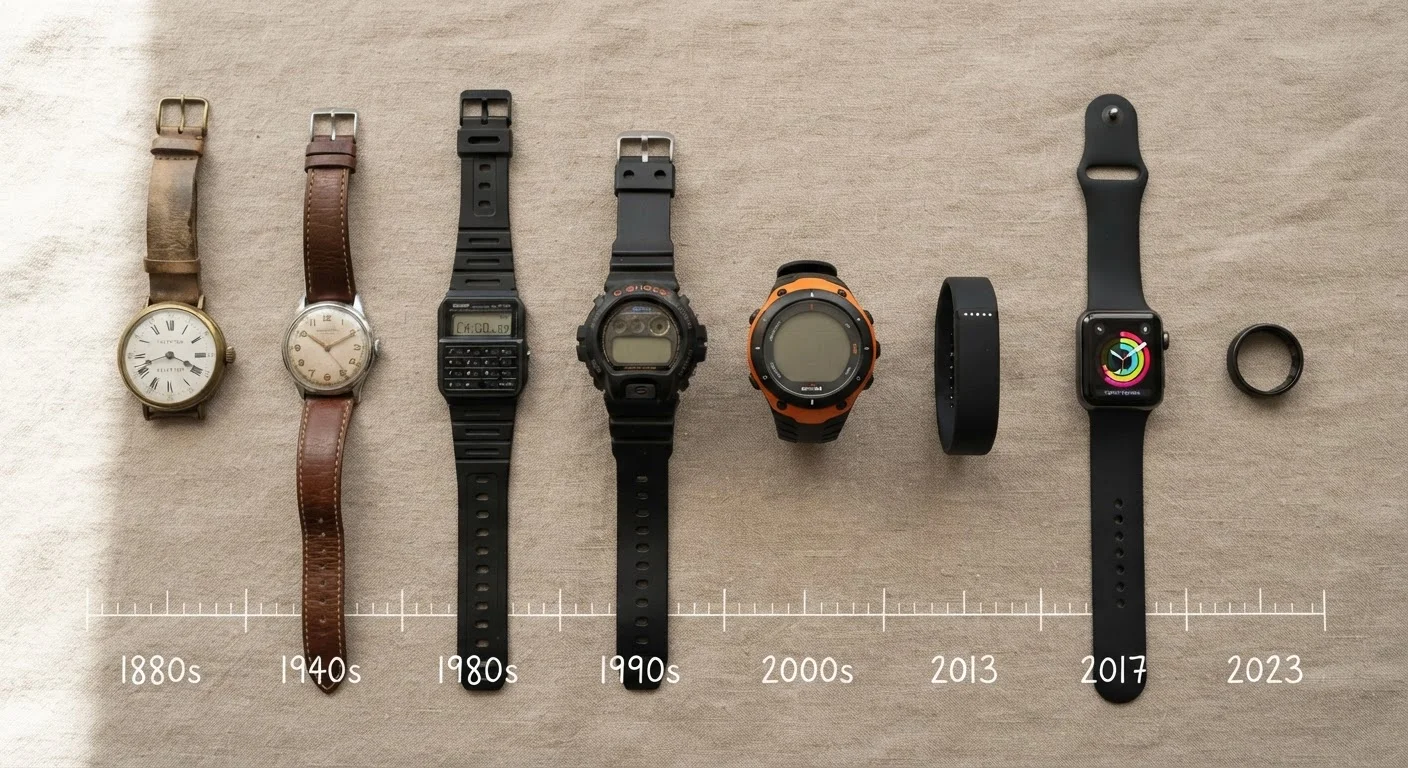
Photo credit: GadgetLite.net | All Things Tech
In this article
Wearables have evolved dramatically over decades. Explore the key milestones that shaped the devices people wear on their bodies today.
Key Takeaways
- Wearable tech dates back decades, long before smartphones made connected devices mainstream.
- Each generation of wearables solved a specific user problem — from step counting to continuous health monitoring.
- Miniaturized sensors and wireless connectivity were the two biggest technical leaps enabling modern wearables.
- Smart rings represent the latest push toward discreet, always-on health tracking without a screen.
- Understanding the history helps consumers cut through marketing hype and identify genuine innovation.
A Surprisingly Long History
Most people think of wearable technology as a product of the smartphone era. In reality, the impulse to attach useful technology to the human body stretches back much further. The mechanical pedometer — a pocket-worn device that estimated steps by detecting hip movement — was already in use during the 18th century. What changed over the following 200-plus years was not the core idea, but the sophistication of what those devices could sense, compute, and communicate.
Understanding that arc is genuinely useful for any gadget lover trying to make sense of today's crowded market. For a broader look at what modern wearables actually are and how they function day-to-day, see our clear breakdown of wearable devices. Below, we trace the key milestones that brought us from spring-loaded step counters to rings that read your body while you sleep.
The Mechanical Pedometer Era (Pre-1980s)
Long before digital displays, pedometers used a swinging arm mechanism to tally steps. Originally designed to estimate distances traveled on foot, these devices were worn on the belt or carried in a pocket. They were single-purpose and strictly passive — no data storage, no connectivity, no feedback beyond a dial reading.
Their significance lies in establishing the core premise of wearable tech: a device worn on or near the body provides more relevant data than one left behind. That premise has never changed.
The mechanical pedometer established the core premise still driving wearables today.
The First Digital Fitness Trackers (1980s–1990s)
The 1980s brought digital pedometers with LCD displays and, critically, the first consumer heart rate monitors — initially designed for athletic training. Early chest-strap monitors transmitted heart rate wirelessly to a wrist-worn receiver, introducing the idea of real-time biometric feedback during exercise.
This era also produced the first basic smart watches, which added calculator functions, calendars, and even crude data storage to wristwear. They were novelties more than tools, but they proved that consumers would wear computation.
The first chest-strap heart rate monitors introduced real-time biometric feedback to everyday athletes.
GPS and Sport Watches Transform Outdoor Fitness (2000s)
The commercialization of GPS technology changed fitness wearables fundamentally. Runners and cyclists could now track precise routes, pace, elevation, and distance without carrying a phone. Dedicated sport watch manufacturers built rugged devices that combined GPS with heart rate monitoring, targeting endurance athletes but gradually reaching mainstream fitness enthusiasts.
This period also saw the first Bluetooth-enabled wearables sync data to computers — an early glimpse of the connected ecosystem model that would later define the category.
GPS-enabled sport watches moved wearables beyond step counting into precision athletic training.
The Fitness Band Boom (Early 2010s)
The early 2010s marked the moment wearables entered mainstream consumer culture. Slim, affordable wristbands — focused almost entirely on step counting, sleep tracking, and calorie estimation — made personal health data feel accessible to non-athletes. Smartphone app ecosystems gave users a place to view trends over time, transforming raw sensor data into digestible insights.
Accelerometers (motion sensors), optical heart rate sensors, and low-energy Bluetooth became standard building blocks during this period, setting the hardware baseline every subsequent wearable would build upon.
Affordable fitness bands and companion apps made personal health data accessible to everyday users.
The Smartwatch Shifts the Wrist Into a Notification Hub (Mid-2010s)
When major tech platforms launched smartwatches with touchscreens and app stores, the wrist transformed from a fitness tracker location into a secondary smartphone interface. Notifications, music control, mobile payments, voice assistants, and third-party apps all moved to the wrist. Health features remained — ECG sensors, blood oxygen monitoring, and fall detection became headline additions over successive hardware generations.
The challenge these devices faced was battery life: more features meant more power draw, and charging a watch every night felt like a regression for users accustomed to traditional timepieces.
Smartwatches turned the wrist into a notification hub, but battery life became the central trade-off.
Audio Wearables and Hearables Emerge as a Category (Late 2010s)
True wireless earbuds — untethered from each other and from devices via Bluetooth — redefined how people interact with audio. Beyond sound quality, these devices began incorporating heart rate sensors, motion tracking, and real-time translation features, earning the term "hearables." The ear canal, it turns out, is an excellent location for certain biometric readings due to consistent skin contact.
This diversification was significant: it showed that meaningful health and contextual data could come from body locations other than the wrist.
The ear canal proved to be a surprisingly effective location for biometric sensing.
Smart Rings Emerge as the Minimalist Alternative (2020s)
Smart rings represent the most recent major form factor shift in wearables. By embedding sensors — optical heart rate, temperature, accelerometer — into a titanium band with no screen, designers achieved continuous health monitoring in an unobtrusive package. Sleep tracking, readiness scoring, and menstrual cycle monitoring became key use cases, appealing to users who found smartwatches visually or ergonomically intrusive.
The trade-off is deliberate: smart rings sacrifice real-time on-device display for multi-day battery life and a look indistinguishable from conventional jewelry. For a candid assessment of where the form factor succeeds and struggles, see our honest look at smart rings.
Smart rings sacrifice the screen entirely to deliver multi-day battery life and passive health tracking.
What the Timeline Tells Us
Looking at wearable history as a whole, a clear pattern emerges: each major leap was driven by a specific convergence of smaller components — a new sensor type, a jump in battery density, or the arrival of wireless standards like Bluetooth Low Energy. No single moment created the wearable market; dozens of incremental advances compounded over time.
Use History to Spot Genuine Innovation
When evaluating any new wearable, ask what technical constraint it actually overcomes — not what the marketing claims. Historically, real leaps came from new sensor types, meaningfully longer battery life, or a form factor that reached a previously underserved user group. Incremental spec bumps packaged as revolutions are the norm in consumer electronics, and wearables are no exception.
Today's landscape is broader than ever. Every major wearable category — from medical-grade patches to audio wearables — now occupies distinct territory. If you're just starting to explore personal tech, our introduction to wearable tech walks through what each type does and whether it belongs in your life.

Author
Electronics Editorial Team
Electronics Editorial Team is the collective byline for our editorial team and contributor network. Articles published under this byline or an editorial pen name are researched, written, and reviewed according to our editorial standards for clarity, consistency, and independence before publication.
View all articles →