
Audio Quality in Consumer Devices: Earbuds, Speakers, and the Science of Sound
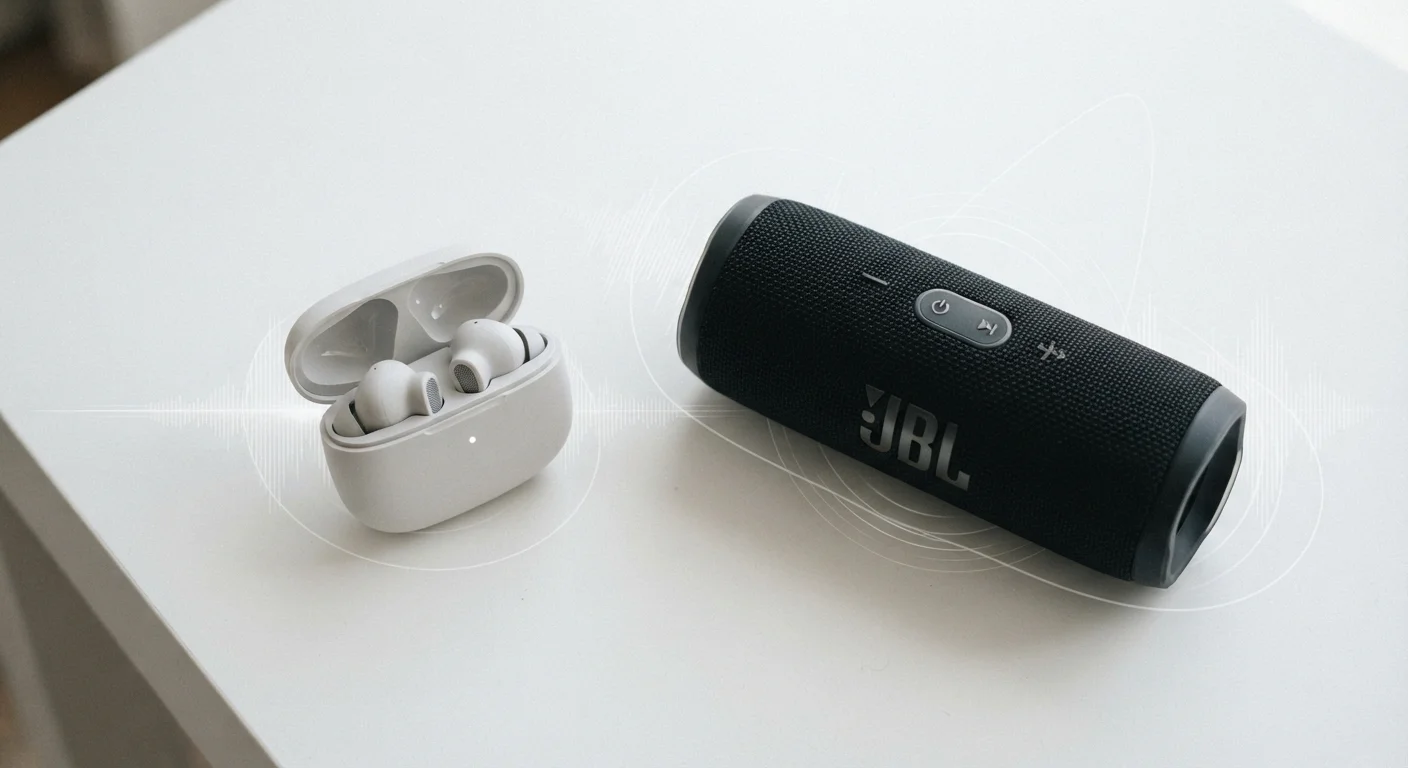
Photo credit: GadgetLite.net | All Things Tech
In this article
What makes audio sound good in a small device? Explore the core concepts behind consumer audio — drivers, codecs, frequency response, and more.
Key Takeaways
- Drivers — the tiny components that move air — are the single biggest factor in how earbuds and speakers sound.
- Wireless audio codecs like AAC and aptX affect sound quality over Bluetooth connections.
- Frequency response describes the range of pitches a device can reproduce, from bass to treble.
- Active Noise Cancellation (ANC) uses microphones and signal processing, not just physical blocking.
- Bigger drivers generally move more air, which is why compact speakers have physical acoustic limits.
- Matching your source quality to your hardware matters — compressed audio limits even premium gear.
The Driver: Where Sound Actually Begins
Inside every earbud and speaker is a driver — a transducer that converts electrical signals into physical vibrations, which we perceive as sound. Understanding drivers is the fastest way to make sense of audio quality claims.
Consumer devices use two main driver types:
- Dynamic drivers — the most common type, using a voice coil and magnet to move a diaphragm. They tend to deliver strong bass and natural-sounding mids.
- Balanced armature drivers — originally developed for hearing aids, these are compact and precise, common in in-ear monitors. They handle mid and high frequencies exceptionally well but traditionally struggle with deep bass.
Many premium earbuds now use hybrid driver configurations — combining both types to cover the full frequency range more effectively. Driver size also matters: a larger driver displaces more air, which is why floor-standing speakers can produce bass that a truly wireless earbud physically cannot.
Match Your Ear Tips for Better Sound
With in-ear earbuds, the ear tip seal is as important as the driver itself. A poor seal loses bass and lets in outside noise regardless of how capable the hardware is. Try different ear tip sizes until you achieve a firm, comfortable seal — most earbuds include multiple tip sizes for this reason.
Codecs and Wireless Audio Transmission
When audio travels wirelessly over Bluetooth, it must be compressed and then decoded at the receiving end. The algorithm handling this process is called a codec (short for coder-decoder). Not all codecs are equal, and the one your device uses directly affects audio fidelity.
990 kbps
Maximum bitrate of Sony's LDAC codec
LDAC's peak transmission rate is roughly three times that of standard SBC, according to Sony's published codec specifications.
20 Hz–20 kHz
Human hearing frequency range
This is the commonly cited range for healthy adult hearing; sensitivity at frequency extremes typically decreases with age.
~40 ms
Typical SBC Bluetooth latency
Lower-latency codecs like aptX Low Latency target under 40 ms, which is meaningful for video sync and gaming applications.
Common Bluetooth audio codecs include:
- SBC
- The universal baseline codec — supported by all Bluetooth audio devices but lowest in audio quality.
- AAC
- Preferred by Apple devices; generally delivers better quality than SBC at similar bitrates.
- aptX / aptX HD
- Qualcomm's codecs, widely supported on Android devices, offering lower latency and higher bitrates.
- LDAC
- Sony's codec, capable of transmitting up to 990 kbps — the highest bitrate among mainstream Bluetooth codecs.
For a deeper dive into codec terminology, the Consumer Electronics Glossary covers these and dozens of other key terms in plain language.
Frequency Response, Sound Signatures, and What They Mean for You
Frequency response is typically measured in hertz (Hz) and describes the range of pitches a device reproduces — the human hearing range spans roughly 20 Hz to 20,000 Hz (20 kHz). A flat frequency response means all frequencies are reproduced at equal volume, which audio engineers prefer for mixing. Consumer devices, however, are often tuned with intentional emphasis.
Common sound signatures include:
- V-shaped — boosted bass and treble, recessed mids. Energetic and popular for casual listening.
- Warm — elevated bass, smooth highs. Comfortable for long listening sessions.
- Bright — emphasized treble. Detailed but potentially fatiguing over time.
- Neutral/flat — accurate across the range. Preferred for studio monitoring.
No single tuning is objectively superior — it depends on your listening preferences and use case. Many devices now offer equalizer (EQ) apps that let you adjust these curves to taste.
EQ Adjustments Have Limits
Equalizer apps can meaningfully shape how a device sounds within the range its drivers are capable of reproducing. However, EQ cannot add frequencies the hardware physically cannot produce — boosting bass beyond a driver's capability typically introduces distortion rather than depth. Think of EQ as fine-tuning, not a hardware replacement.
Active Noise Cancellation and Spatial Audio Explained
Active Noise Cancellation (ANC) works by using external microphones to sample ambient sound, then generating an inverse sound wave to cancel it before it reaches your ears. This is different from passive noise isolation, which simply uses physical materials to block sound. ANC is most effective against low-frequency, consistent noise like airplane cabin hum or air conditioning.
Spatial audio — sometimes called 3D audio or head-tracking audio — uses digital signal processing to simulate sound coming from specific directions around you. It's particularly effective for immersive content like film and gaming. If you're curious how audio integrates into a broader home entertainment setup, see our guide on how TVs, streaming sticks, and soundbars fit together.
Both ANC and spatial audio introduce digital signal processing into the audio chain, which can affect perceived sound quality depending on implementation quality. This is why the same hardware often sounds different across firmware versions — the processing algorithms are updated separately from the physical components.
“The ear is far more forgiving than many audiophiles admit, but it's also more sensitive to distortion and dynamic compression than most consumer specs reveal. What people call 'good sound' is usually a combination of low distortion, controlled bass, and a soundstage that doesn't fatigue the listener.”
— Floyd Toole, Acoustical engineer and author of 'Sound Reproduction: The Acoustics and Psychoacoustics of Loudspeakers and Rooms'
Frequently Asked Questions

Author
Electronics Editorial Team
Electronics Editorial Team is the collective byline for our editorial team and contributor network. Articles published under this byline or an editorial pen name are researched, written, and reviewed according to our editorial standards for clarity, consistency, and independence before publication.
View all articles →