
The Complete Picture of Wearable Device Categories
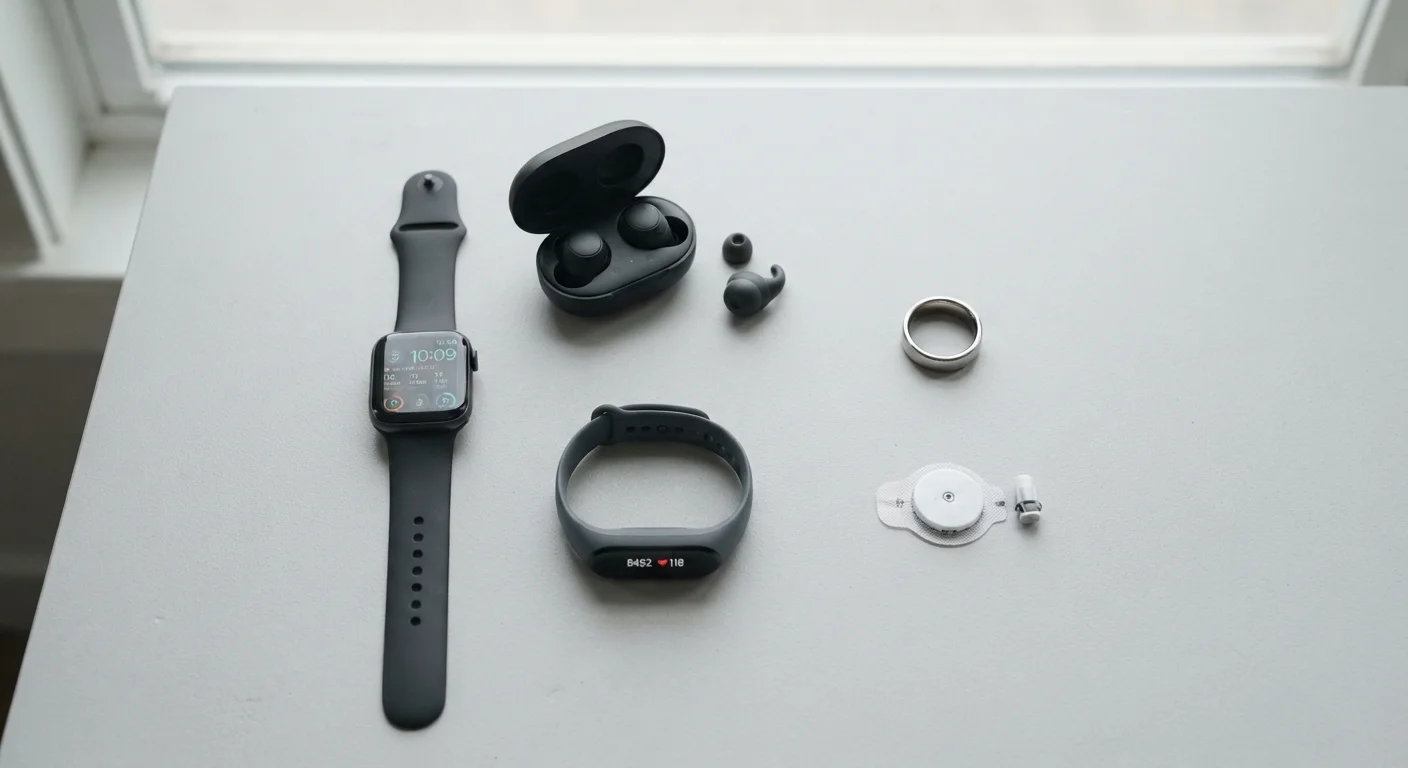
Photo credit: GadgetLite.net | All Things Tech
In this article
A handy reference covering every major type of wearable — smartwatches, rings, earbuds, patches, and more — with clear definitions.
Why Category Matters When Choosing a Wearable
The wearable market has expanded well beyond fitness bands and step counters. Today's devices track sleep, monitor heart rhythms, translate speech, measure blood oxygen, and even detect skin temperature changes. With so many options, understanding which category a device belongs to is the fastest way to judge whether it actually fits your lifestyle.
This reference maps every major wearable category, explains its primary purpose, and notes the typical sensors and connectivity each type relies on. For a broader introduction to how these devices work together, see The Everyday Person's Introduction to Wearable Tech.
| Core wearable categories | 6 primary types |
| Most common body placement | Wrist (smartwatches, bands) |
| Connectivity standard | Bluetooth (most common), Wi-Fi, LTE |
| Emerging form factor | Smart rings |
| Medical-grade wearable example | Continuous glucose monitor (CGM) |
| Sensor types commonly found | PPG, accelerometer, gyroscope, SpO2, temperature |
The Six Major Wearable Categories
1. Smartwatches
Worn on the wrist, smartwatches combine timekeeping with a touch screen interface, notification mirroring, and an expanding suite of health sensors. Most support app ecosystems and connect to smartphones via Bluetooth or LTE. Common sensors include optical heart-rate monitors (PPG), accelerometers, gyroscopes, and — in many current models — single-lead ECG and SpO2 readers.
2. Fitness Bands and Activity Trackers
Slimmer and generally less expensive than smartwatches, fitness bands prioritize step counting, sleep staging, calorie estimation, and basic heart-rate tracking. They typically feature smaller displays or no screen at all, trading interface richness for lighter weight and longer battery life.
3. Smart Rings
A compact ring-shaped wearable worn on a finger, designed to track health metrics passively and continuously. Because fingers have strong pulse signals and consistent skin contact, rings can deliver accurate heart-rate and body-temperature data with minimal battery drain. They have no display and rely entirely on a companion app for data review.
4. Hearables
In-ear or over-ear devices that extend beyond audio playback. Modern hearables may include biometric sensors (such as in-ear heart-rate detection), real-time language translation, active noise cancellation (ANC), and voice assistant integration. The wearable glossary covers the audio and sensor terms you'll see on hearable spec sheets.
5. Smart Glasses and Head-Mounted Displays
Head-worn devices range from audio-enabled frames with no screen to full augmented-reality (AR) headsets overlaying digital information on the real world. Consumer-facing smart glasses typically focus on hands-free audio and camera access, while AR headsets are used more broadly in enterprise and industrial settings.
6. Biosensor Patches and Medical Wearables
Thin, adhesive patches applied directly to skin to monitor physiological signals continuously — including glucose levels, hydration, body temperature, and sweat biomarkers. Continuous glucose monitors (CGMs) are the most widely recognized example. These devices occupy the boundary between consumer tech and regulated medical equipment.
Categories Overlap More Than You'd Think
Many modern wearables blend features from multiple categories — a smartwatch may include GPS tracking, ECG monitoring, and wireless audio controls all at once. The categories described here reflect primary design intent rather than strict technical boundaries. If a device serves your primary use case, secondary features are a bonus, not a reclassification.
How Categories Connect to Sensors and Ecosystems
Each wearable category succeeds or struggles based on which sensors it can physically house and how it connects to your existing devices. Wrist-worn devices benefit from plentiful space for multiple sensors and a familiar interaction surface. Rings trade screen real estate for discretion and comfort. Patches trade usability for skin-contact accuracy.
Connectivity also shapes the experience. Most consumer wearables use Bluetooth as the primary link to a paired smartphone. Cellular-enabled smartwatches can operate independently, making calls and streaming data without a phone nearby. Understanding both the sensor set and the connectivity model of a device helps set accurate expectations before purchase.
Wearable device
Any electronic device designed to be worn on or close to the body, capable of collecting data, delivering information, or performing computations. Most connect wirelessly to a smartphone or cloud service.
Sensor fusion
The process of combining data from multiple sensors — such as accelerometers, gyroscopes, and heart-rate monitors — to produce more accurate or meaningful readings than any single sensor could deliver alone.
Hearable
A category of wearable worn in or around the ears. Modern hearables often include active noise cancellation, biometric sensors, and voice assistant access in addition to audio playback.
Form factor
The physical shape, size, and placement of a device on the body. In wearables, form factor determines both ergonomics and which sensors can realistically be included.
Biosensor patch
A thin, flexible wearable adhered directly to skin to continuously monitor biological signals such as glucose, temperature, or hydration without the need for a rigid housing.
ECG (Electrocardiogram)
A measurement of the electrical activity of the heart. Some smartwatches and bands include single-lead ECG sensors that can detect irregular heart rhythms.
For a deeper look at how sensors, software, and ecosystems fit together across all these categories, Wearable Devices: The Full Story From Sensors to Ecosystems provides the full technical picture. And if you're curious how the market arrived at these form factors, Wearable Tech Through the Years traces the history from basic pedometers to today's smart rings.

Author
Electronics Editorial Team
Electronics Editorial Team is the collective byline for our editorial team and contributor network. Articles published under this byline or an editorial pen name are researched, written, and reviewed according to our editorial standards for clarity, consistency, and independence before publication.
View all articles →