
Gaming Gear That Actually Improves Casual Play (And What's Mostly Marketing)
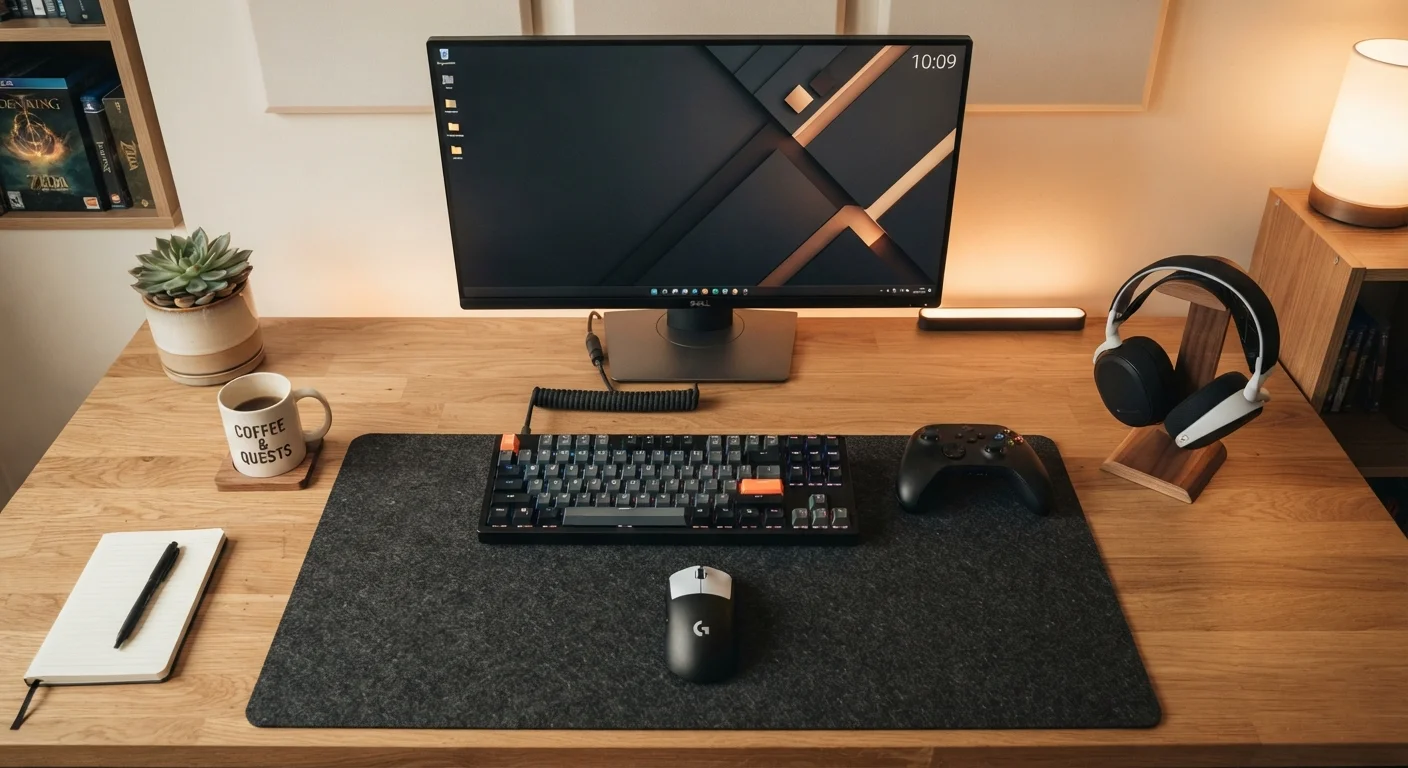
Photo credit: GadgetLite.net | All Things Tech
In this article
Some accessories make a genuine difference for everyday players. Others are spec-sheet theatre. Here's how to tell them apart.
Key Takeaways
- A few core accessories genuinely improve comfort and gameplay for casual players.
- Many high-spec features marketed to gamers offer negligible real-world benefit at the casual level.
- Spending more on gear won't substitute for practice or fix skill gaps.
- Audio and ergonomics tend to deliver the most noticeable improvements per dollar.
- RGB lighting and extreme DPI numbers are largely cosmetic for most players.
Audio clarity improves immersion and communication
A headset with solid sound reproduction makes games more engaging and makes multiplayer coordination far less frustrating, even at a casual level of play.
Ergonomic fit reduces fatigue during longer sessions
Peripherals designed to suit your hand size and grip style can prevent discomfort and strain, which is a practical benefit that applies to every type of player.
Display improvements are immediately perceptible
Upgrading from a low-resolution, high-latency screen to a crisp panel with adequate refresh rate produces visible, tangible improvements in how games look and feel.
A reliable controller removes input frustration
Worn-out thumbsticks, drifting analog inputs, or sticky triggers actively interfere with enjoyment — a functioning, responsive controller is a legitimate quality-of-life upgrade.
Extreme DPI specs offer no real benefit
Maximum DPI figures on gaming mice are marketing numbers; most players use a fraction of the advertised sensitivity, making this spec irrelevant for the vast majority of casual use.
RGB lighting adds cost without performance
Illuminated keyboards, mice, and headsets carry a price premium for purely visual features that have no measurable effect on gameplay of any kind.
"Gaming" branding inflates accessory prices
Products labeled for gaming — chairs, desks, headsets — often carry significant markups over functionally equivalent general-purpose alternatives that perform just as well.
High-end specs plateau quickly for casual play
Features like ultra-high polling rates, hyper-fast switches, and sub-millisecond response times are designed for competitive play where margins are razor-thin — benefits a casual player is unlikely to ever notice.
Gear cannot substitute for skill development
No accessory closes the gap between a new player and an experienced one; hardware upgrades remove friction at the margins but cannot replace game knowledge or practiced reflexes.
Why the Gear Conversation Gets So Complicated
Walk into any gaming retailer — physical or digital — and the sheer volume of accessories can feel paralyzing. Headsets promise "tournament-grade" audio. Mice advertise sensitivity numbers in the tens of thousands. Keyboards light up in every color imaginable. It's a lot, and if you're a casual player who just wants to enjoy a few hours of gaming each week, most of it simply doesn't apply to you.
The gaming gear industry is enormous, and marketing naturally gravitates toward extreme specs because they're easy to put on a box. That doesn't mean the gear is bad — it means the framing is aimed at a competitive audience that represents a fraction of actual players. As research into who actually plays games consistently shows, the average gamer is far more casual than the industry's loudest marketing suggests.
The useful question isn't "what's the best gear?" — it's "what gear makes a noticeable difference at my level of play?" Those are very different questions with very different answers.
Gear That Genuinely Makes a Difference
Some accessories improve the experience in ways you'll feel immediately, regardless of skill level.
Audio clarity improves immersion and communication
A headset with solid sound reproduction makes games more engaging and makes multiplayer coordination far less frustrating, even at a casual level of play.
Ergonomic fit reduces fatigue during longer sessions
Peripherals designed to suit your hand size and grip style can prevent discomfort and strain, which is a practical benefit that applies to every type of player.
Display improvements are immediately perceptible
Upgrading from a low-resolution, high-latency screen to a crisp panel with adequate refresh rate produces visible, tangible improvements in how games look and feel.
A reliable controller removes input frustration
Worn-out thumbsticks, drifting analog inputs, or sticky triggers actively interfere with enjoyment — a functioning, responsive controller is a legitimate quality-of-life upgrade.
Audio is the clearest example. A decent headset — nothing exotic, just one with reasonable clarity and a functional microphone — makes games more immersive and multiplayer communication dramatically easier. Spatial audio features, which help you hear directional sounds like footsteps or incoming fire, can actually be useful in everyday play, not just competitive matches.
Ergonomics matter more than people expect. If a mouse fits your hand poorly or a controller causes wrist strain after an hour, that's a real problem with a real solution. Choosing peripherals that suit your grip style and hand size is one of the most practical upgrades a casual player can make. For more on maintaining what you buy, see how to keep your gaming gear in good shape.
Display quality — specifically resolution and refresh rate — matters up to a point. Moving from a blurry, laggy screen to a crisp one with a 60Hz or higher refresh rate is perceptible. Beyond that threshold, gains become harder to notice without dedicated training.
What's Mostly Marketing
Here's where it gets honest: a significant portion of gaming gear specs are aimed at a competitive audience and offer very little to casual players.
Extreme DPI specs offer no real benefit
Maximum DPI figures on gaming mice are marketing numbers; most players use a fraction of the advertised sensitivity, making this spec irrelevant for the vast majority of casual use.
RGB lighting adds cost without performance
Illuminated keyboards, mice, and headsets carry a price premium for purely visual features that have no measurable effect on gameplay of any kind.
"Gaming" branding inflates accessory prices
Products labeled for gaming — chairs, desks, headsets — often carry significant markups over functionally equivalent general-purpose alternatives that perform just as well.
High-end specs plateau quickly for casual play
Features like ultra-high polling rates, hyper-fast switches, and sub-millisecond response times are designed for competitive play where margins are razor-thin — benefits a casual player is unlikely to ever notice.
Gear cannot substitute for skill development
No accessory closes the gap between a new player and an experienced one; hardware upgrades remove friction at the margins but cannot replace game knowledge or practiced reflexes.
Extreme DPI on mice is the classic example. As the nuances of mouse DPI reveal, most players — including many competitive ones — use sensitivity settings far below a mouse's maximum. A 25,000 DPI sensor sounds impressive but is functionally irrelevant if you play at 800 DPI.
RGB lighting is purely cosmetic. It has zero impact on performance and exists entirely to look appealing on product pages and streaming setups. There's nothing wrong with liking it, but it shouldn't drive a purchasing decision.
"Gaming" versions of ordinary peripherals — chairs branded as gaming chairs, headsets with aggressive angular styling — often charge a premium for aesthetics over function. A comfortable chair is a comfortable chair; the gaming label frequently adds cost without adding value. For a broader look at what accessory categories actually do, this overview of gaming accessory categories is worth bookmarking.
~65%
U.S. adults who play video games
According to the Entertainment Software Association's annual industry reports, gaming has become a mainstream leisure activity across all age groups in the US.
800–1600
DPI range most players actually use
Despite mice being marketed with DPI in the tens of thousands, surveys of player settings consistently show the practical range sits far lower for comfortable, accurate control.
The Trap New Players Fall Into
There's a well-documented pattern where newer players invest heavily in hardware hoping it will close a skill gap. It almost never does. Spending on gear before building fundamentals tends to create a false sense of readiness while the actual bottleneck — practice time and game knowledge — goes unaddressed.
Gear can remove friction. It can't add skill. A high-refresh monitor won't improve your decision-making in a strategy game. A mechanical keyboard won't teach you map awareness in a shooter. The returns from hardware investment flatten out quickly, while the returns from simply playing more, watching how experienced players approach situations, and learning game mechanics continue to compound.
Platform Shapes What Gear Even Matters
If you play primarily on a console, the accessory landscape looks very different than it does for PC gaming. Most console players need only a working controller and a decent display — the peripheral rabbit hole is much shallower. Mobile players have even fewer meaningful upgrade options, though a physical controller attachment can make certain genres significantly more comfortable. Understanding your platform first helps you avoid buying gear that simply doesn't apply.
If you're gaming on a platform other than PC, much of the gear conversation simplifies considerably. Console controllers are purpose-built, and the upgrade options are fewer and more straightforward. For players weighing platform choices entirely, the real differences between handheld and home consoles is a useful read.

Author
Gaming Editorial Team
Gaming Editorial Team is the collective byline for our editorial team and contributor network. Articles published under this byline or an editorial pen name are researched, written, and reviewed according to our editorial standards for clarity, consistency, and independence before publication.
View all articles →