
Handheld vs Home Console: The Gaming Experience Doesn't Translate Directly
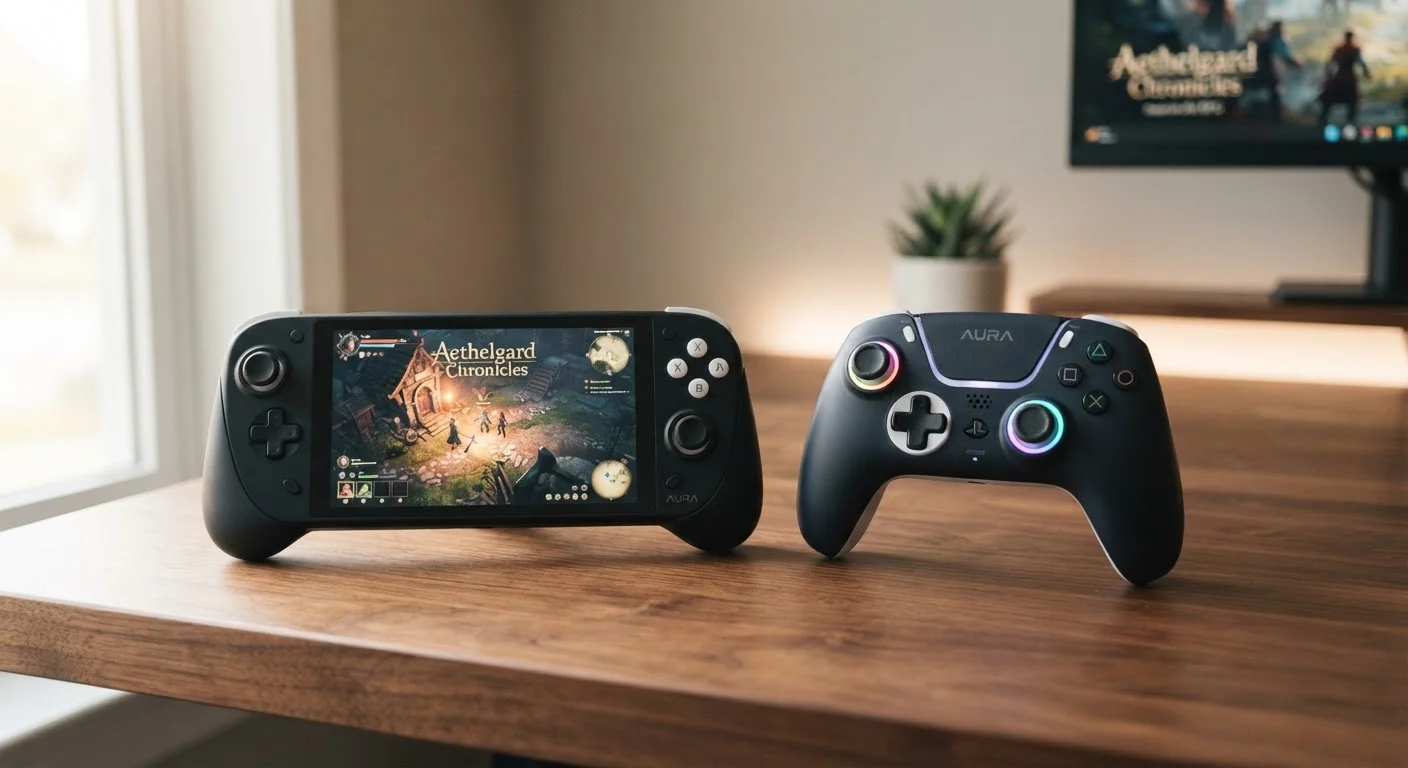
Photo credit: GadgetLite.net | All Things Tech
In this article
Handheld consoles and home consoles look similar on paper but deliver very different experiences. Here's where the real distinctions lie.
Key Takeaways
- Handheld consoles prioritize portability, while home consoles prioritize performance and screen size.
- Battery life and screen size are the two factors that most constrain handheld gaming.
- Home consoles typically deliver better graphics and audio due to consistent power and display connections.
- Game libraries overlap more than they used to, but some titles are still exclusive to one form factor.
- Neither platform type is objectively better — your lifestyle determines which fits you.
Two Platforms, Two Very Different Promises
At first glance, handheld and home consoles seem to exist on the same spectrum — both are dedicated gaming devices with controllers, game libraries, and online features. But they make fundamentally different promises to the player, and understanding those promises is the fastest way to know which one suits you.
A home console is designed around permanence: it sits under your TV, draws from a wall outlet, and delivers its best experience when you're settled in for a proper session. A handheld is designed around flexibility: it goes where you go, runs on a battery, and is built for the reality that you might only have 20 minutes to play before your train stops.
That difference in design philosophy ripples through nearly every aspect of how each device works — from screen size and processing power to the kinds of games each platform handles best. For a broader look at how consoles sit alongside PCs and mobile devices, see our breakdown of the three main gaming worlds.
| Criterion | Handheld Console | Home Console |
|---|---|---|
| Portability | Fully portable, play anywhere | Stationary, requires TV setup |
| Screen Size | 5–8 inches (built-in) | Depends on your TV (typically 40–75") |
| Processing Power | Limited by battery and thermal constraints | Higher performance, actively cooled |
| Battery / Power | 4–8 hours per charge | Unlimited (plugged in) |
| Controller Ergonomics | Compact, built-in controls | Full-sized dedicated controllers |
| Multiplayer Setup | Limited couch co-op options | Designed for split-screen and local play |
| Audio/Visual Immersion | Good for the size; limited scope | Supports 4K, HDR, surround sound |
Where the Experience Actually Diverges
The most obvious gap is performance. Home consoles connect to large televisions and often support 4K resolution, HDR visuals, and surround sound — creating a sensory experience that fills your field of view and makes big cinematic games feel genuinely epic. Handheld screens are typically 5–8 inches, which means graphical detail that looks stunning on a 65-inch TV can be harder to appreciate when you're holding the device in your hands.
Battery life is the handheld's other major constraint. Most handheld consoles offer between 4 and 8 hours of play per charge, depending on the game and screen brightness settings. Demanding games drain faster; lighter titles stretch that window. Home consoles have no such limit — they run as long as you stay plugged in.
On the flip side, the portability advantage is real and meaningful. Handheld gaming sessions are naturally self-contained, which suits certain types of games — puzzle games, RPGs with frequent save points, sports titles — better than others. Long, narrative-driven games with few breaks can feel awkward when played in interrupted 15-minute chunks.
~6 hrs
Typical handheld gaming battery life
Battery performance varies widely by game demand and screen brightness; demanding 3D titles typically drain faster than 2D or puzzle games.
4K
Max resolution for current home consoles
Modern home consoles support up to 4K output when connected to a compatible display, a resolution impractical on handheld-sized screens.
Input controls also differ in subtle ways. Handheld controllers are built into the device and tend to be smaller, which can feel cramped during extended sessions for players with larger hands. Home consoles use full-sized dedicated controllers that are ergonomically designed for hours of use. For a deeper look at how input method affects your experience, our guide to controllers vs. keyboard and mouse covers the nuances well.
Game Libraries, Online Features, and the Real Trade-Offs
Game library overlap has grown considerably in recent years — many titles now appear on both handheld and home platforms, sometimes on the same device family. But there are still meaningful gaps. Graphically intensive blockbusters often arrive on home consoles first, or in a more limited form on handhelds. Conversely, some handheld-native genres — quick-session games, portable RPGs, indie titles — thrive on the format in ways that don't need a big screen at all.
Online multiplayer tends to work similarly on both platforms, though home consoles benefit from a stable wired internet connection, while handhelds rely on Wi-Fi (or mobile data where supported), introducing more variability.
Hybrid Devices Blur the Line
Some modern devices are designed to function as both a handheld and a home console, docking to a TV for big-screen play and undocking for portable use. These hybrids offer a compelling middle ground but typically involve trade-offs in raw performance compared to a dedicated home console. They're worth considering if you genuinely want both experiences from a single device.
Our guide to home console trade-offs goes deeper on what dedicated living-room gaming costs you in flexibility. And if you're thinking about moving between platforms down the road, what transfers when you switch platforms is worth reading before you commit — your game library and save data may not come with you.
Ultimately, neither platform type wins outright. The handheld trades raw power for freedom. The home console trades portability for immersion. Knowing which trade-off you're willing to make is the whole decision.

Author
Gaming Editorial Team
Gaming Editorial Team is the collective byline for our editorial team and contributor network. Articles published under this byline or an editorial pen name are researched, written, and reviewed according to our editorial standards for clarity, consistency, and independence before publication.
View all articles →