
The Persistent Myths About Who Plays Video Games
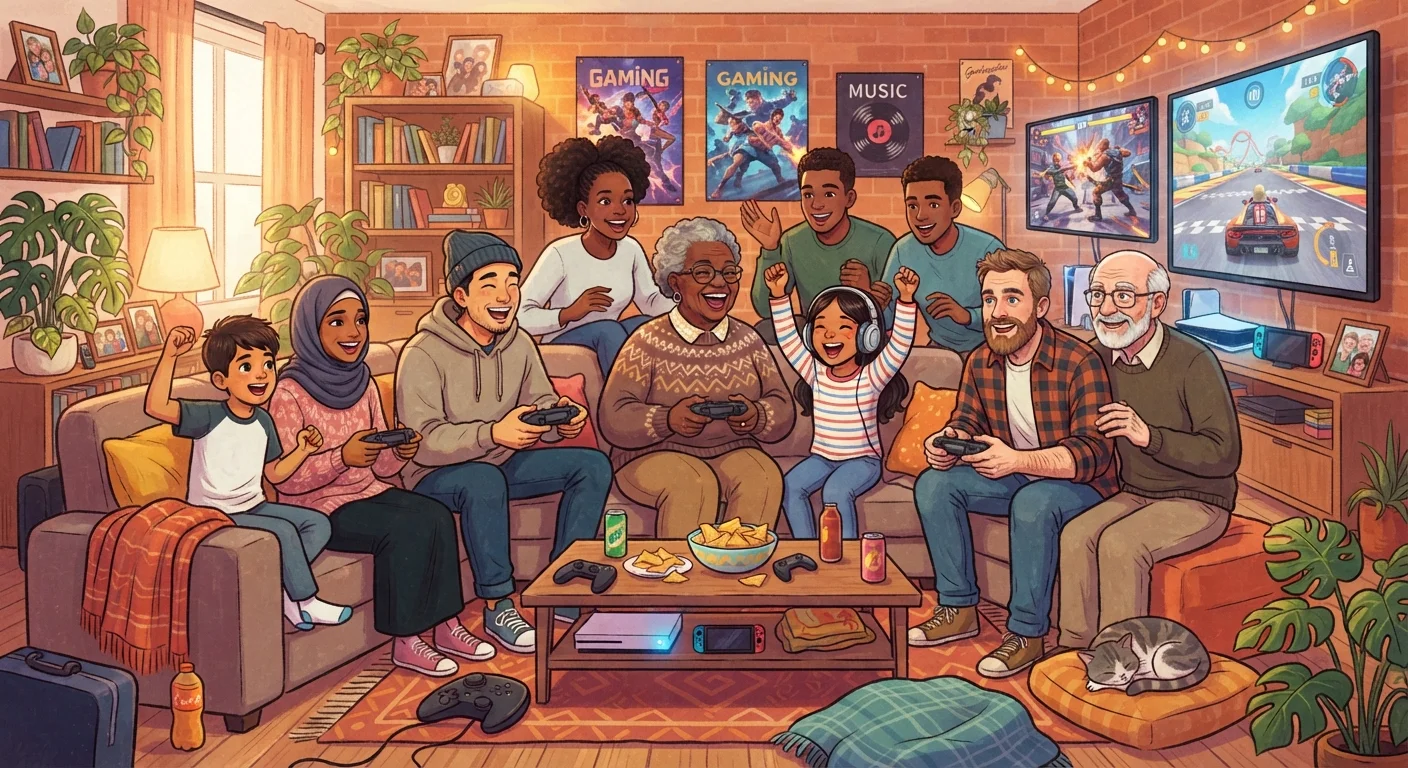
Photo credit: GadgetLite.net | All Things Tech
In this article
Gamers are still misrepresented by outdated stereotypes. This article separates common misconceptions from what the research actually shows.
Key Takeaways
- The average gamer is in their mid-thirties, not a teenager in a basement.
- Women and non-binary players make up nearly half of the gaming population in the US.
- Playing games casually still counts — there is no threshold to being a 'real' gamer.
- Gaming has documented social and cognitive benefits when enjoyed in balance.
- Outdated stereotypes about who plays games actively discourage newcomers from joining.
Why These Myths Stick Around
Stereotypes about gamers have proven remarkably durable — partly because they were baked into the earliest mainstream coverage of the hobby, and partly because they're vivid and easy to repeat. A cultural image that forms in one era rarely updates itself automatically, even when the underlying reality shifts dramatically. Today's gaming audience is enormous, varied, and growing, yet the mental picture many non-gamers carry is still shaped by decades-old assumptions.
Understanding who actually plays games matters beyond trivia. These misconceptions discourage people from trying gaming at all, shape policy debates incorrectly, and affect how the industry designs and markets its products. If you've ever felt like gaming "wasn't for you" based on the stereotypes, the data tells a different story. Dig into representation in games to see how the industry itself is grappling with these questions.
Myth
Video games are mostly played by teenage boys.
Fact
Research consistently shows the gaming population spans all ages and genders, with the average US player well into adulthood.
The Entertainment Software Association (ESA) has reported for years that the average age of a US gamer is in the mid-thirties, and that women represent a near-equal share of players. Mobile gaming in particular has drawn in enormous numbers of players who would never self-identify as "gamers" but fire up a puzzle or card game every single day. The teenage-boy image stuck partly because early gaming marketing in the 1980s and 1990s leaned heavily into that demographic — but the actual audience has always been broader than the ads suggested.
Myth
If you only play casual or mobile games, you're not a 'real' gamer.
Fact
There is no official criteria for being a gamer — playing games of any kind qualifies.
The idea of a gatekeeping checklist — hours logged, genre played, platform used — has no grounding in reality. Someone who plays word puzzles on their phone during a commute is engaging with interactive digital entertainment, full stop. The notion of "real" versus "fake" gamers tends to serve exclusion rather than community. For anyone curious about where to start, platforms and play styles range enormously — explore the gaming platforms overview to find an entry point that suits you.
Myth
Gaming is antisocial and isolating.
Fact
Multiplayer and cooperative games are among the most popular genres, and many players cite gaming as a key social outlet.
Online co-op, team-based competition, and shared streaming experiences have made gaming one of the most socially connected hobbies in existence. Friends coordinate across time zones, families bond over shared consoles, and communities form around niche titles. Research published in peer-reviewed psychology journals has found that multiplayer gaming can strengthen friendships and provide meaningful social support — especially for people who face barriers to in-person socializing. For a deeper look at how culture and community intertwine, see Gaming Culture Decoded.
Myth
Video games cause aggression and violent behavior.
Fact
Decades of research have not established a causal link between playing violent video games and real-world violent behavior.
This myth has been studied extensively. Major psychological and medical associations have noted that while some studies detect short-term increases in arousal after playing violent games, the evidence does not support the conclusion that gaming causes real-world violence. Many countries with high gaming rates have significantly lower rates of violent crime than those where gaming is less prevalent. Context, personal history, and social environment are far stronger predictors of aggressive behavior than game content.
Myth
Serious gamers are always spending a fortune on gear.
Fact
Expensive hardware can enhance certain experiences, but most gaming is perfectly enjoyable on standard equipment.
Marketing around "pro" peripherals can make it seem like you need a high-end setup to have fun. In practice, the vast majority of players use mid-range or entry-level gear without noticing any meaningful gap in enjoyment. If you're curious about what actually makes a difference versus what's mostly spec-sheet hype, this breakdown of gaming gear cuts through the noise. You can also browse the gaming gear hub for grounded, practical guidance.
What the Research Actually Shows
Survey data from organizations like the ESA and academic research from game studies programs paint a consistent picture: gaming is a mainstream, cross-demographic activity. Roughly two-thirds of American households include at least one person who plays video games regularly. Age ranges skew heavily toward adults. Gender splits are far closer to even than the stereotype implies.
65%
US adults who play video games
The Entertainment Software Association has reported that roughly two-thirds of American adults play video games across platforms.
~48%
Female-identifying players in the US
ESA data indicates that women make up close to half of all video game players in the United States.
Mid-30s
Average age of a US gamer
Industry research consistently places the average American player well into adulthood, not in their teens.
None of this means every game appeals to every person — preferences vary widely, just as they do with film or music. But the idea that gaming belongs to a narrow slice of the population simply doesn't hold up. Whether you're brand new and eyeing your first console (and want to avoid common first-time buyer mistakes) or just curious what all the fuss is about, the community is more welcoming than the old clichés suggest.
Don't Let Stereotypes Decide For You
If your only exposure to gaming has been through outdated media portrayals, it's worth approaching the subject fresh. Assumptions about who games are "for" have historically kept curious people on the sidelines. Exploring even one accessible game on a platform you already own is a much better data point than a decades-old cliché.

Author
Gaming Editorial Team
Gaming Editorial Team is the collective byline for our editorial team and contributor network. Articles published under this byline or an editorial pen name are researched, written, and reviewed according to our editorial standards for clarity, consistency, and independence before publication.
View all articles →