
Wearing a Fitness Tracker Long-Term: The Honest Trade-Offs
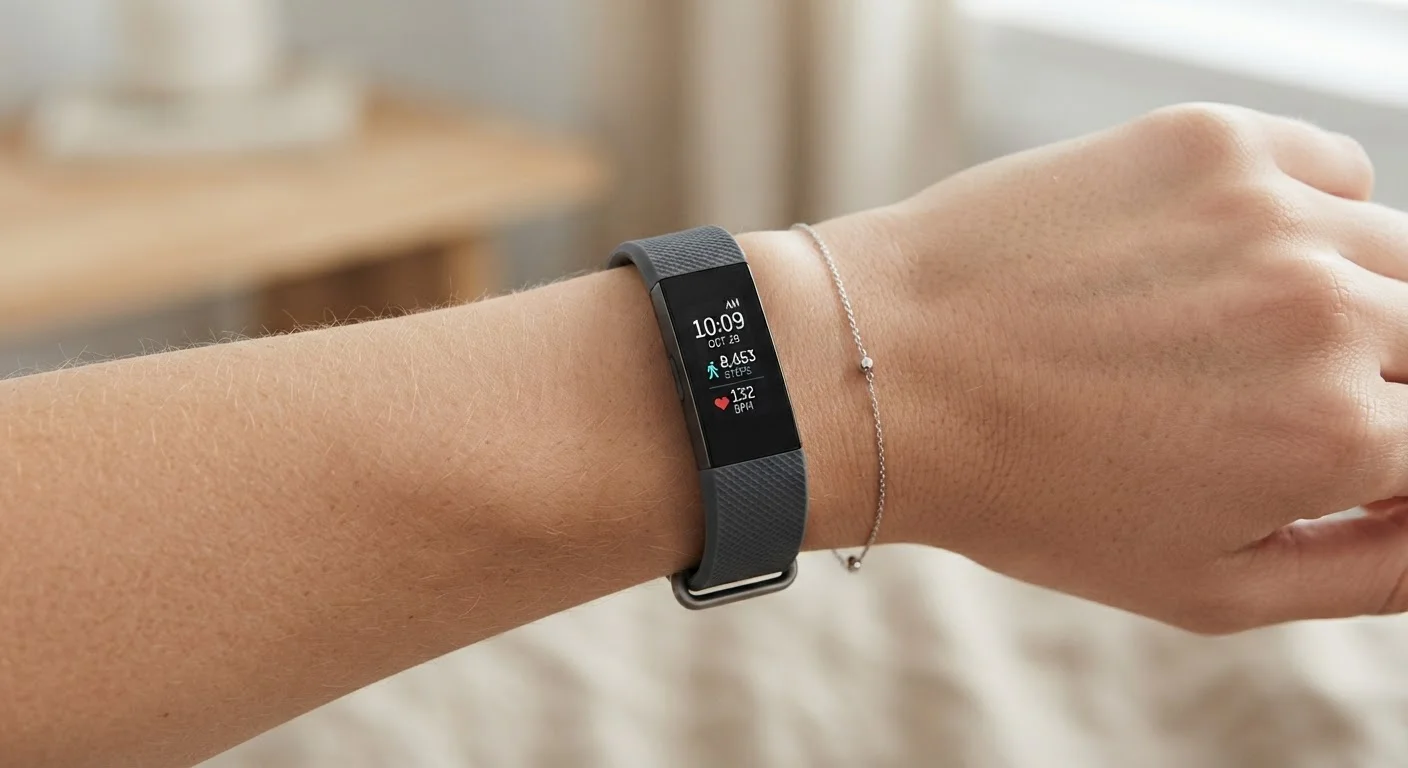
Photo credit: GadgetLite.net | All Things Tech
In this article
Fitness trackers offer useful data and motivation, but they also come with privacy questions and accuracy caveats. Here's the full picture.
Key Takeaways
- Fitness trackers can motivate lasting behavior change, but engagement often drops off after the first few weeks.
- Sensor readings for heart rate, sleep, and calories are estimates — not clinical measurements.
- Health data collected by tracker apps may be shared with or sold to third parties.
- Wearing a tracker all day can cause skin irritation for some users over extended periods.
- The long-term value depends heavily on whether you actually review and act on the data.
Builds consistent daily activity awareness
Step counts, move reminders, and activity rings create a feedback loop that many users find motivating for building and sustaining exercise habits over time.
Establishes a personal health baseline over months
Long-term wear reveals patterns in resting heart rate, sleep quality, and recovery that a single snapshot measurement cannot capture.
Low friction compared to manual health logging
Passive, automatic tracking removes the effort barrier of manually recording workouts or sleep, making it easier to maintain a continuous data record.
Can support conversations with healthcare providers
Months of trend data — particularly heart rate variability or sleep disruption patterns — can offer useful context to share with a doctor, even if the readings aren't clinical grade.
Sensor readings are estimates, not measurements
Optical heart rate sensors and accelerometers produce approximations that can vary significantly from true values, especially during intense movement or poor band fit.
Health data privacy is genuinely unclear
Many tracker apps share or sell user data to third parties under terms most users don't scrutinize. Sensitive health data deserves careful attention before it's handed to any platform.
Engagement frequently drops off after weeks
Consumer research on wearables consistently shows high abandonment rates within the first one to three months, suggesting the devices don't retain attention for most users.
Can cause skin irritation with extended daily wear
Prolonged contact, moisture trapped under the band, and sensitivity to materials used in straps are common complaints among long-term wearers.
Data can create anxiety without actionable context
Seeing a low sleep score or elevated resting heart rate without guidance on what to do about it can increase rather than reduce stress for some users.
What You Actually Get From Daily Wear
Strap on a fitness tracker for a few weeks and the most immediate benefit isn't the data itself — it's the nudge. Step reminders, move alerts, and sleep summaries create a feedback loop that research on behavior change consistently links to modest but real improvements in daily activity levels. For most users, that gentle accountability is the core value proposition.
Beyond motivation, long-term wear builds a personal baseline. Over months, you start to see patterns: how your resting heart rate shifts during stressful periods, how alcohol affects your sleep score, or how a new exercise routine changes recovery trends. That longitudinal picture is something a single doctor's visit can't replicate.
Builds consistent daily activity awareness
Step counts, move reminders, and activity rings create a feedback loop that many users find motivating for building and sustaining exercise habits over time.
Establishes a personal health baseline over months
Long-term wear reveals patterns in resting heart rate, sleep quality, and recovery that a single snapshot measurement cannot capture.
Low friction compared to manual health logging
Passive, automatic tracking removes the effort barrier of manually recording workouts or sleep, making it easier to maintain a continuous data record.
Can support conversations with healthcare providers
Months of trend data — particularly heart rate variability or sleep disruption patterns — can offer useful context to share with a doctor, even if the readings aren't clinical grade.
For a broader look at how these devices compare to their more feature-rich cousins, see how fitness trackers and smartwatches differ in daily use.
Where the Numbers Fall Short
Fitness trackers use optical sensors and accelerometers to estimate metrics — they do not measure them directly. Heart rate readings are generally reasonable during steady-state activities but can drift during high-intensity intervals or when the band fits loosely. Calorie burn estimates carry even wider margins of error, often varying by 20–30% depending on the algorithm and your individual physiology.
Sleep tracking is similarly approximate. Trackers infer sleep stages from movement and heart rate variability, which is a useful proxy but not equivalent to clinical sleep study data. If you're using your device to manage a genuine health concern, understand what the research actually says about wearable accuracy before leaning on those numbers.
~20–30%
Typical calorie burn estimation error
Multiple independent validation studies have found wrist-worn fitness trackers can over- or underestimate energy expenditure by this margin depending on activity type and device.
~1 in 3
Wearable owners who stop using device regularly
Consumer behavior research, including surveys by the Pew Research Center, suggests a substantial share of wearable owners abandon regular use within months of purchase.
Getting consistent readings also depends heavily on how and where you wear the device. Proper fit and placement habits make a measurable difference in the reliability of your data.
The Privacy Cost of Constant Monitoring
Every step, heartbeat, and sleep pattern your tracker records ends up in an app — and that app has a privacy policy most users never read. Health data is among the most sensitive categories of personal information, and it doesn't always stay within the ecosystem you signed up for. Data may be shared with research partners, advertisers, or third-party analytics platforms depending on the terms you agreed to.
Your Health Data May Travel Further Than You Think
Fitness tracker apps often operate under privacy policies that permit data sharing with research institutions, advertising partners, or parent companies. Some policies also change after acquisitions. Before syncing your tracker, review the current privacy policy and check whether there is an option to opt out of data sharing for non-essential purposes. This is worth doing at setup, not after months of data have already been collected.
This doesn't mean you should avoid trackers entirely, but it does mean the data-sharing question deserves attention before you buy. Understanding what you exchange for app features applies directly to fitness platforms, not just social media or browsers.
Sensor readings are estimates, not measurements
Optical heart rate sensors and accelerometers produce approximations that can vary significantly from true values, especially during intense movement or poor band fit.
Health data privacy is genuinely unclear
Many tracker apps share or sell user data to third parties under terms most users don't scrutinize. Sensitive health data deserves careful attention before it's handed to any platform.
Engagement frequently drops off after weeks
Consumer research on wearables consistently shows high abandonment rates within the first one to three months, suggesting the devices don't retain attention for most users.
Can cause skin irritation with extended daily wear
Prolonged contact, moisture trapped under the band, and sensitivity to materials used in straps are common complaints among long-term wearers.
Data can create anxiety without actionable context
Seeing a low sleep score or elevated resting heart rate without guidance on what to do about it can increase rather than reduce stress for some users.
Long-Term Wear: The Physical and Behavioral Reality
Wearing a tracker every day isn't always frictionless. Skin irritation under the band is a common complaint, particularly in hot or humid conditions or for users with sensitive skin. Rotating wear position slightly and removing the band for an hour each day can reduce this for many people.
The bigger long-term challenge is engagement drop-off. Consumer behavior studies consistently show that wearables see sharp declines in active use after the first month or two. The novelty fades, the data starts to feel repetitive, and the device ends up in a drawer. Understanding why smart devices go unused can help you decide whether your habits actually support sustained use before you invest. If you want a comparison with a device that does more but also demands more, the honest trade-offs of wearing a smartwatch long-term are worth weighing alongside this.

Author
Gadgets Editorial Team
Gadgets Editorial Team is the collective byline for our editorial team and contributor network. Articles published under this byline or an editorial pen name are researched, written, and reviewed according to our editorial standards for clarity, consistency, and independence before publication.
View all articles →