
Fitness Trackers vs Smartwatches: Which One Fits Your Life?
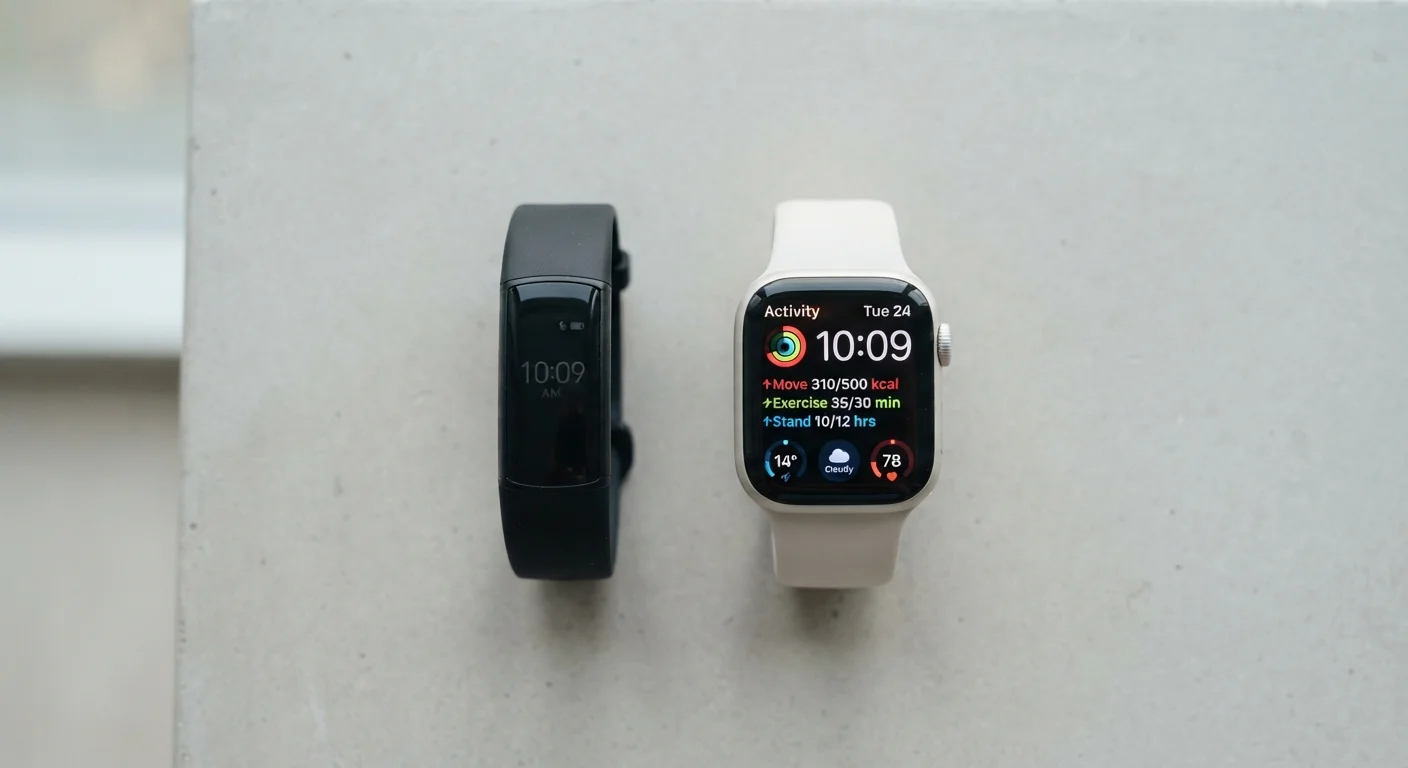
Photo credit: GadgetLite.net | All Things Tech
In this article
Fitness trackers and smartwatches overlap more than ever. Here's how to tell them apart and decide which actually suits your daily routine.
Key Takeaways
- Fitness trackers prioritize health metrics and battery life; smartwatches add connectivity and app support.
- Smartwatches typically cost more and require more frequent charging than fitness trackers.
- Both device types now share many health sensors, but their daily experience differs significantly.
- Your smartphone habits and lifestyle goals should drive the choice more than any feature checklist.
- Battery life can be a decisive factor — fitness trackers often last days longer per charge.
How These Two Categories Actually Differ
At a glance, a fitness tracker and a smartwatch can look nearly identical on your wrist. Both measure heart rate. Both count your steps. Both sync to your phone. So why does the choice matter? Because the experience of living with each one is meaningfully different — and that gap becomes clear fast once you're wearing one every day.
A fitness tracker is purpose-built around health and movement data. Its interface is minimal by design: you get what you need at a glance and put your wrist down. A smartwatch, on the other hand, is designed to extend your smartphone experience. It runs apps, surfaces notifications, and increasingly handles payments and calls directly. That added capability comes with trade-offs — mainly in battery life and complexity.
For a deeper breakdown of the feature overlap between these two categories, see where fitness trackers and smartwatches overlap. And if you're already using a smartwatch and wondering how it fits alongside your phone, this comparison of smartwatch versus smartphone use cases is worth a read.
| Criterion | Fitness Tracker | Smartwatch |
|---|---|---|
| Primary purpose | Health and activity monitoring | Connected device + health monitoring |
| Battery life | 5–10+ days typical | 1–2 days typical |
| Display size | Small or minimal | Larger, full touchscreen |
| App support | Limited or none | Full app ecosystem |
| Notifications | Basic alerts only | Full notification management |
| GPS | Often via phone (some built-in) | Built-in on most models |
| Sleep tracking | Strong, designed for all-night wear | Available, but bulk can be limiting |
| Price range | Generally lower | Generally higher |
Battery Life, Comfort, and Daily Wear
One of the starkest real-world differences between these two device types is how often you'll need to charge them. Fitness trackers routinely run 5 to 10 days on a single charge — some models stretch even longer. Most smartwatches, particularly those with always-on displays and extensive app ecosystems, need charging every one to two days. If you track sleep or travel frequently, that difference is genuinely significant.
Comfort is another underrated factor. Fitness trackers tend to be slimmer and lighter, which makes them easier to forget you're wearing — a real advantage for overnight sleep tracking. Smartwatches, with their larger displays and more complex hardware, can feel bulkier, especially if you're not used to wearing a watch at all.
5–10 days
Typical fitness tracker battery life
Most major fitness tracker brands advertise between five and ten days of battery life under standard use conditions.
1–2 days
Typical smartwatch battery life
Smartwatches with always-on displays and active app use generally require charging every one to two days.
~30%
US adults who own a smartwatch or fitness tracker
Pew Research Center has reported that roughly three in ten American adults own some form of wearable fitness technology.
If you're considering a fitness tracker for the long haul, it's worth understanding the honest trade-offs involved — including data privacy and measurement accuracy. This piece on long-term fitness tracker use covers those realities plainly.
Which One Actually Suits Your Life?
The right answer depends less on specs and more on your daily habits. Ask yourself: Do you frequently want to glance at messages, control music, or use third-party apps without reaching for your phone? If yes, a smartwatch aligns with your routine. Are you primarily motivated by health awareness — tracking sleep quality, resting heart rate trends, and step counts — without wanting a mini-computer on your wrist? A fitness tracker may serve you better with less friction.
It's also worth considering where you wear your device. For athletic or sport-specific use cases, the distinction between consumer wearables and performance-grade devices becomes important — this comparison of sport wearables versus general wellness trackers explains the differences clearly. For a broader overview of what wearable tech can offer in everyday life, the Wearable Devices hub is a useful starting point.
The Lines Are Blurring — But Not Gone
Many smartwatches now include the same sensors found in dedicated fitness trackers, and some fitness trackers have added small displays and notification support. Despite this convergence, the core design philosophy of each device type still shapes your daily experience in ways that a spec sheet won't reveal. If you're unsure which category a specific device falls into, this explainer on the real difference between smartwatches and fitness trackers can help clarify.
Neither category is objectively superior. The fitness tracker's strength is its focus and endurance. The smartwatch's strength is its versatility. Whichever you choose, you'll get the most value when the device fits the way you actually live — not the lifestyle you imagine having once you start wearing it.

Author
Gadgets Editorial Team
Gadgets Editorial Team is the collective byline for our editorial team and contributor network. Articles published under this byline or an editorial pen name are researched, written, and reviewed according to our editorial standards for clarity, consistency, and independence before publication.
View all articles →