
Health Tracking on Your Wrist: How Accurate Is It, Really?
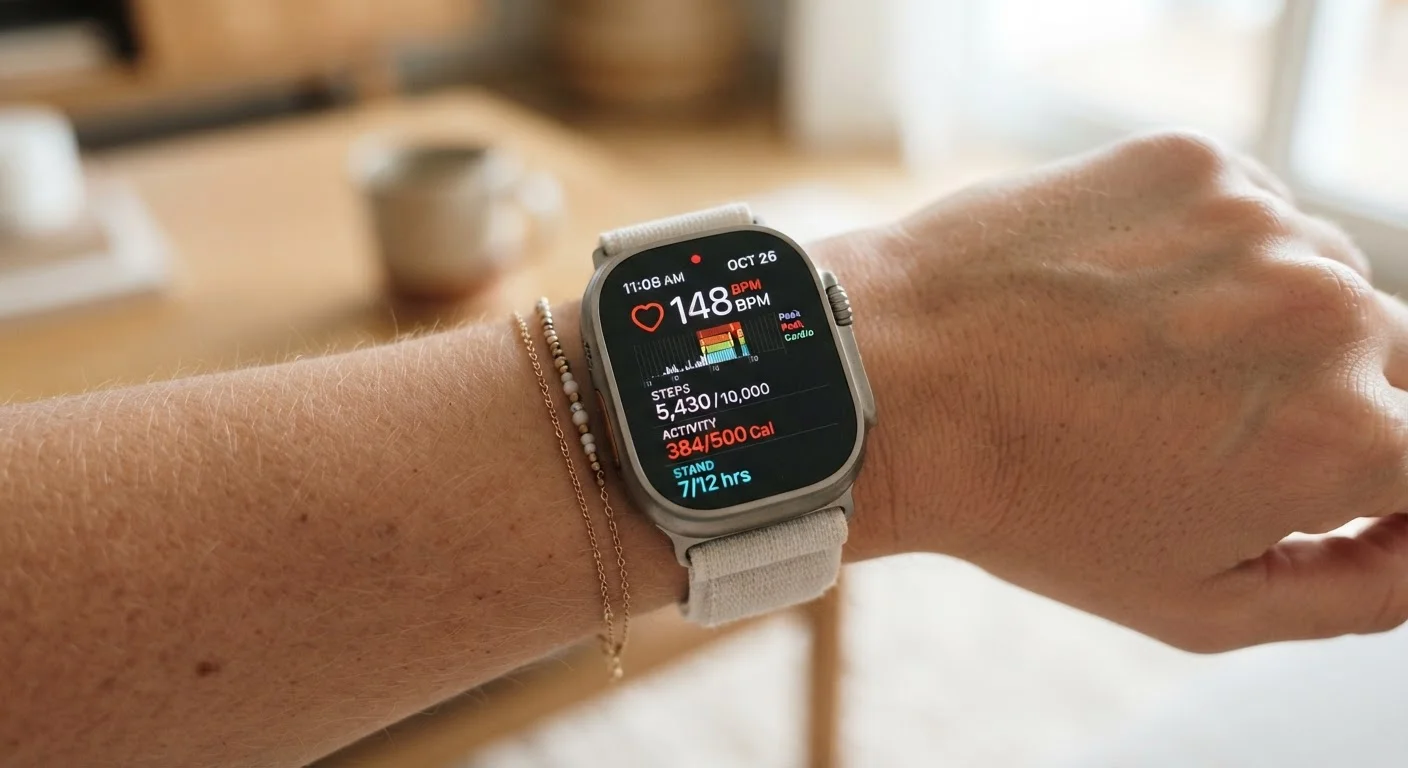
Photo credit: GadgetLite.net | All Things Tech
In this article
Wearables promise to monitor your heart rate, sleep, and stress — but how reliable are those readings? Here's what the research suggests.
Key Takeaways
- Wrist-based heart rate sensors are reasonably accurate at rest but less reliable during intense exercise.
- Sleep tracking on wearables estimates sleep stages using movement and heart rate, not brain activity.
- SpO2 (blood oxygen) readings from consumer wearables are not equivalent to medical-grade pulse oximeters.
- Wearable step counts and calorie estimates carry meaningful margins of error that vary by activity type.
- Proper device fit and consistent placement significantly affect the reliability of any reading.
Why Accuracy Questions Matter More Than Ever
Smartwatches and fitness bands have become a daily fixture for millions of people — worn not just to tell time, but to track heart rate, sleep quality, blood oxygen, stress levels, and more. As health-tracking features multiply with each new device generation, so do the questions: How much should I trust this data? And more importantly, am I making decisions based on numbers that might be wrong?
The honest answer is nuanced. Consumer wearables are capable, useful tools — but they are not medical instruments. Understanding what they actually measure, and where the technology has documented gaps, helps you get genuine value from your device without over-interpreting the output. For a broader look at what each sensor type is really doing under the hood, see our companion guide on wearable health sensors.
Common Myths — and What the Evidence Actually Says
Many misconceptions about wearable accuracy stem from marketing language, anecdotal comparisons, and a natural tendency to trust a number displayed with precision. The myth-fact pairs below address the most widespread misunderstandings.
Myth
My smartwatch heart rate reading is just as accurate as a chest strap or medical ECG.
Fact
Optical wrist-based sensors perform well at rest but show meaningful error rates during vigorous movement, particularly high-intensity interval training.
Consumer smartwatches use PPG sensors — tiny LEDs that detect blood flow changes through the skin. At rest, published research has generally found error rates within 5% compared to ECG references. During intense exercise, however, wrist movement creates signal interference (called motion artifact), and error margins can widen significantly. Chest strap monitors, which measure electrical heart signals directly, remain more reliable during dynamic activity for users who need precision.
Myth
Sleep stage data on my wearable tells me exactly how much deep and REM sleep I got.
Fact
Wearables estimate sleep stages from movement and heart rate variability — not brain activity. The results are approximations, not clinical measurements.
Clinically validated sleep analysis uses PSG, which records brain waves via electrodes on the scalp. Wearables have no access to brain activity; they infer sleep stages from accelerometer data and heart rate patterns. Studies comparing consumer devices against PSG have found that wearables are reasonably good at distinguishing sleep from wakefulness, but less reliable when differentiating specific stages like N3 (deep sleep) from lighter stages. Treat sleep stage breakdowns as useful directional data, not precise measurements.
Myth
The SpO2 reading on my wrist device is equivalent to the clip-on oximeter my doctor uses.
Fact
Consumer wearable SpO2 sensors are less accurate and less validated than medical-grade pulse oximeters, especially outside the normal healthy range.
Medical pulse oximeters are FDA-cleared devices calibrated across a range of oxygen saturation levels, including low-oxygen conditions where precision is most critical. Most consumer wearables use SpO2 measurement primarily for sleep monitoring features and are not intended or cleared for medical diagnosis. Several independent evaluations have noted that wrist-based SpO2 readings can deviate by several percentage points, particularly on users with darker skin tones — a known limitation tied to how optical sensors interact with melanin. If you have a medical reason to monitor blood oxygen, consult a healthcare provider about appropriate tools.
Myth
The calorie burn number my tracker shows is highly accurate.
Fact
Calorie estimates from wearables carry substantial error — studies have reported average errors ranging from roughly 15% to over 40% depending on the device and activity type.
Calorie calculations on wearables rely on algorithms that combine heart rate, movement data, and user-entered profile information (age, weight, height, sex). Each input introduces its own uncertainty, and the algorithms themselves are trained on population averages that may not reflect individual metabolic variation. Activities with irregular movement patterns — cycling, weightlifting, rowing — tend to produce larger errors than steady-state walking or running. Treating calorie data as a rough relative indicator rather than an absolute number reduces the risk of over- or under-correcting your diet based on flawed output.
Myth
Stress scores and HRV metrics from wearables give me a reliable window into my nervous system health.
Fact
Heart rate variability and stress scores are real physiological signals, but their interpretation on consumer devices is heavily algorithm-dependent and not standardized.
HRV — the variation in time between consecutive heartbeats — is a legitimate area of physiological research linked to autonomic nervous system function. However, consumer wearables measure HRV using optical sensors (less precise than ECG), apply proprietary algorithms to generate a single "stress" or "recovery" score, and rarely disclose how those algorithms work. Different devices can produce markedly different scores from the same underlying signal. These metrics can surface useful patterns over time, but comparing your score to a clinical reference range or another person's device output is not meaningful.
If you're trying to get the most reliable readings possible from a device you already own, fit and placement matter more than most users realize. Our article on getting accurate readings from health wearables covers the practical habits that make a measurable difference.
Putting Wearable Data in Practical Context
None of the accuracy limitations above mean your wearable is useless — far from it. The real value of most consumer devices lies in trend detection over time rather than point-in-time clinical precision. Noticing that your resting heart rate has crept upward over three weeks, or that your sleep scores reliably dip after late-night screen time, is genuinely actionable insight even if any single reading carries a margin of error.
~5%
Typical resting heart rate error margin
Multiple published studies have found PPG-based smartwatch heart rate readings to be within approximately 5% of ECG references under resting or low-activity conditions.
15–40%+
Calorie estimate error range across devices
A widely cited Stanford University study found that calorie estimates from consumer fitness trackers varied from about 15% to over 40% error compared to indirect calorimetry, depending on device and activity.
Sleep data deserves special mention. Wearable sleep tracking has improved considerably, but the data can still be hard to interpret correctly. Our guide to getting meaningful sleep insights from your wearable explains how to read those reports more effectively. And if you've noticed your readings differ from a friend's device after the same night, there are specific technical reasons for that — explored in detail in our piece on why sleep tracking data looks different across devices.
Don't Use Wearable Data to Self-Diagnose
Consumer wearables are not medical devices and their readings should never be used to diagnose, treat, or rule out any health condition. If a reading concerns you — an unusually high resting heart rate, a persistently low SpO2, or irregular rhythm alerts — consult a qualified healthcare professional rather than relying on the device alone. Wearable notifications flagging potential arrhythmias, for example, can generate both false positives and false negatives.
For those exploring alternatives to wrist-based devices, smart rings offer a different form factor with their own accuracy trade-offs worth examining. And before acting on any new health metric a wearable claims to measure, it's worth checking our breakdown of which wearable health features are clinically validated and which are not.

Author
Electronics Editorial Team
Electronics Editorial Team is the collective byline for our editorial team and contributor network. Articles published under this byline or an editorial pen name are researched, written, and reviewed according to our editorial standards for clarity, consistency, and independence before publication.
View all articles →