
What 'Smart' Actually Means on a Wearable Label
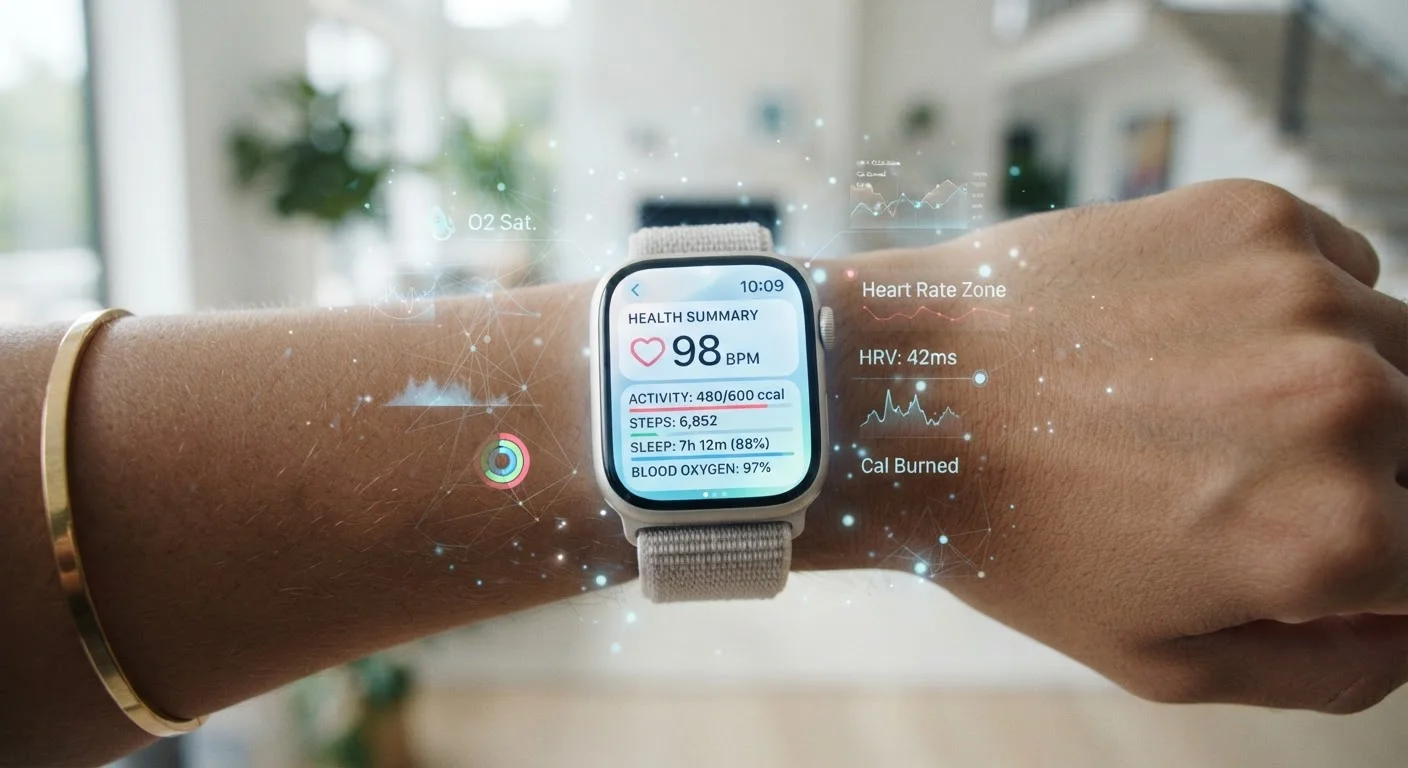
Photo credit: GadgetLite.net | All Things Tech
In this article
Marketing uses 'smart' loosely. Here's what the term genuinely signals about a wearable's capabilities—and when it's just a buzzword.
Key Takeaways
- 'Smart' on a wearable label should mean active data processing, not just Bluetooth pairing.
- Connectivity alone — syncing steps to an app — does not make a device genuinely smart.
- The most capable wearables run logic onboard and can act without a paired phone nearby.
- Marketing often applies 'smart' to any device with an app, regardless of actual intelligence.
- Understanding what 'smart' really means helps you evaluate whether a device justifies its price.
Why 'Smart' Has Become Almost Meaningless
Walk through any electronics retailer and you'll find 'smart' attached to watches, rings, earbuds, glasses, and even clothing. The word has been stretched so thin it barely communicates anything useful. A pair of earbuds that auto-pauses when removed gets called smart. So does a watch that measures your heart rate 24/7 and flags possible atrial fibrillation. These are not equivalent capabilities.
The core problem is that there's no industry-wide standard for what 'smart' requires. Any brand can apply it to any connected device. For everyday buyers, that creates real confusion when comparing products that look similar on the shelf but differ dramatically in what they actually do.
To cut through the noise, it helps to focus on three things: onboard processing, sensor interpretation, and autonomous action. Devices that do all three earn the label. Devices that only sync data to an app are closer to glorified sensors. See the full wearable tech overview for context on how different device categories stack up.
No Regulated Definition Exists
Consumer electronics regulators in the US do not define 'smart' as a product category with specific technical requirements. The term is applied entirely at the discretion of the manufacturer or marketer. This is why two products using identical language can have vastly different actual capabilities.
The Three Markers of Genuine Smartness
Onboard processing means the device has its own chip capable of running algorithms — it doesn't need to send raw data to your phone to figure out what's happening. A watch that detects an irregular rhythm and alerts you during a run has done that calculation locally, even without a cellular signal.
Sensor interpretation goes beyond measurement. Counting steps is measurement. Estimating sleep stages by combining accelerometer and heart rate variability data is interpretation. The gap between these two tells you how much analytical work the device is actually doing. For a closer look at specific sensor terms, the wearable tech glossary breaks down specs like HRV and SpO2 in plain language.
Autonomous action is the clearest signal. Can the device do something useful without your phone? Standalone GPS navigation, on-device emergency SOS, or real-time coaching during a workout — these are behaviors that require local intelligence. A device that becomes a paperweight when disconnected from a phone is, at best, a conduit.
~30%
Wearables with onboard ECG capability
Industry analysts have estimated that fewer than a third of consumer smartwatches shipped include medically-adjacent sensors like ECG, underscoring how wide the capability gap remains.
3–6
Sensors in a capable smart wearable
Most genuinely smart wearables combine at least three to six distinct sensors — optical heart rate, accelerometer, gyroscope, temperature, and others — to enable meaningful data interpretation.
When 'Smart' Is Just a Buzzword
Many wearables marketed as smart are really just connected. They pass data through to an app, which does the actual analysis on a server or your phone. That arrangement can still be useful — the app experience may be excellent — but it's worth knowing that the 'intelligence' lives in the software ecosystem, not the device on your wrist.
Red flags include vague spec sheets that mention an app but say nothing about an onboard processor, devices that require a constant phone connection for all features, and products whose 'smart' features are entirely dependent on a subscription service. None of that means the product is bad, but it reframes what you're actually buying.
Check the Spec Sheet, Not the Box
When evaluating a wearable, search the manufacturer's product page for mentions of a specific processor or chip. If none is listed, the device likely offloads its processing to a paired phone or app server. That's not a dealbreaker, but it's important context for understanding what you're actually paying for.
For a plain breakdown of what the more capable end of the spectrum genuinely offers, what a smartwatch actually does beyond telling time walks through real-world use cases without the marketing spin. And if you're starting from scratch on wearables, wearable tech explained provides a grounded foundation.
What to Look for Instead of the Label
Skip the word 'smart' on the box and look at specifics. Does the product page mention an onboard processor or chip name? How many distinct sensors does it include, and does the software actually use them together? Can it function in airplane mode? Does it offer health insights that go beyond raw numbers?
The wearable tech glossary is a useful reference for decoding the spec sheet terms that actually matter — things like always-on display, IP rating, and sensor accuracy. Pair that with a clear sense of your own use case and you'll be far better positioned than any marketing label can guide you.
The goal isn't to find the 'smartest' device — it's to find the right level of capability for what you actually need. Sometimes a simple, well-built tracker does that better than a feature-loaded watch. See the broader wearable devices hub and wearables and accessories hub for category-level guidance.
Frequently Asked Questions

Author
Releases Editorial Team
Releases Editorial Team is the collective byline for our editorial team and contributor network. Articles published under this byline or an editorial pen name are researched, written, and reviewed according to our editorial standards for clarity, consistency, and independence before publication.
View all articles →