
The Wearable Glossary: Terms Every User Should Recognise
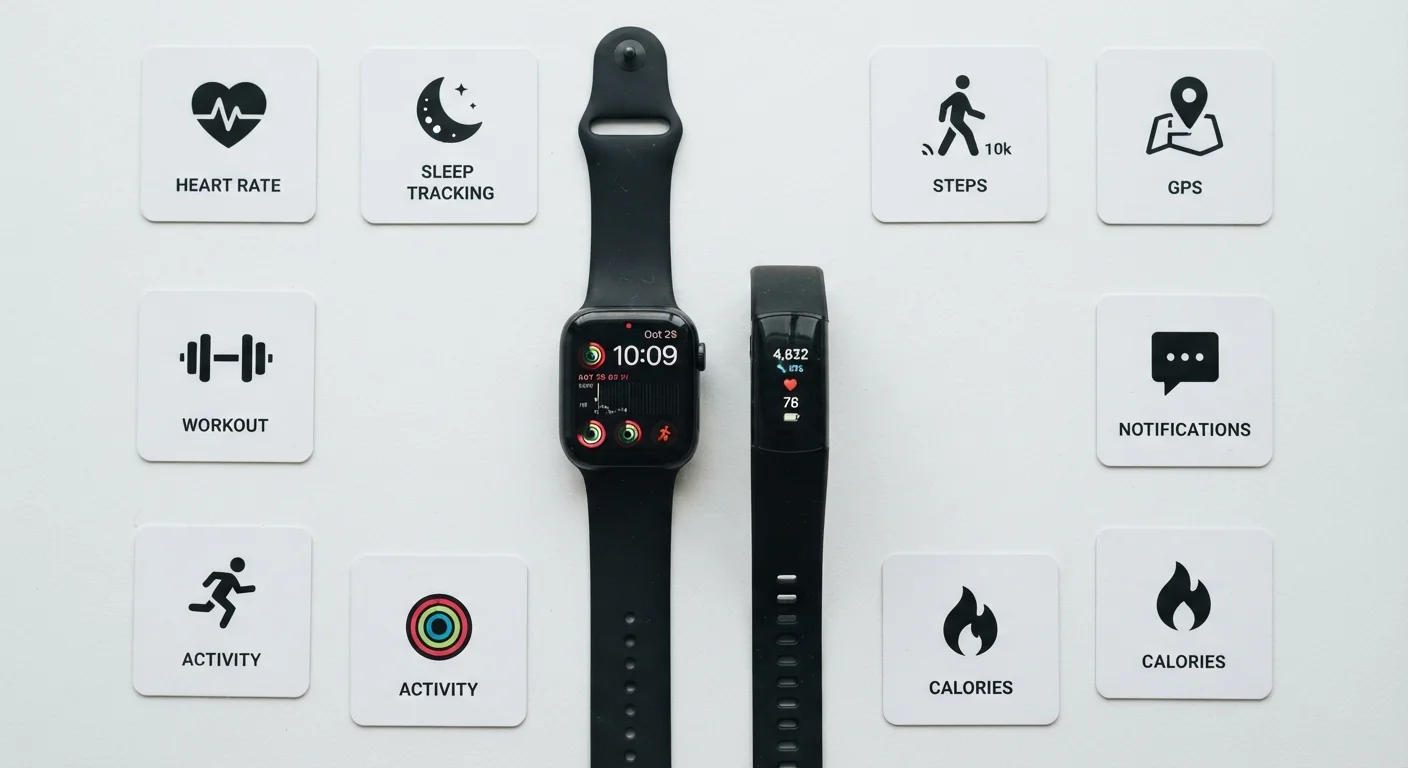
Photo credit: GadgetLite.net | All Things Tech
In this article
SpO2, HRV, ECG, always-on display — wearable tech has its own language. This reference explains the key terms in plain English.
Why Wearable Jargon Feels Overwhelming
Pick up any smartwatch or fitness tracker and its spec sheet reads like an acronym soup: SpO2, HRV, ECG, PPG, AOD. Manufacturers assume familiarity with terms that many users have never encountered. The result is that features you're already paying for often go unused — simply because their names don't explain what they do.
This glossary exists to change that. Whether you've just unboxed your first wearable or you've owned several and still feel uncertain about what some readings mean, the definitions below cut straight to what matters. For a broader orientation to the category itself, see our introduction to wearable tech.
| Most common health sensor | PPG (optical heart rate) |
| Standard water resistance tier | 5 ATM (50 metres) for swim-safe devices |
| ECG availability | Varies by country due to medical device regulations |
| Typical smartwatch battery life | 1–7 days depending on features enabled |
| HRV measurement window | Usually captured during sleep for accuracy |
Health and Sensor Terms Explained
The most confusing wearable terminology clusters around health tracking. These sensors form the core of what makes a wearable useful beyond telling the time — and understanding them helps you interpret what your device is actually reporting.
SpO2
Short for blood oxygen saturation, SpO2 measures the percentage of oxygen-carrying hemoglobin in your blood. Wearables estimate this using optical sensors on the underside of the device. Readings around 95–100% are generally considered normal for healthy adults.
HRV (Heart Rate Variability)
HRV tracks the time variation between consecutive heartbeats. Rather than measuring how fast your heart beats, it captures subtle rhythm fluctuations that some researchers associate with recovery, stress, and nervous system balance. Many fitness wearables use overnight HRV data to generate daily readiness or recovery scores.
ECG / Electrocardiogram
An ECG records the electrical signals that trigger each heartbeat. On a wearable, you typically generate a reading by touching a sensor on the device while wearing it. Consumer ECG readings can flag irregular rhythms such as atrial fibrillation, though they are not a substitute for clinical-grade equipment.
Always-On Display (AOD)
A display mode that keeps basic information — time, steps, heart rate — visible at all times without a wrist raise or tap. AOD is convenient but draws more power continuously, which can meaningfully reduce battery life.
IP Rating
IP stands for Ingress Protection. The two digits that follow (e.g., IP68) indicate resistance to solid particles and liquids respectively. A higher second digit means greater water resistance — IP68 generally indicates the device can be submerged beyond one metre, though exact limits vary by manufacturer.
PPG Sensor
Photoplethysmography (PPG) is the optical technology most wearables use to detect blood flow. A light source shines into the skin, and a sensor measures how much is absorbed or reflected with each pulse. PPG underpins heart rate, SpO2, and some stress tracking features.
Latency
Latency refers to the delay between an action — such as a notification arriving on your phone — and the wearable responding to it. Low latency matters most for audio applications like true wireless earbuds, where audio sync is noticeable.
VO2 Max
VO2 max is an estimate of the maximum rate at which your body can use oxygen during intense exercise. Wearables calculate this from heart rate and movement data rather than lab testing, so figures should be treated as directional rather than clinically precise.
Companion App
The smartphone application that pairs with a wearable to display historical data, adjust settings, and push software updates. Most wearables require a companion app for full functionality; compatibility with iOS or Android varies by device.
Haptic Feedback
Vibration-based alerts delivered through small motors inside the wearable. Haptic patterns can signal notifications, alarms, navigation turns, or workout milestones without sound.
AMOLED / LCD
Two common display technologies found in smartwatches. AMOLED screens produce deep blacks and vivid colour by lighting individual pixels, which can aid battery efficiency in AOD mode. LCD screens are generally brighter in direct sunlight and often less expensive to produce.
Continuous Glucose Monitoring (CGM)
CGM tracks blood sugar levels throughout the day and night, typically via a small sensor inserted just under the skin. While CGM devices are distinct from most consumer wearables, some next-generation smartwatches are exploring non-invasive glucose sensing — a capability still under active development.
Consumer Readings Are Estimates, Not Diagnoses
Metrics like SpO2, ECG, and VO2 max generated by consumer wearables are approximations based on optical or electrical sensors designed for convenience, not clinical accuracy. They can be useful for tracking trends over time, but should never replace advice from a qualified healthcare professional. If a reading concerns you, consult a doctor rather than acting solely on what your device reports.
It's worth noting that ECG availability on consumer devices varies by country. Regulatory approval processes mean a feature present on a device sold in one market may be disabled in another. Always verify what's active on your specific device variant.
Display, Connectivity, and Everyday Specs
Beyond health sensors, wearable specs cover display technology, water resistance, and how the device communicates with your phone. These terms appear consistently across product descriptions and reviews.
~15%
Battery drain added by Always-On Display
Independent battery tests suggest AOD can reduce smartwatch battery life by roughly 10–20% depending on the hardware and screen type.
IP68
Most common water resistance rating on premium wearables
IP68 is widely cited in wearable spec sheets, though exact submersion limits differ between manufacturers and are not standardised beyond the rating itself.
Understanding IP ratings is especially practical: a device rated 5 ATM is safe for swimming, while IP68 handles submersion but may have manufacturer-specific limits. Always check the fine print rather than relying on the rating alone. For a complete breakdown of spec sheet terminology, reading a wearable spec sheet without getting lost is a useful companion to this glossary.
If you're curious about how the word smart is used across the category — and when it's genuinely meaningful versus marketing shorthand — what 'smart' actually means on a wearable label offers a clear perspective. And for a full overview of device types, the complete picture of wearable device categories covers everything from smartwatches to patches.

Author
Electronics Editorial Team
Electronics Editorial Team is the collective byline for our editorial team and contributor network. Articles published under this byline or an editorial pen name are researched, written, and reviewed according to our editorial standards for clarity, consistency, and independence before publication.
View all articles →