
What a Smartwatch Actually Does Beyond Telling Time
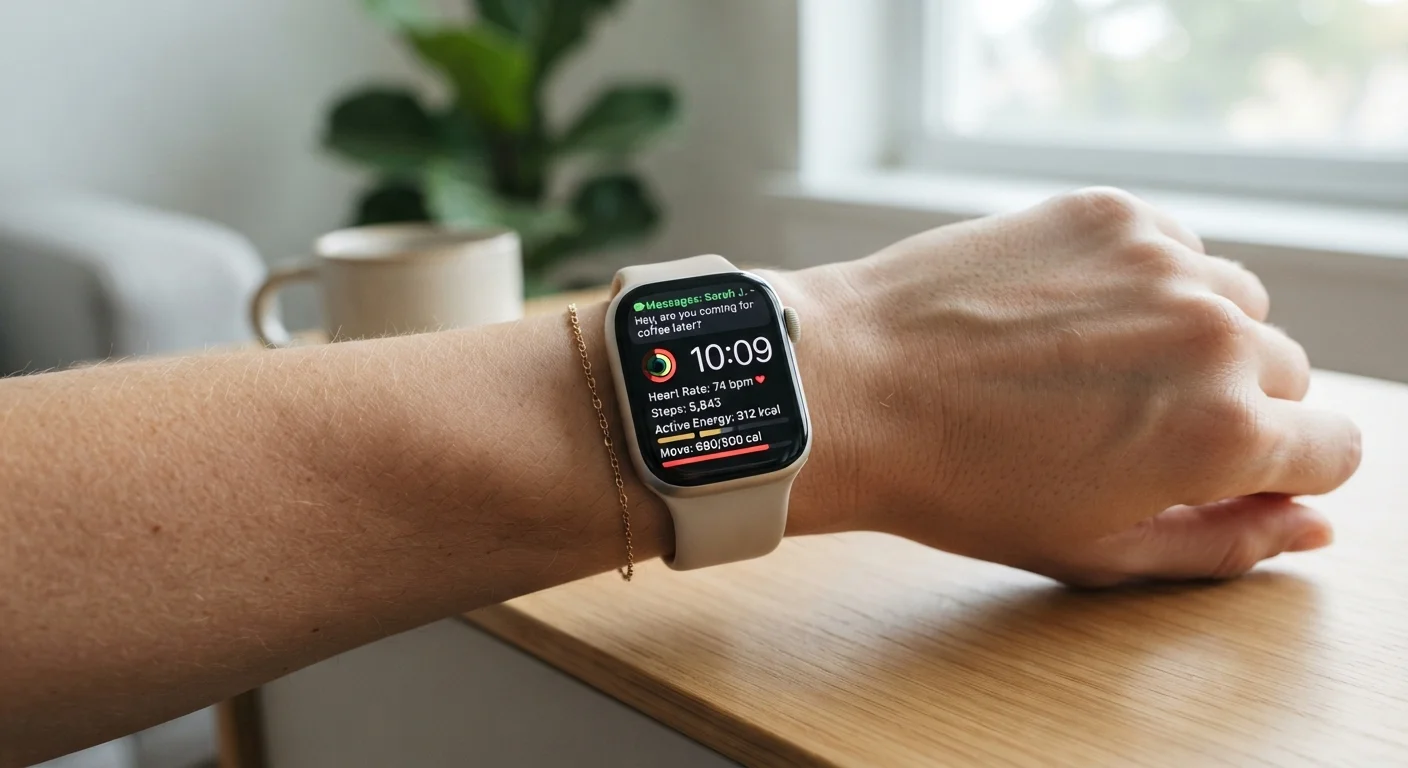
Photo credit: GadgetLite.net | All Things Tech
In this article
Confused about what smartwatches are really for? Here's a plain-language breakdown of their real-world functions and everyday usefulness.
Key Takeaways
- Smartwatches serve as a wrist-level extension of your smartphone, not a replacement.
- Health and fitness tracking — heart rate, sleep, steps — is one of their most used features.
- Notifications on your wrist reduce how often you need to check your phone.
- Many models support contactless payments, letting you pay without your wallet or phone.
- Battery life and ongoing charging are the most common trade-offs users report.
- The value of a smartwatch depends heavily on which features match your actual daily habits.
More Than a Clock on Your Wrist
The name 'smartwatch' undersells what these devices actually do day-to-day. Most people who haven't owned one assume it's a novelty — a way to see the time with a fancier screen. In practice, regular users tend to reach for their wrists far more often than they expected, and for reasons that have nothing to do with timekeeping.
The core idea is simple: a smartwatch acts as a low-friction interface to information and actions you'd otherwise need your phone for. That glanceability — seeing something in a second without pulling a phone from your pocket — is the real value proposition. For a deeper look at how this fits into the broader wearable category, see Wearable Tech Explained.
~30%
US adults who own a smartwatch or fitness tracker
According to Pew Research Center survey data, roughly three in ten American adults report owning a smartwatch or fitness tracker, reflecting mainstream adoption of wrist-worn tech.
1–2 days
Typical battery life for most smartwatches
Industry benchmarks and manufacturer specifications for mainstream smartwatch models commonly cite one to two days of typical use between charges, a key trade-off versus traditional watches.
Heart rate, sleep, steps
Three most-used health tracking features
Consumer research consistently identifies heart rate monitoring, sleep tracking, and step counting as the health features smartwatch owners rely on most in daily use.
Health and Fitness: The Feature Most People Actually Use
Ask most smartwatch owners what they use it for most and health tracking comes up immediately. At minimum, most devices count steps, monitor resting and active heart rate, and log sleep duration and quality. More advanced models add blood oxygen monitoring, irregular heart rhythm alerts, skin temperature sensing, and menstrual cycle tracking.
The important nuance is that this data is most useful as a trend tool rather than a diagnostic instrument. Seeing that your resting heart rate has crept up over three weeks, or that your sleep dropped sharply after a schedule change, is genuinely actionable. It's not a substitute for a doctor's assessment, but it gives you a more honest picture of your baseline than memory alone.
Use Trends, Not Single Readings
Don't overinterpret a single data point from your smartwatch — one night of low sleep or one elevated heart rate reading isn't cause for concern on its own. Instead, look for patterns across days or weeks. That longer view is where wearable health data becomes genuinely useful for spotting changes in your baseline.
If you're deciding between a full smartwatch and a simpler device, Smartwatch or Fitness Tracker: Understanding the Real Difference breaks down what sets them apart.
Notifications, Payments, and Small Conveniences That Add Up
Beyond health, smartwatches handle a cluster of small tasks that collectively reduce friction throughout your day. Notification mirroring is one of the most cited benefits: incoming messages, calendar reminders, and call alerts appear on your wrist, so you can decide in two seconds whether something needs your full attention. This matters especially in meetings, at the gym, or when your phone is in a bag.
Contactless payments are another feature that surprises first-time users with how often they use it. Tapping your wrist at a checkout terminal when your hands are full is genuinely more convenient than the alternative. Navigation prompts — discreet haptic taps on your wrist guiding you through a route — work similarly well for walkers and cyclists who don't want to stare at a screen.
That said, it's worth being honest about where smartwatches still fall short. Living With a Smartwatch: The Honest Trade-Offs covers the real-world downsides that marketing materials tend to skip.
Understanding What 'Smart' Really Means Here
Not everything labeled a smartwatch offers the same capabilities. Entry-level devices might show notifications and count steps but lack GPS, contactless payment support, or third-party apps. Higher-end models run full operating systems with app stores, voice assistants, and onboard LTE. The word 'smart' on packaging doesn't guarantee any specific feature set — What 'Smart' Actually Means on a Wearable Label explains this gap clearly.
The practical question isn't whether a smartwatch is impressive in a spec sheet sense — it's whether its specific features map to moments in your actual day. A runner who wants GPS-tracked routes and heart rate zones has different needs than someone who mainly wants to glance at messages during work hours. Before getting drawn in by a long feature list, use a practical checklist to clarify which capabilities you'd genuinely use. And if you're still weighing when it makes sense to reach for your wrist versus your phone, Smartwatch or Smartphone: When Reaching for Your Wrist Actually Makes Sense offers a clear-eyed comparison.
“The most personal device we've ever created is the one you wear. It's with you throughout the day, sensing things about you that even you might not notice.”
— Tim Cook, CEO, Apple — speaking at an Apple product event about wearable technology
Frequently Asked Questions

Author
Gadgets Editorial Team
Gadgets Editorial Team is the collective byline for our editorial team and contributor network. Articles published under this byline or an editorial pen name are researched, written, and reviewed according to our editorial standards for clarity, consistency, and independence before publication.
View all articles →