
Everything Wearables Collect About You—and Who Can Access It
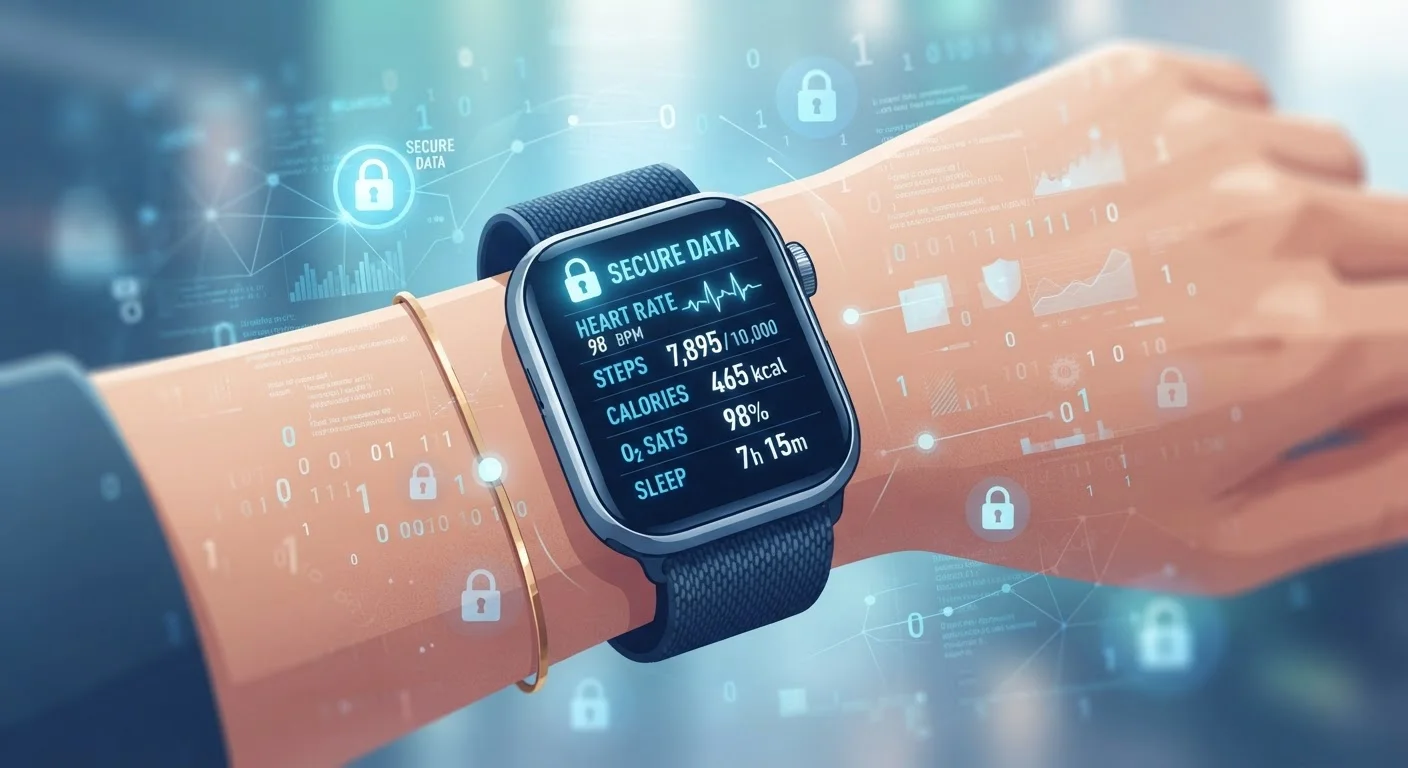
Photo credit: GadgetLite.net | All Things Tech
In this article
Your smartwatch logs more than steps. Understand what data wearables gather, where it goes, and what your privacy settings actually control.
Key Takeaways
- Wearables collect biometric, location, behavioral, and device data simultaneously.
- Most data is stored on manufacturer cloud servers, not just your phone.
- Third-party app integrations often share your health data beyond the original platform.
- Privacy settings limit some sharing but rarely stop data collection at the source.
- Reviewing app permissions and data-sharing agreements is the most effective control you have.
What Data Wearables Actually Collect
Most people think of a smartwatch as a step counter with notifications. The reality is considerably broader. Modern wearables are sensor arrays that run continuously, capturing data across several distinct categories.
Biometric data is the most obvious layer — heart rate, blood oxygen saturation (SpO2), skin temperature, sleep stages, menstrual cycle tracking, and stress scores derived from heart rate variability. See our honest look at wearable health sensor accuracy for context on what these readings actually mean.
Location data goes beyond GPS coordinates. Devices log movement patterns, commute routes, and frequently visited locations — enough to reconstruct a detailed daily routine over time.
Behavioral data includes activity intensity, sedentary periods, calorie burn estimates, workout types, and even typing cadence on some devices.
Device and interaction data covers which apps you open, notification responses, voice assistant queries, and paired device identifiers.
72%
Users unaware of third-party data sharing
A 2023 survey by the Future of Privacy Forum found that most wearable users did not know their health data could be shared with third-party app developers.
30+
Data types logged by flagship smartwatches
Contemporary flagship smartwatches from major manufacturers can capture over 30 distinct data signals, according to published developer API documentation.
0
Consumer wearable platforms covered by HIPAA
The U.S. Department of Health and Human Services has confirmed that consumer wearable platforms are not classified as HIPAA-covered entities.
Taken together, that is a persistent, intimate portrait of how you live — not just what you do in a gym.
Where Your Data Goes After It Leaves Your Wrist
The path your data travels matters as much as what gets collected. When a wearable syncs, data typically moves in three hops: from the device to a companion app on your phone, then from the app to the manufacturer's cloud servers, and often from there to integrated third-party platforms.
Manufacturer cloud storage is the primary destination. Companies retain health and activity data on their servers, sometimes indefinitely, under terms that allow them to use aggregated or anonymized data for product development and research. "Anonymized" is worth scrutinizing — research has repeatedly shown that health and location datasets can be re-identified when combined with other data.
"Anonymized" Health Data Is Not Always Private
Several peer-reviewed studies have demonstrated that health and location datasets described as anonymized can be re-identified by combining them with publicly available information. Do not assume that a platform's use of aggregate or de-identified data eliminates your personal privacy risk. Review what data you share with any third-party integration before authorizing access.
Third-party integrations are where data spreads furthest. Connecting your wearable platform to a nutrition app, a coaching service, or an insurance wellness program each represents a new data-sharing relationship with its own privacy policy. The original manufacturer's policy no longer governs what happens next.
For a deeper look at how collected data is stored and what controls exist, the wearable personal data guide covers the storage and policy landscape in detail.
Who Can Access Your Wearable Data
Access is not limited to the company that made your device. The parties who may lawfully or contractually access your wearable data include:
- The device manufacturer — under the terms you accepted during setup.
- Third-party app developers — any platform you authorize through the health ecosystem (Apple Health, Google Health Connect, etc.).
- Employers and insurers — if you participate in a wellness or incentive program that links your wearable, data sharing with those entities is often a condition of the benefit.
- Researchers — many platforms share de-identified datasets with academic or commercial research partners, usually disclosed in privacy policies but rarely highlighted.
- Law enforcement — with a valid legal process, wearable data held by a company is subject to the same subpoena and warrant mechanisms as any other cloud-stored data.
Before joining any employer wellness program tied to your wearable, request a copy of the data-sharing agreement — not just the program brochure. The agreement specifies exactly what your employer or insurer can see.
Program marketing materials routinely emphasize privacy while the underlying data agreements permit access to individual activity and biometric records.
Set a recurring monthly reminder to audit third-party app permissions in your health platform. Apps you authorized once and stopped using retain access until you revoke it.
Permissions do not expire automatically on any major wearable platform, so data access from forgotten integrations accumulates silently over time.
Health data protections vary significantly by jurisdiction. In the U.S., HIPAA (the Health Insurance Portability and Accountability Act) generally does not apply to consumer wearable platforms because they are not covered healthcare entities — meaning the familiar medical privacy rules most people assume apply actually do not.
What Your Privacy Settings Actually Control
Privacy dashboards in wearable apps have expanded, but their scope is narrower than the controls suggest. Here is what settings typically do — and do not — govern.
What they control: which third-party apps can read your health data, whether location services are active, whether data is shared for advertising, and in some cases whether your data contributes to research pools.
What they generally do not control: the collection itself. Turning off location sharing with third parties does not stop the device from logging GPS coordinates locally or sharing them with the manufacturer. Opting out of research data sharing does not delete data already collected. Revoking an app's health permissions stops future access but does not remove data that app already pulled.
Submit a Data Deletion Request, Not Just Account Deletion
Most major wearable platforms offer a formal data deletion request separate from simply closing your account. Look for this option in the platform's web privacy portal or privacy policy. Submitting a formal request typically triggers a documented deletion process with a confirmed timeline, whereas deleting the app alone often leaves server-side data intact.
Deleting your account is the most complete option most platforms offer, but data retention policies differ — some platforms delete server-side data within weeks; others retain it for months or specify only that it will eventually be purged.
Your digital footprint does not shrink automatically when you adjust a toggle. Active management requires checking both the app settings and the platform's web privacy portal, which often expose additional controls the mobile app omits.
Practical Steps to Reduce Your Exposure
You cannot eliminate data collection and still use a wearable. What you can do is reduce unnecessary exposure with a few deliberate habits.
- Audit connected apps regularly. In your health platform settings (Apple Health, Google Health Connect, or the manufacturer's own app), review which third-party apps have read or write access. Revoke permissions for any you no longer actively use.
- Read the data-sharing section before joining wellness programs. Employer or insurer-linked programs may require broad data access as a participation condition. Understanding the scope before opting in is the only point at which you have genuine leverage.
- Use the minimal data profile your goals require. If you wear a device primarily for sleep tracking, there is no practical reason to enable continuous GPS logging. Disable sensors and features you are not using.
- Check data deletion terms before buying. Platforms differ on what deletion actually removes and how long it takes. This information is in the privacy policy — look for the section on data retention and deletion requests.
- Understand ecosystem boundaries. Data shared with a third-party platform is now under that platform's policy. Before connecting any app, ask whether you trust that company's data practices independently of the wearable brand.
For broader context on how wearables fit into daily digital life, the wearable tech explainer and the complete wearables overview are useful starting points. The full story from sensors to ecosystems covers how all these hardware and software layers connect.
Regional Privacy Laws Vary Significantly
Residents of certain U.S. states — including California under the CCPA — have additional rights to request data access, correction, and deletion from consumer platforms. The rights available to you depend on where you live, not where the company is headquartered. Check your state attorney general's website for current consumer data rights applicable to your location.

Author
Releases Editorial Team
Releases Editorial Team is the collective byline for our editorial team and contributor network. Articles published under this byline or an editorial pen name are researched, written, and reviewed according to our editorial standards for clarity, consistency, and independence before publication.
View all articles →