
Wearable Health Sensors: What They Can and Cannot Tell You
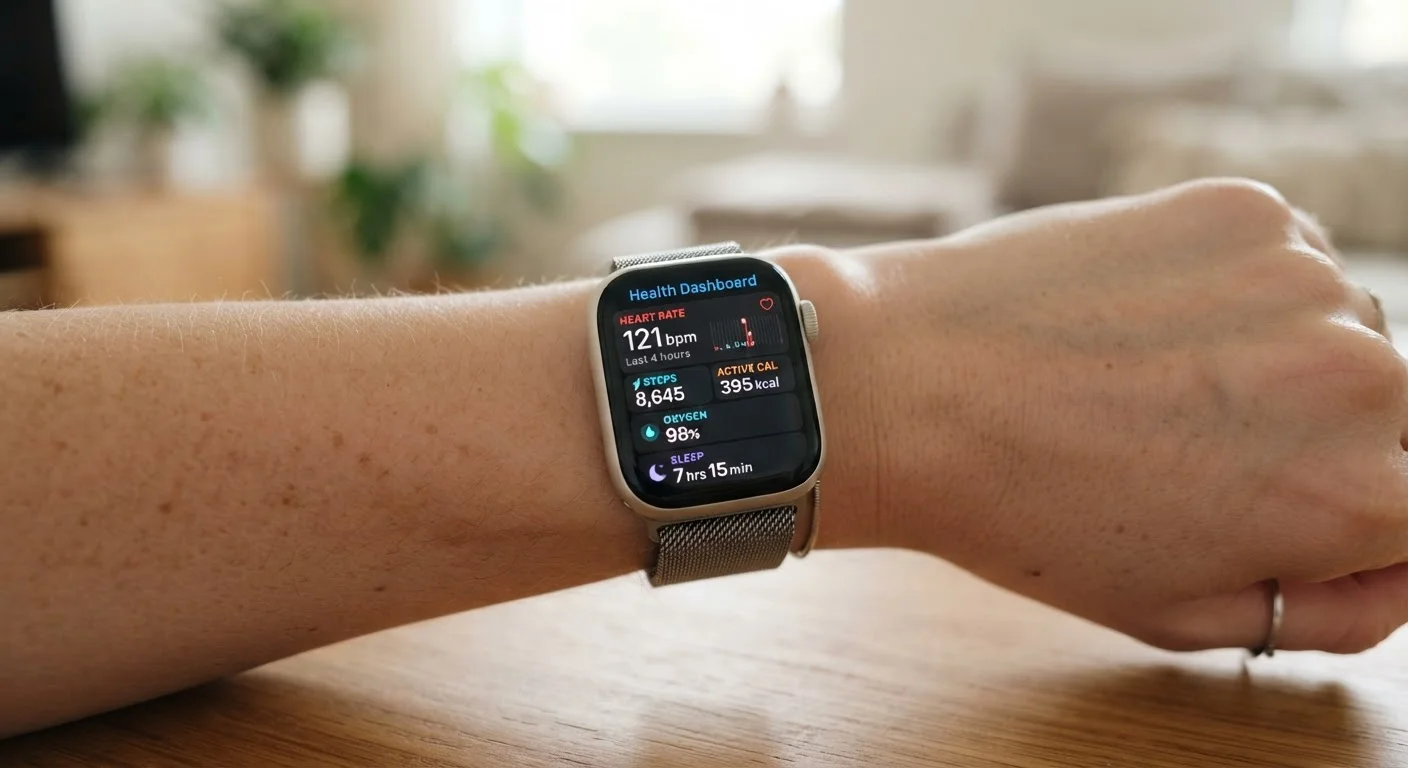
Photo credit: GadgetLite.net | All Things Tech
Smartwatches can track heart rate, sleep, and SpO2 — but their accuracy and medical value have real limits. Here's an honest look.
Key Takeaways
- Wearable sensors are useful wellness tools but are not substitutes for clinical medical diagnostics.
- Heart rate and step counting are among the most reliable metrics; blood oxygen and stress readings are less precise.
- Skin tone, wrist placement, and movement can all meaningfully affect sensor accuracy.
- Trend data collected over time is often more actionable than any single reading.
- Always consult a healthcare professional before acting on health data from a wearable.
Why This Confusion Exists
Wearable devices have matured rapidly, and the marketing around them has kept pace. Terms like "medical-grade," "clinically validated," and "advanced health monitoring" appear on product pages and packaging — sometimes accurately, often loosely. For everyday users, the line between a wellness gadget and a medical device has become genuinely hard to see.
The result is a common pattern: people either over-trust their wearable's readings (using them to self-diagnose) or under-trust them entirely (dismissing the data as noise). Both extremes miss the real value these devices offer. Understanding what the sensors actually measure — and how — helps you land in a more useful middle ground. For a deeper look at how each sensor works, see what each wearable sensor is actually measuring.
Myth
My smartwatch can detect health problems the way a doctor or hospital can.
Fact
Consumer wearables are wellness tools, not diagnostic medical devices — a meaningful distinction with real implications.
Regulatory agencies like the U.S. FDA distinguish between general wellness devices and medical devices. Most consumer smartwatches fall into the wellness category, meaning they are not required to meet the clinical accuracy standards that medical equipment must clear. Some specific features — such as certain ECG (electrocardiogram) functions — have received regulatory clearance for limited purposes, but that applies to one feature, not the device overall. Acting on wearable data as though it were a clinical diagnosis can lead to unnecessary anxiety or, worse, a false sense of reassurance.
Myth
The SpO2 (blood oxygen) reading on my watch is as reliable as a pulse oximeter from a pharmacy.
Fact
Consumer wearable SpO2 sensors are significantly less accurate than dedicated pulse oximeters, especially at lower oxygen levels.
Dedicated pulse oximeters are medical devices calibrated against arterial blood samples and validated for clinical use. Wrist-based SpO2 sensors use a different optical approach and are much more sensitive to movement, skin contact, and ambient light. Studies comparing the two have consistently found wider error margins in wearable devices. For casual wellness awareness — noticing a general pattern during sleep, for example — the feature can be informative. For anything medically significant, a dedicated device and professional interpretation are necessary. See which wearable health features are actually validated for more context on this distinction.
Myth
Step counts and calorie estimates from wearables are highly accurate.
Fact
Step counts are relatively reliable on flat surfaces; calorie estimates carry substantial error margins and should be treated as rough approximations.
Pedometer-style step counting is one of the oldest and most refined wearable functions, and modern accelerometers do a reasonable job on straightforward walks. However, accuracy drops during activities like cycling, weightlifting, or pushing a stroller. Calorie burn estimates compound inaccuracies — they rely on step count, your entered body metrics, and assumed metabolic formulas that don't account for individual variation. Published research has found calorie estimates from consumer wearables can be off by 20–40% or more depending on activity type and the specific device.
Myth
If my wearable doesn't flag anything unusual, my health must be fine.
Fact
Wearables monitor a narrow slice of physiological signals and can miss many health conditions entirely.
Even the most feature-rich consumer wearable measures only a handful of metrics — typically heart rate, movement, skin temperature, and in some cases ECG or SpO2. Conditions involving blood pressure, cholesterol, blood glucose, organ function, or structural cardiac issues are entirely outside what these sensors can detect. Using the absence of an alert as health reassurance is a form of confirmation bias that the technology simply doesn't support. Regular check-ups with a healthcare provider remain the appropriate tool for comprehensive health screening.
Myth
Stress and sleep scores from wearables are scientifically precise measurements.
Fact
Stress and sleep metrics are algorithmic estimates based on indirect signals — useful for patterns, not precise diagnoses.
There is no single physiological signal that directly measures "stress" or cleanly defines sleep stages. Wearables approximate both by combining data points — heart rate variability for stress, movement and heart rate for sleep staging — and feeding them through proprietary algorithms. The outputs are relative scores, not clinical measurements. Clinical sleep studies (polysomnography) use brain wave monitoring, eye movement tracking, and other inputs that a wrist device cannot replicate. Wearable sleep data can surface useful patterns over time, but individual nightly scores should not be over-interpreted.
Reading Your Data More Intelligently
The most practical shift you can make is treating wearable data as trend information, not diagnostic output. A resting heart rate that creeps up over two weeks, or sleep quality that consistently dips on certain nights, tells a more meaningful story than a single anomalous reading at 2 p.m.
Don't Self-Diagnose From Wearable Readings
A single unusual reading — a high heart rate, a low SpO2 figure, an irregular rhythm alert — can reflect sensor error or normal physiological variation just as often as a genuine health issue. If a reading concerns you, note it, check your device fit, and consult a healthcare professional rather than drawing conclusions on your own. Wearable alerts are conversation starters with your doctor, not diagnoses.
Context also matters. Factors like skin tone, tattoos on the wrist, improper device fit, and vigorous movement all introduce measurement error. Research has noted that optical heart-rate sensors — the technology behind most wrist-based monitors — can perform differently across skin tones, something manufacturers are actively working to address but have not fully resolved.
If you're curious about the broader accuracy picture, health tracking accuracy on wearables breaks down what the research actually shows metric by metric. And if you're weighing whether a full smartwatch or a simpler fitness band suits your needs, the real difference between smartwatches and fitness trackers can help you decide.
20–40%
Typical calorie estimate error range
Multiple independent studies have found consumer wearables can over- or underestimate calorie burn by this margin, varying by activity type and device.
~95%
Resting heart rate accuracy vs. ECG
Research generally shows wrist-based optical sensors perform well for resting heart rate but accuracy declines meaningfully during vigorous exercise.
Finally, keep data privacy in mind. Your wearable collects a significant volume of personal health information. Understanding what wearables collect and who can access it is a reasonable next step for any long-term wearer. For a fuller picture of the ongoing trade-offs of daily wear, the honest trade-offs of wearing a fitness tracker long-term is worth reading alongside this piece.

Author
Gadgets Editorial Team
Gadgets Editorial Team is the collective byline for our editorial team and contributor network. Articles published under this byline or an editorial pen name are researched, written, and reviewed according to our editorial standards for clarity, consistency, and independence before publication.
View all articles →