
Single-Player vs. Multiplayer: Different Experiences, Different Cultures
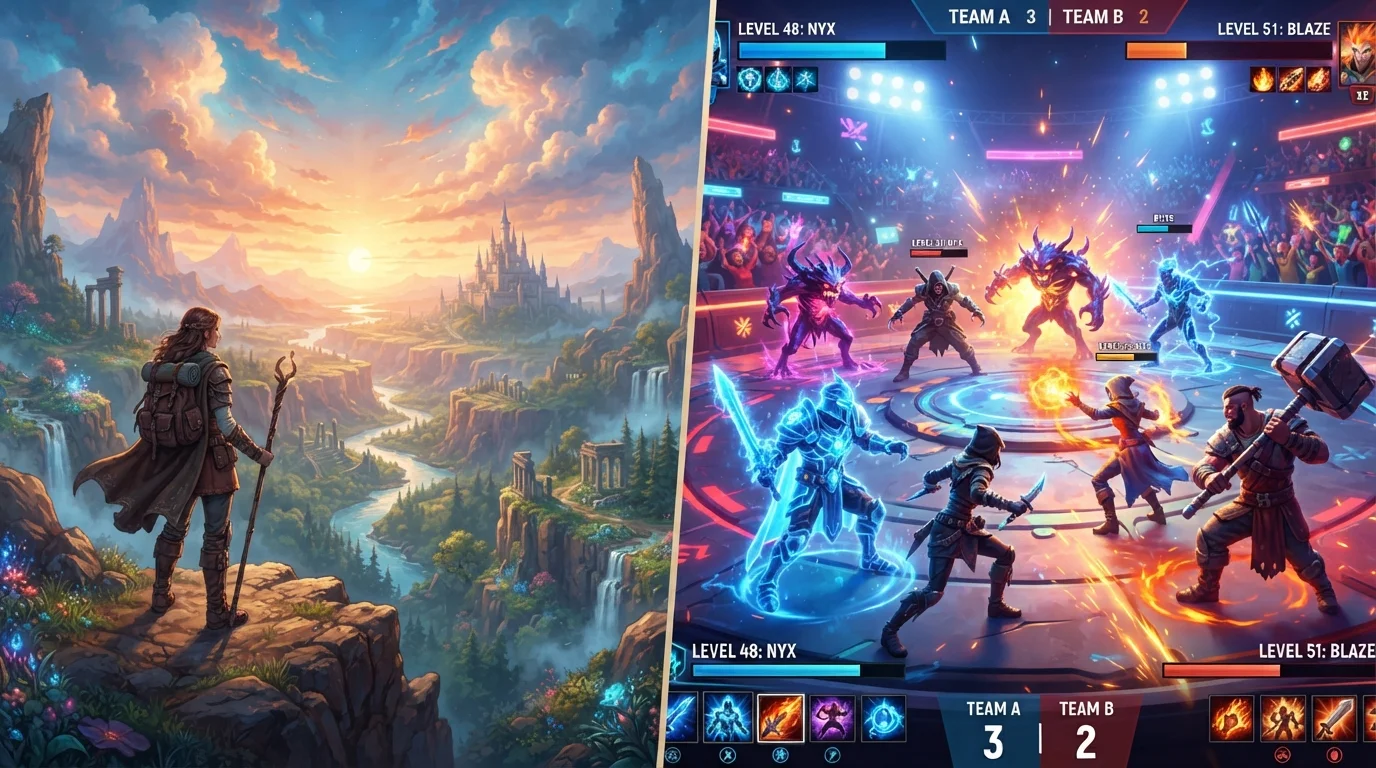
Photo credit: GadgetLite.net | All Things Tech
In this article
Solo adventures and online competition attract different players and spark distinct communities. See how each style shapes a unique culture.
Key Takeaways
- Single-player games prioritize narrative and personal exploration, while multiplayer centers on social dynamics and competition.
- Each style has spawned its own distinct culture, vocabulary, and community rituals.
- Many players enjoy both modes — the two aren't mutually exclusive.
- Multiplayer communities tend to evolve in real time, shaped by player behavior and ongoing updates.
- Single-player games often inspire deep fan communities around lore, speedrunning, and modding.
What Separates These Two Styles
At the most basic level, single-player games are designed for one person playing alone — think epic RPGs, story-driven adventures, or atmospheric puzzle games. Multiplayer games connect you with other human players, whether you're competing against them, cooperating with them, or a mix of both.
But the difference runs deeper than just how many people are in the room (or server). Each format delivers a genuinely different emotional experience. Single-player games are often about immersion — disappearing into a world and living someone else's story. Multiplayer games are about interaction — the unpredictability and electricity of human opponents and teammates who think, adapt, and surprise you.
This distinction shapes not just how games are built, but the entire culture that grows around them. As part of the broader landscape of gaming culture, each style has its own language, rituals, and identity.
| Criterion | Single-Player | Multiplayer |
|---|---|---|
| Core experience | Immersive story and exploration | Social interaction and competition |
| Pace | Self-directed, pauseable | Real-time, reactive |
| Community type | Lore fans, speedrunners, modders | Guilds, ranked ladders, esports |
| Replayability driver | Hidden content, choices, challenges | New opponents and evolving meta |
| Social pressure | None — fully private experience | High — real people involved |
| Longevity model | Fixed story with optional DLC | Live service with ongoing updates |
The Culture of Solo Play
Single-player gaming fosters a culture of personal discovery and creative engagement. Players routinely spend hours hunting for hidden lore, theorizing about story endings, and documenting secrets in fan wikis. The relationship between a player and a game can feel almost private — a world that exists just for you.
This culture has produced remarkable subcultures of its own. Speedrunning — the practice of completing games as quickly as possible — is largely rooted in single-player titles, where players dissect game mechanics with almost scientific obsession. Similarly, modding communities frequently rally around beloved single-player franchises, reshaping and extending them long after official support ends.
Single-player games also tend to drive deeper conversations about storytelling and representation. Discussions about character writing, moral choices, and representation in games are most prominent in story-driven, solo experiences.
59%
US adults who play video games
According to Pew Research Center data, a majority of American adults identify as video game players, spanning both solo and multiplayer formats.
Top genre
Action-adventure dominates single-player
Industry tracking consistently shows action-adventure titles — typically story-driven single-player games — among the highest-selling genre categories globally.
The Culture of Multiplayer
Multiplayer gaming culture is louder, faster, and intensely social. It thrives on shared moments — a last-second comeback, a perfectly coordinated team strategy, or the chaos of a friend group laughing at an unexpected defeat. These games create ongoing communities rather than one-time stories: the game is never really over because there's always another match, another season, another challenge.
The vocabulary here is rich and evolving — terms like "meta" (the current dominant strategy), "carry" (a player who leads their team to victory), and "GG" (short for "good game") have crossed into mainstream culture. Online gaming communities form around specific titles and sustain themselves through forums, Discord servers, and content creation.
Multiplayer culture also fuels the split between esports and casual play, and it drives massive gaming events and conventions where communities gather in person. The platform ecosystem you choose — including its friends list and online services — matters enormously in multiplayer, because your community is tied to it.
Do You Have to Choose?
Absolutely not. Most experienced gamers move fluidly between both styles depending on their mood, schedule, or what friends are playing. A single-player epic might be your go-to on a quiet evening; a competitive multiplayer session might be how you unwind with friends on weekends.
Gaming has evolved across decades to a point where many modern titles even blend both — offering rich solo campaigns alongside fully-featured online modes. The real takeaway? Both styles are valid, both are vibrant, and both offer something genuinely irreplaceable. The best starting point is simply the one that sounds most fun to you right now.
Couch Co-op: A Middle Ground
Local multiplayer — sometimes called "couch co-op" — lets multiple players share the same screen or room, blending the social energy of multiplayer with the casual ease of solo play. It's a great option for newcomers who want company without the pressure of online competition. Many classic titles and modern indie games continue to support this format.

Author
Gaming Editorial Team
Gaming Editorial Team is the collective byline for our editorial team and contributor network. Articles published under this byline or an editorial pen name are researched, written, and reviewed according to our editorial standards for clarity, consistency, and independence before publication.
View all articles →