
Gaming Through the Decades: How Play Culture Evolved
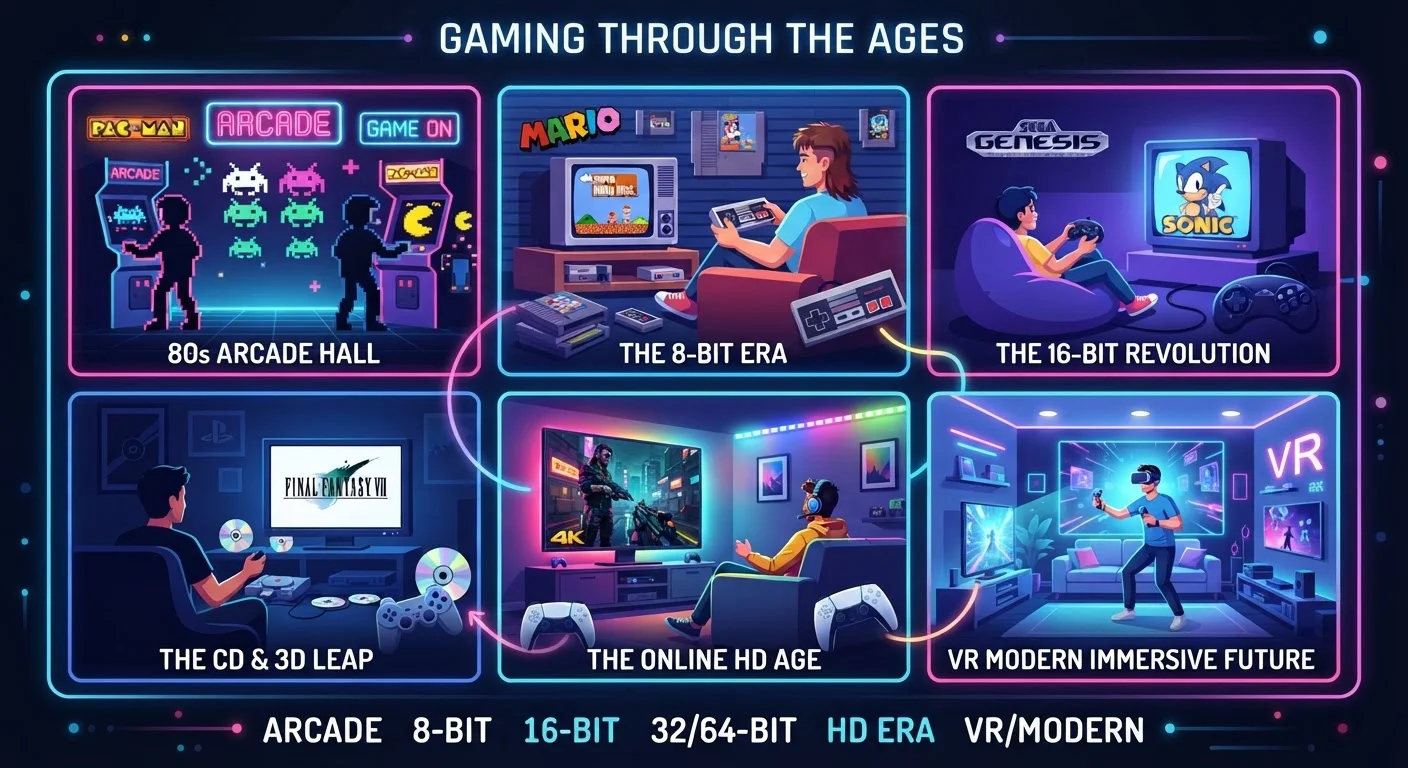
Photo credit: GadgetLite.net | All Things Tech
In this article
From arcade halls to global streaming platforms, trace how gaming culture has transformed across generations and technological shifts.
Key Takeaways
- Gaming began as a coin-operated social activity in public arcades before moving into homes.
- Each hardware generation expanded who could play and what stories games could tell.
- Online connectivity turned gaming from a solo or local hobby into a global community.
- Streaming and mobile devices have made gaming accessible to hundreds of millions worldwide.
- Gaming culture now shapes music, fashion, film, and mainstream entertainment broadly.
The Arcade Era: Where It All Began
Picture a dimly lit room buzzing with electronic beeps, pockets full of quarters, and a crowd gathered around a glowing cabinet. That was the arcade — gaming's very first community space. From the late 1970s into the 1980s, coin-operated machines like Space Invaders, Pac-Man, and Donkey Kong turned interactive entertainment into a genuine social ritual.
Arcades weren't just about high scores; they were neighborhood hubs. Strangers cheered each other on, rivalries formed over initials etched into leaderboards, and a shared language of tips and tricks spread organically. For many people, this was their first taste of what gaming culture really feels like — competitive, communal, and endlessly exciting.
For a deeper look at how the hardware shifted across every era, see our timeline of gaming platforms.
~3.3B
Active gamers worldwide
Industry research organizations have estimated global player counts reached roughly 3.3 billion people by the mid-2020s.
50+ years
Commercial video game history
Commercially available video games trace back to the early 1970s, making the medium over half a century old.
~45%
Mobile share of gaming revenue
Market analysis firms have consistently found mobile platforms account for close to half of total global gaming revenue.
Home Consoles and the Living Room Revolution
When the Atari 2600 arrived in the late 1970s, followed by the Nintendo Entertainment System in the mid-1980s, gaming moved from public spaces into private ones. Suddenly, families and friend groups could play together on their own schedule — no quarters required.
This shift fundamentally changed who games were made for. Developers began crafting longer, story-driven experiences because players could save progress and return. Franchises like The Legend of Zelda and Final Fantasy built worlds worth revisiting for dozens of hours. Meanwhile, the Sega-Nintendo rivalry of the early 1990s introduced something new: brand loyalty as a form of identity. Which console you owned became a statement about who you were.
The 32-bit and 64-bit eras of the mid-to-late 1990s pushed gaming further into pop culture, with mascot characters becoming as recognizable as cartoon icons. Across every genre — from platformers to role-playing games — narrative ambition grew. Curious about genres? Our breakdown of major gaming genres explains what makes each one distinct.
If you're new to gaming history, start with a console generation that interests you and work outward — you don't need to experience every era in order to appreciate where things stand today.
Gaming's history is broad and can feel overwhelming. Anchoring yourself in a familiar era or franchise gives you context without requiring you to start from scratch.
Pay attention to the genres that dominated each decade — they often reflect the technological limits and social moods of their time, making history feel much more alive.
Genre trends track closely with hardware capabilities and cultural moments, so understanding them adds real depth to how you read gaming's evolution.
Online Play and the Rise of Gaming Communities
The arrival of reliable broadband internet in the early 2000s was the catalyst that transformed gaming from a mostly solo or couch co-op hobby into a genuinely global pursuit. Consoles like the Xbox introduced dedicated online services that let players compete and cooperate with strangers across the country — or the planet.
Online multiplayer didn't just add new gameplay mechanics; it seeded entirely new cultures. Guilds, clans, forums, and fan wikis sprang up around beloved titles. Friendships formed between people who had never met in person. The notion of the lone gamer in a basement gave way to something far more social and collaborative.
Online Communities Have a Complicated History
While online gaming created remarkable friendships and communities, it also introduced toxicity, harassment, and gatekeeping that affected many players — particularly women, people of color, and LGBTQ+ gamers. Recognizing this history is part of understanding the culture honestly. Many developers and platforms have since invested in moderation tools and community guidelines, though the work is ongoing.
This era also gave rise to dedicated competitive gaming, or esports, where organized tournaments attracted live audiences and, eventually, major sponsorships. The line between player and spectator began to blur. Explore how single-player and multiplayer cultures each developed their own unique identities.
Streaming, Mobile, and the Democratization of Gaming
Two forces reshaped gaming culture in the 2010s: the smartphone and the live stream. Mobile gaming put playable experiences in billions of pockets, welcoming an enormous wave of players who never owned a traditional console. Casual titles and free-to-play models made entry essentially frictionless.
Simultaneously, platforms dedicated to game broadcasting turned playing into a spectator sport on a massive scale. Watching skilled or entertaining players became a pastime in its own right — sometimes drawing more viewers than traditional sports broadcasts. This content creation ecosystem gave rise to a new kind of gaming celebrity and a new form of community built around shared viewing experiences.
Our article on streaming and content creation dives deep into how this second stage of gaming culture took shape. Cloud gaming services have since pushed accessibility even further, letting players stream titles to almost any screen without specialized hardware — a development chronicled in our Gaming Platforms hub.
Why Gaming Culture Matters Today
Gaming is no longer a niche — it is one of the largest entertainment industries on the planet, and its cultural footprint extends well beyond the screen. Game soundtracks fill concert halls. Game aesthetics influence fashion runways. Characters from game franchises appear in blockbuster films. The creative language games pioneered has permeated how mainstream audiences consume storytelling.
Perhaps more importantly, gaming culture has become a lens through which broader social conversations play out. Questions about representation and diverse storytelling are now front and center in game development and criticism alike. Who gets to see themselves in games — and how — matters deeply to millions of players.
For anyone just stepping into this world, understanding gaming's history isn't just trivia — it's context. It explains why certain communities, habits, and passions exist the way they do. And if you want to explore what gaming culture means at a deeper level, our guide to gaming culture decoded is a great next step.
“Games are the only medium that lets you inhabit a story rather than observe it — that distinction changes everything about how culture gets built around them.”
— Jane McGonigal, Game designer and author of 'Reality Is Broken'

Author
Gaming Editorial Team
Gaming Editorial Team is the collective byline for our editorial team and contributor network. Articles published under this byline or an editorial pen name are researched, written, and reviewed according to our editorial standards for clarity, consistency, and independence before publication.
View all articles →