
Esports vs. Casual Gaming: Two Worlds Under the Same Roof
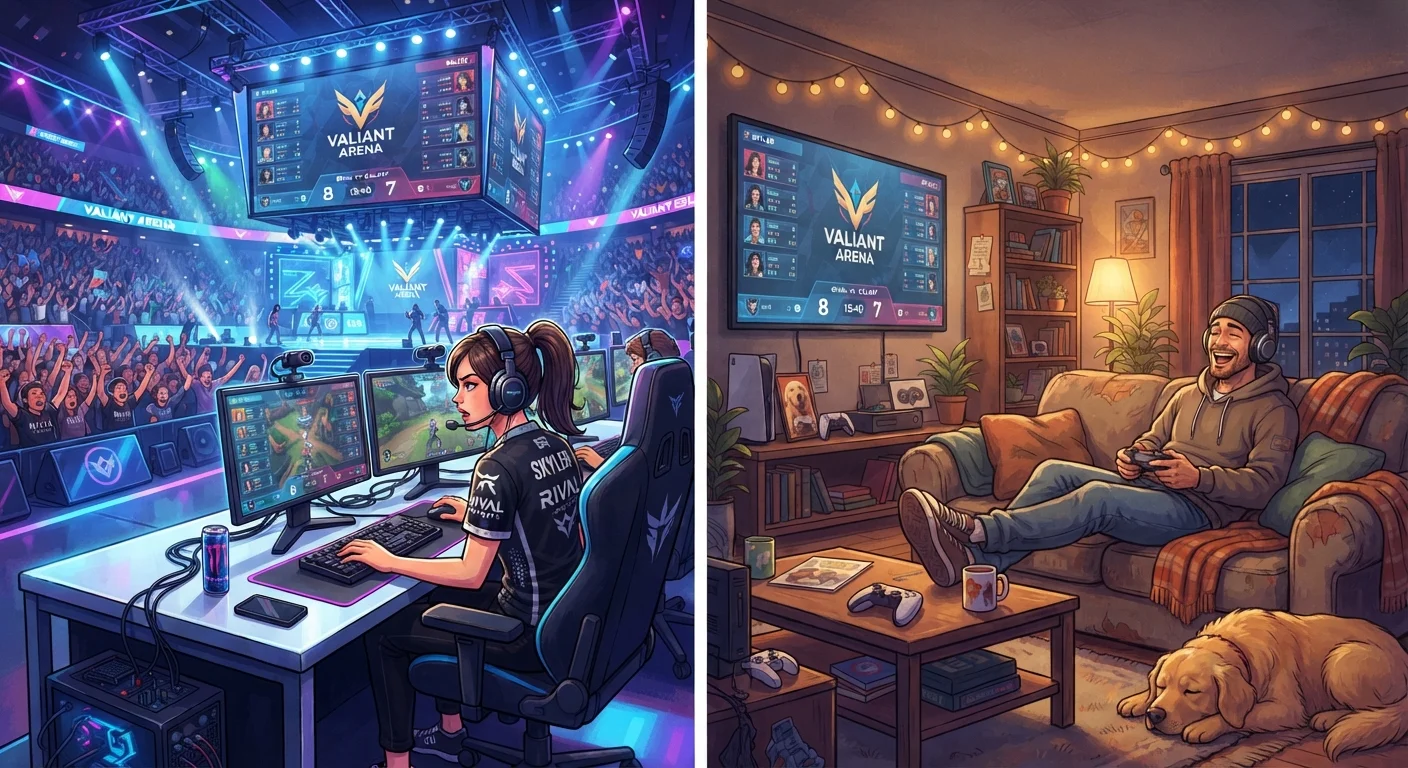
Photo credit: GadgetLite.net | All Things Tech
In this article
Competitive esports and casual gaming share a hobby but differ wildly in culture, commitment, and community. Here's how they compare.
Key Takeaways
- Esports involves structured competition with professional leagues, coaches, and prize pools; casual gaming has no such requirements.
- Casual gaming is defined by player intent and pace — enjoyment over performance — not the game title itself.
- Both communities overlap in spaces like streaming platforms, gaming events, and shared game libraries.
- The line between casual and competitive can blur; many players move fluidly between both modes.
- Neither style is superior — they serve genuinely different needs and personalities.
What Actually Separates Esports from Casual Gaming?
At first glance, esports and casual gaming look like the same thing — people playing video games. But zoom in, and the differences in structure, mindset, and community become striking. Understanding those differences is a great entry point into gaming culture broadly.
Esports (short for electronic sports) refers to organized, competitive gaming at a structured level. Think professional leagues, coaches, practice schedules, sponsorships, and tournaments with significant prize pools. Games like League of Legends, Counter-Strike 2, and Valorant have entire ecosystems built around competitive play, complete with drafted teams, analysts, and packed arenas.
Casual gaming, by contrast, is defined less by the game and more by the player's intent. A casual gamer plays for enjoyment, relaxation, or social connection — not to climb a ranked ladder. The same game title can be experienced casually or competitively depending entirely on how someone approaches it.
| Criterion | Esports | Casual Gaming |
|---|---|---|
| Primary goal | Win, rank up, compete | Enjoy, relax, explore |
| Time commitment | High — structured practice | Flexible — play at your pace |
| Community structure | Teams, leagues, organizations | Loose, interest-based groups |
| Skill emphasis | Precision and mastery required | Skill is optional, fun is the point |
| Entry barrier | Higher — rank and gear matter | Low — pick up and play |
| Spectator culture | Huge — live events, pro streams | Exists, but less formalized |
| Typical platforms | PC, console (competitive titles) | Console, PC, mobile — all of them |
Culture, Commitment, and Community
The cultural gap is real but not hostile. Esports culture tends to celebrate dedication, mechanical skill, and game knowledge. Following a team, analyzing meta strategies (the dominant tactics at any given time), and logging significant practice hours are common among competitive players. For a deeper look at how the competitive scene is structured, our beginner's overview of esports is a great next read.
Casual gaming culture is broader and arguably more diverse. It spans couch co-op nights, solo story adventures, and quick mobile sessions during a lunch break. The mobile gaming world alone shows just how wide casual play has grown — far beyond simple puzzle games.
Both communities converge at live gaming events and conventions, on streaming platforms like Twitch and YouTube Gaming, and in shared online spaces. Many casual players are avid esports spectators; plenty of esports competitors unwind with low-stakes casual play.
500M+
Global esports audience size
Newzoo's global esports reports have tracked the worldwide esports audience surpassing 500 million viewers and enthusiasts in recent years.
3B+
Estimated global gamers overall
Industry analysts broadly estimate more than 3 billion people worldwide play video games, the vast majority in casual or non-competitive contexts.
Choosing Your Lane — Or Playing Both
The refreshing truth is that esports and casual gaming aren't a binary choice. Most people who identify as gamers slide between modes depending on the day. You might grind ranked matches in Rocket League on weekends while spending weekday evenings exploring a single-player RPG at your own pace. That's completely normal — and it reflects how gaming actually works for most people.
What matters is matching your gaming habits to your goals. If competition, measurable improvement, and the thrill of organized play appeal to you, exploring the esports side of a game you already enjoy is a natural step. If you want flexibility, variety, and zero pressure, casual gaming offers an enormous and welcoming space.
Platform choice can also shape the experience. Whether you're on a console, PC, or mobile device, each comes with its own competitive and casual ecosystems — something worth exploring in our comparison of console vs. PC gaming. And if you're curious about single-player vs. multiplayer culture, that divide maps closely onto the casual-vs-competitive conversation too.
Neither path is better. Both are genuinely valid ways to be a gamer.
The 'Casual' Label Isn't an Insult
In gaming circles, 'casual' is sometimes used dismissively, but it simply describes a style of play — not a player's intelligence or dedication. Many casual gamers have played for decades and have deep knowledge of gaming history and culture. The label is about intent, not ability.

Author
Gaming Editorial Team
Gaming Editorial Team is the collective byline for our editorial team and contributor network. Articles published under this byline or an editorial pen name are researched, written, and reviewed according to our editorial standards for clarity, consistency, and independence before publication.
View all articles →