
Representation in Games: Why Diverse Characters and Stories Matter
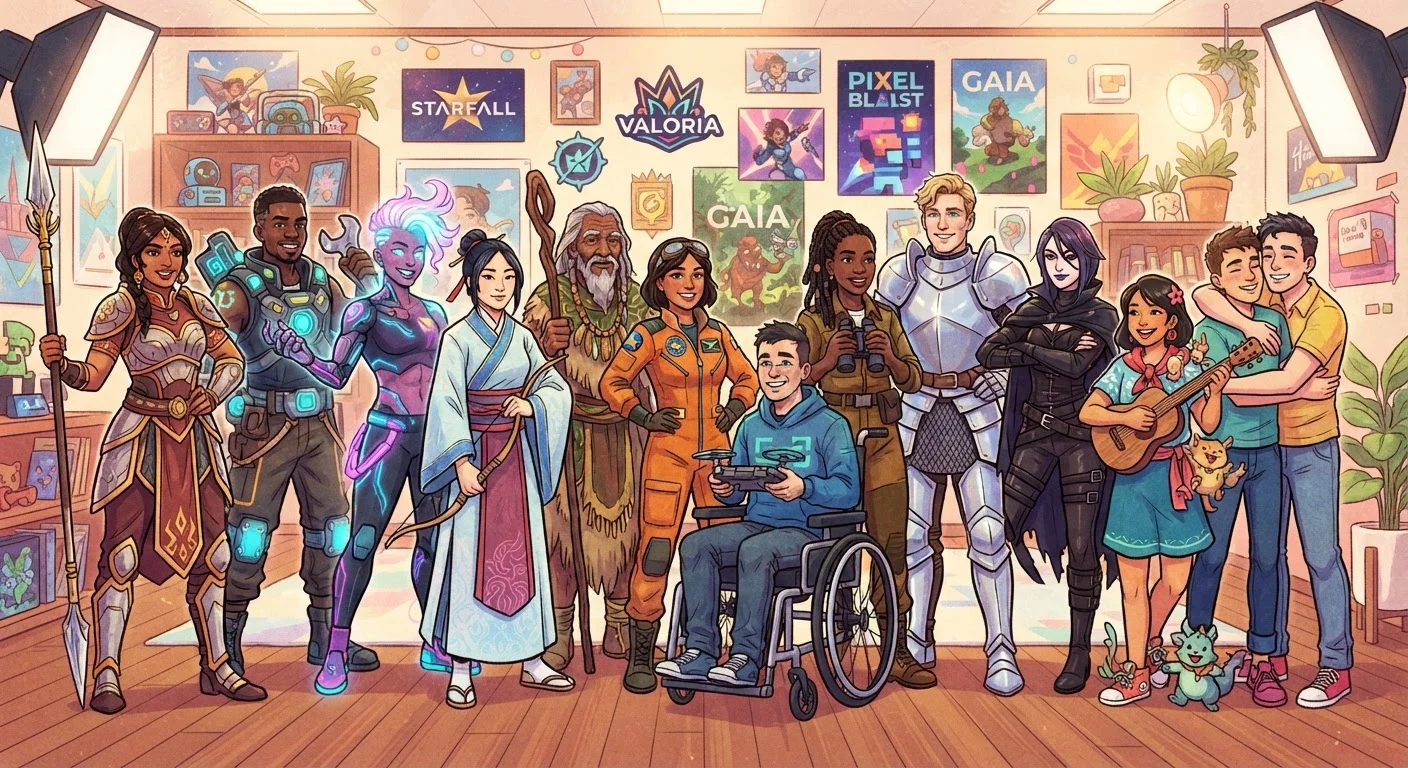
Photo credit: GadgetLite.net | All Things Tech
In this article
Who gets portrayed in games — and how — has become a central cultural debate. This explainer covers the issue and the conversations surrounding it.
Key Takeaways
- Gaming's audience is enormous and diverse, yet character rosters have historically skewed narrow.
- Representation affects player immersion, emotional connection, and sense of belonging in gaming communities.
- The conversation around representation is part of the broader evolution of gaming culture.
- More studios are intentionally expanding the diversity of characters and narratives in their games.
- Criticism of representation can be constructive — it often leads to richer, more imaginative storytelling.
Who Gets to Be the Hero?
For much of gaming's early history, the default protagonist was a narrow archetype: a white male hero on a mission. That wasn't a conscious conspiracy — it reflected the demographics of early development studios and assumptions about who was buying consoles. But gaming's audience grew far faster and more diversely than its character rosters did.
Today, roughly half of all gamers in the United States identify as women, and the player base spans every age group, ethnicity, and background. Understanding why the characters in games matter to that enormous audience is central to understanding modern gaming culture. For a deeper look at how this culture developed, see our explainer on gaming culture.
~48%
US gamers who identify as women
According to the Entertainment Software Association's annual industry reports, the US gaming audience has been roughly gender-balanced for several years.
3 in 10
Lead game characters who are women
Industry analyses have repeatedly found that female protagonists remain underrepresented relative to the actual player demographic split.
~215M
Video game players in the US
The ESA estimates more than 215 million Americans play video games, making it one of the most demographically broad entertainment mediums.
Why Representation Has Real Emotional Stakes
Games are uniquely immersive compared to other media — you don't just watch a character, you inhabit them. That interactivity raises the emotional stakes of representation considerably. When a player spends 40 hours guiding a character through a story, the question of whether that character reflects their own identity, values, or lived experience becomes genuinely meaningful.
Research in media psychology consistently finds that seeing oneself reflected in media reinforces a sense of belonging and social validity. The inverse is also documented: consistent absence or negative stereotyping can contribute to feelings of exclusion. This is why the representation debate in gaming is rarely just about aesthetics — it touches on who the medium treats as its "default" audience.
Representation Isn't Just About the Player Character
The conversation extends beyond who the protagonist is. Supporting characters, villains, background civilians, and the cultures depicted in a game's world all contribute to its overall representational picture. A game with a diverse lead but stereotyped supporting cast still has work to do. Story, dialogue, and visual design all carry meaning.
The Conversation Is Evolving — and That's a Good Thing
Pushback against narrow representation in games became a prominent cultural flashpoint in the 2010s, and the debate has matured considerably since. Critics, players, and developers now engage in more nuanced conversations — distinguishing between surface-level diversity (adding a character of color to a roster) and deep, thoughtful inclusion (crafting stories that authentically explore different cultural experiences).
Many studios have responded substantively. Games across genres — from sweeping role-playing adventures to indie storytelling experiences — now feature protagonists and supporting casts that reflect a much wider slice of humanity. The different gaming genres have each responded to this shift in their own ways, with some, like narrative RPGs, leading the charge.
Engage With the Conversation Thoughtfully
If you're new to the representation debate in gaming, it helps to approach it with curiosity rather than defensiveness. Critics raising concerns about character portrayals are generally advocating for richer, more imaginative games — not fewer. Reading or listening to perspectives from players who feel underrepresented can genuinely deepen your appreciation of why storytelling choices matter.
The myths about who plays games have also been central to this conversation — outdated stereotypes about the "typical gamer" have long been used, incorrectly, to justify narrow representation.
What Good Representation Actually Looks Like
Strong representation isn't a checklist — it's a craft decision. A well-represented character has a genuine arc, motivations that exist beyond their identity, and a place in the story that doesn't feel grafted on. Players have become adept at recognizing the difference between a character who exists to demonstrate inclusion and one who earns their place through compelling writing.
Studios that engage directly with the communities they're depicting — through consultants, writers from those communities, or direct feedback — tend to produce more authentic results. This is part of how gaming culture has grown more self-aware over time, a transformation traced in the history of gaming culture.
Ultimately, broader representation tends to make games better — more varied worlds, more original stories, and more reasons for a wider range of players to fall in love with the medium. That's something every gaming fan can get behind.
Frequently Asked Questions

Author
Gaming Editorial Team
Gaming Editorial Team is the collective byline for our editorial team and contributor network. Articles published under this byline or an editorial pen name are researched, written, and reviewed according to our editorial standards for clarity, consistency, and independence before publication.
View all articles →