
Smartwatch or Fitness Tracker: Understanding the Real Difference
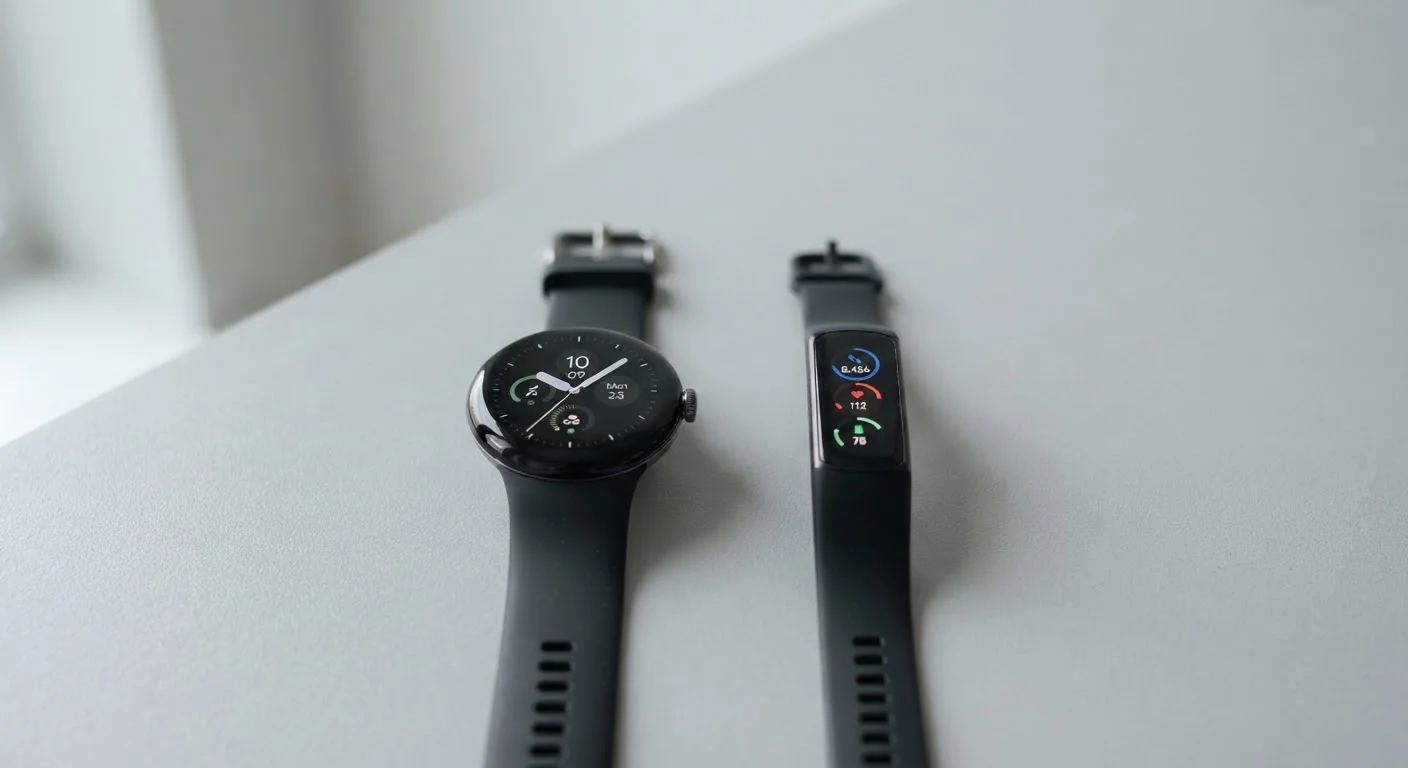
Photo credit: GadgetLite.net | All Things Tech
In this article
Smartwatches and fitness trackers often get confused. Learn what sets them apart so you know which kind of device suits your lifestyle.
Key Takeaways
- Smartwatches function as miniature computers with apps, calls, and notifications; fitness trackers focus narrowly on health metrics.
- Fitness trackers generally offer longer battery life — often a week or more — compared to most smartwatches.
- Both device types now include heart rate monitoring, but smartwatches tend to offer more advanced health sensors.
- Smartwatches cost more on average; fitness trackers are usually a more budget-accessible entry point into wearables.
- The right choice depends on whether your priority is connectivity and versatility or simplicity and endurance.
What Each Device Is Actually Designed to Do
Both a smartwatch and a fitness tracker sit on your wrist, and both can count your steps — so it's easy to assume they're basically the same thing. They're not. The difference lies in what each device treats as its core job.
A smartwatch is a miniature computing platform. It mirrors your smartphone's notifications, runs independent apps, supports voice assistants, and on many models enables contactless payments or even standalone calls. Think of it as an extension of your phone — something that reduces how often you need to pull a device from your pocket. For a deeper look at what smartwatches handle beyond basic timekeeping, see what a smartwatch actually does beyond telling time.
A fitness tracker has a narrower mandate: capture health and activity data as accurately and unobtrusively as possible. Steps, heart rate, sleep stages, calories burned, and workout sessions are its primary outputs. The interface is typically minimal — often just a slim band with a small display or no screen at all — because the data is meant to be reviewed later in a companion app, not acted upon in real time.
Neither design is inherently superior. They're optimized for different user intentions, which is why comparing them directly only makes sense once you're clear on what you actually need from a wearable. Explore the broader Wearables & Accessories category for more context on how these devices fit into daily life.
Key Differences: Features, Battery, and Sensors
Once you move past the shared step-counting basics, the feature gap between these two device categories becomes significant.
| Criterion | Smartwatch | Fitness Tracker |
|---|---|---|
| Primary purpose | Connectivity, apps, and health tracking | Health and activity monitoring |
| Typical battery life | 1–2 days | 5–14 days |
| Notifications and apps | Yes — full app ecosystem | Limited or none |
| Advanced health sensors | Common (ECG, SpO2, temp) | Basic heart rate; varies by model |
| Display | Full color touchscreen | Small screen or no screen |
| Form factor | Watch-like, larger | Slim band, lightweight |
| Typical price range | Higher | Lower to mid-range |
Battery life is one of the starkest differences. Most smartwatches require daily or every-other-day charging because their processors and displays are power-hungry. Fitness trackers — with simpler hardware and smaller screens — routinely last five to fourteen days on a single charge, making them notably lower-maintenance.
Health sensor depth varies too. While both device types now commonly include optical heart rate monitors, smartwatches are more likely to carry advanced sensors such as electrocardiogram (ECG) readers, blood oxygen (SpO2) monitors, and skin temperature sensors. That said, it's worth understanding what these sensors can and cannot reliably tell you — see wearable health sensors: what they can and cannot tell you for an honest assessment.
5–14 days
Typical fitness tracker battery life
Most fitness trackers significantly outlast smartwatches, which average one to two days between charges, based on general manufacturer specifications.
~50%
Wearable users who primarily track fitness
Industry surveys consistently show that health and fitness monitoring is the leading reason consumers adopt wearable devices.
Price reflects the complexity gap. Entry-level fitness trackers can cost a fraction of what mainstream smartwatches command, making them more accessible for users who aren't ready to commit to a full wrist-worn platform.
How to Decide Which One Fits Your Life
The practical question isn't which device is objectively better — it's which one matches how you actually live and what you genuinely want from a wearable.
If your day involves a lot of back-and-forth communication, calendar management, or situations where pulling out a phone is inconvenient, a smartwatch makes that friction disappear. It's also the stronger choice if you want a single device that bridges connectivity and health tracking. For a candid look at what living with a smartwatch involves day to day, Living With a Smartwatch: The Honest Trade-Offs is worth reading before you commit.
If your goal is simply to build better habits around movement and sleep — without the pull of notifications or the obligation to charge every night — a fitness tracker removes the noise. It keeps the focus on your body rather than your inbox. Be aware, though, that long-term tracker use comes with its own considerations: Wearing a Fitness Tracker Long-Term: The Honest Trade-Offs covers both the benefits and the caveats clearly.
There's also meaningful middle ground. The line between these categories has blurred as manufacturers add more health features to smartwatches and more notification capabilities to trackers. Fitness Trackers and Smartwatches: Where They Overlap and Where They Don't maps that overlap in detail if you're finding it hard to categorize a specific device you're considering.
When the Categories Overlap
Many mid-range and premium devices now blur the line between smartwatch and fitness tracker. Some fitness bands have added notification mirroring; some smartwatches now rival dedicated trackers on sleep and activity accuracy. If a specific device seems to straddle both categories, focus on which features you'll use most rather than which label applies. Fitness Trackers vs Smartwatches: Which One Fits Your Life? can help you work through that decision.

Author
Electronics Editorial Team
Electronics Editorial Team is the collective byline for our editorial team and contributor network. Articles published under this byline or an editorial pen name are researched, written, and reviewed according to our editorial standards for clarity, consistency, and independence before publication.
View all articles →