
The Sensors Inside Your Wearable and What They're Actually Measuring
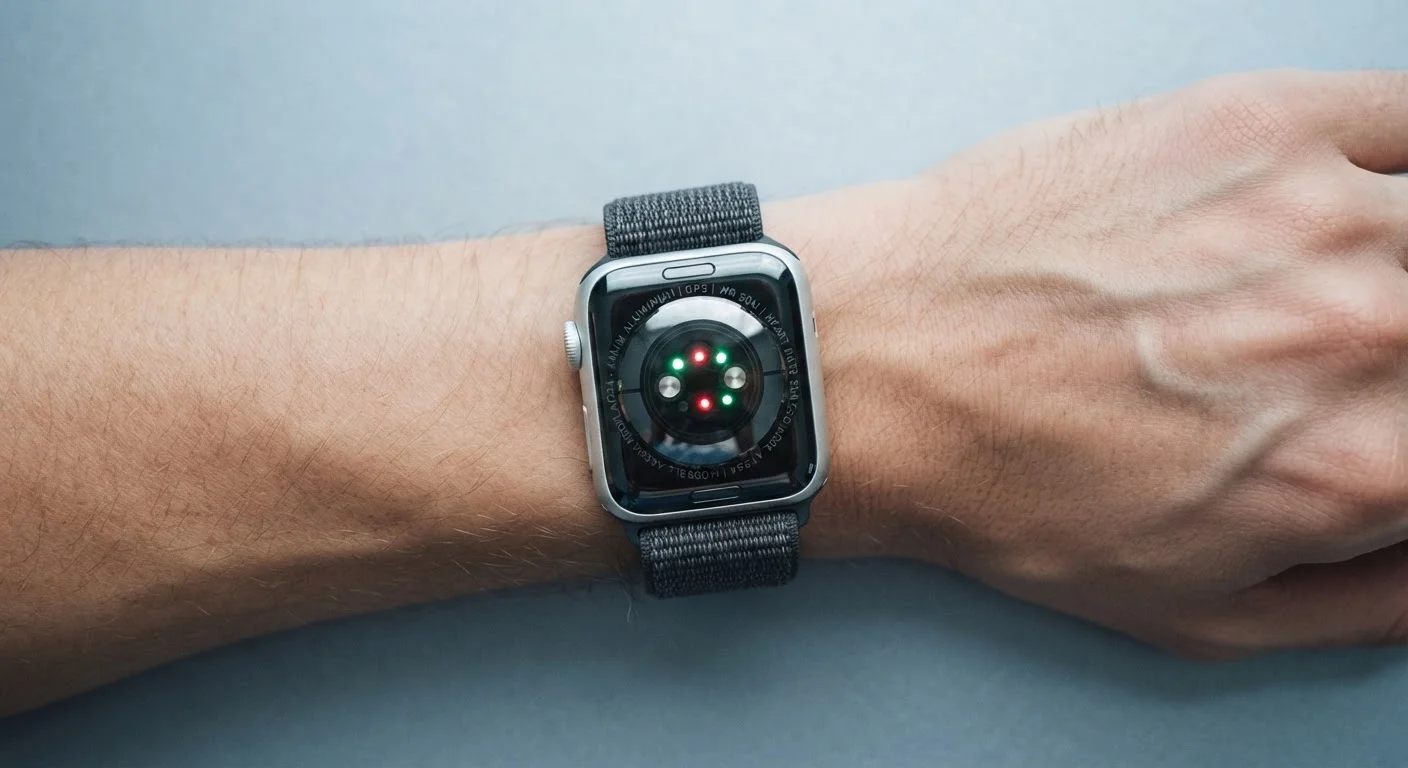
Photo credit: GadgetLite.net | All Things Tech
In this article
From optical heart-rate monitors to SpO2 sensors, this guide unpacks what each wearable sensor does and how reliable its data really is.
Key Takeaways
- Optical heart-rate sensors estimate pulse by detecting blood volume changes under the skin.
- SpO2 sensors use two light wavelengths to approximate blood oxygen saturation — not a clinical measurement.
- Accelerometers and gyroscopes together power step counting, sleep staging, and fall detection.
- Skin temperature sensors measure surface temperature, which differs from core body temperature.
- ECG sensors in wearables can flag irregular rhythms but are not a substitute for a medical-grade EKG.
- Sensor accuracy depends heavily on fit, skin tone, motion, and placement on the body.
The Optical Sensor: Reading Your Blood With Light
The most common sensor in any wearable is the PPG (photoplethysmography) sensor — usually visible as a cluster of green LEDs on the device's underside. It works by shining light into your skin and measuring how much reflects back. Because blood absorbs green light, each heartbeat causes a small, detectable dip in reflected light. The device counts those dips to estimate heart rate.
For SpO2 (blood oxygen saturation), the same principle applies but using red and infrared light instead. Oxygenated and deoxygenated blood absorb these wavelengths differently, so the ratio between the two gives an approximation of oxygen saturation. This is why SpO2 readings require holding still — motion scrambles the signal.
PPG sensors are also the foundation for heart rate variability (HRV) tracking, which measures the millisecond variations between beats. Some apps use HRV as a loose proxy for recovery status and autonomic stress response, though the science connecting consumer HRV readings to actionable health insights is still evolving.
PPG Accuracy and Skin Tone
Multiple studies have found that optical PPG sensors can be less accurate for people with darker skin tones, because higher melanin concentrations affect light absorption. Regulatory bodies and some manufacturers have begun requiring or recommending more inclusive testing protocols, but the gap has not been fully closed across all devices and conditions.
Motion Sensors: How Your Device Knows You're Moving
Two sensors handle movement: the accelerometer, which detects linear acceleration in three axes (forward/back, left/right, up/down), and the gyroscope, which measures rotational movement. Together, they form the backbone of step counting, workout detection, sleep staging, and fall detection.
Step counting algorithms look for the rhythmic, repetitive acceleration pattern of walking or running. Sleep tracking uses subtle shifts in wrist movement — or the absence of it — alongside heart rate changes to estimate sleep stages. Fall detection looks for a sharp acceleration spike followed by sudden stillness, which matches the signature of a fall.
~95%
PPG heart rate accuracy during rest
Consumer wearable optical heart rate sensors generally achieve around 95% accuracy at rest, but accuracy can drop significantly during vigorous exercise, according to peer-reviewed studies comparing wearables to chest-strap ECG references.
1–2%
Typical SpO2 margin of error
Most consumer wearables report SpO2 within 1–2 percentage points of a clinical pulse oximeter under ideal conditions, though motion, skin tone, and fit can widen this margin considerably.
3–5°F
Difference: wrist vs. core body temperature
Skin temperature at the wrist consistently reads lower than core body temperature, which is why consumer wearables track relative change from a personal baseline rather than absolute temperature values.
Because motion sensing is algorithmic, edge cases trip it up. A bumpy car ride can register false steps; very slow movement during cycling may undercount activity. Understanding that these are estimates — not perfect measurements — helps set realistic expectations. For a deeper look at how these readings translate to health insight, see how accurate wrist-based health tracking really is.
ECG, Temperature, and Emerging Sensors
A growing number of wearables include an ECG (electrocardiogram) sensor, typically activated by pressing a finger on the device's crown or bezel to complete an electrical circuit. This single-lead reading can detect the P, QRS, and T waves of a heartbeat cycle, enabling the device to flag irregular rhythms — most notably atrial fibrillation (AFib). It is not equivalent to a clinical EKG, which uses 12 leads placed across the body, but it has proven useful for early AFib detection in real-world cases.
Skin temperature sensors measure the temperature at the surface of your wrist, which typically runs 3–5°F cooler than core body temperature. Wearables use nightly temperature trends rather than absolute values — a consistent deviation from your personal baseline may indicate illness or, in some platforms, signal a phase of the menstrual cycle.
Bioelectrical impedance sensors, found in a smaller number of devices, pass a tiny electrical current through the body to estimate body composition metrics like muscle mass and body fat percentage. These are particularly sensitive to hydration levels, so readings can vary significantly day to day.
Get Consistent Readings With One Simple Habit
For overnight metrics like skin temperature, SpO2, and HRV, wear your device consistently every night rather than intermittently. These sensors establish a personal baseline over time, and missing nights creates gaps that make trend data less reliable. Regularity matters more than any individual reading.
For a broader picture of how all these components fit together in a complete device, the full wearable device guide from sensors to ecosystems covers the hardware-to-software pipeline in more detail.
What Affects Sensor Accuracy — and What You Can Do About It
No wearable sensor operates in a vacuum. Accuracy is shaped by a constellation of factors: how snugly the device sits on your wrist, your skin tone, tattoos, ambient temperature, body hair, and how much you're moving during a reading. Optical sensors in particular are sensitive to motion artifacts — the noise introduced when the sensor shifts against the skin.
Fit is arguably the single biggest variable. A loose band allows light to leak in from outside, throwing off PPG readings. Wearing the device slightly above the wrist bone (rather than directly over it) gives the sensor better contact with the radial artery. For more practical guidance on maximizing reading quality, getting accurate readings from health wearables walks through fit, placement, and usage habits in detail.
The key takeaway is that wearable sensors generate useful trend data for most people — patterns over days and weeks that can surface meaningful changes. They are not diagnostic tools, and their outputs should not be used to make medical decisions without professional guidance. For a plain-language breakdown of where wearable health data is and isn't reliable, wearable health sensors: what they can and cannot tell you is a useful companion read.
Frequently Asked Questions

Author
Releases Editorial Team
Releases Editorial Team is the collective byline for our editorial team and contributor network. Articles published under this byline or an editorial pen name are researched, written, and reviewed according to our editorial standards for clarity, consistency, and independence before publication.
View all articles →