
Fitness Trackers and Smartwatches: Where They Overlap and Where They Don't
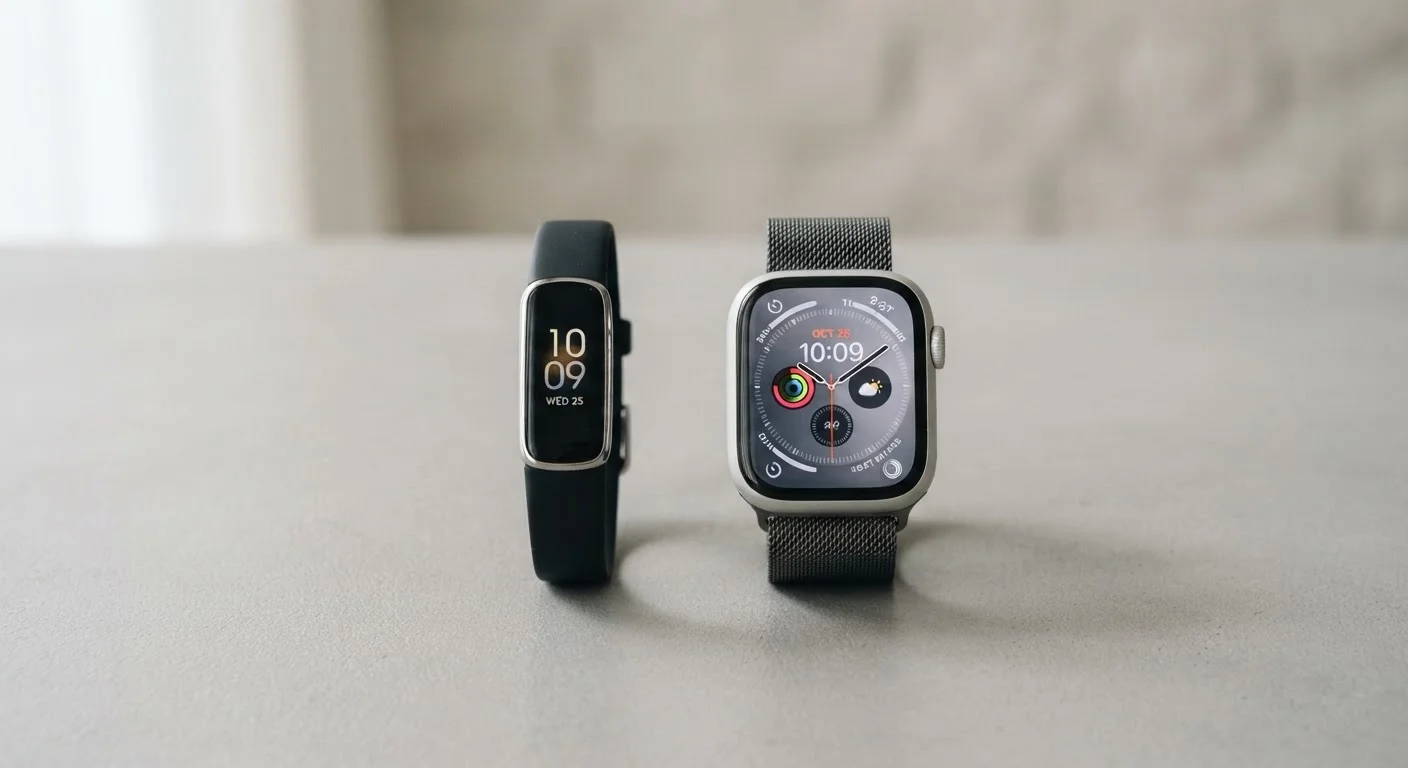
Photo credit: GadgetLite.net | All Things Tech
In this article
Fitness trackers and smartwatches share features but serve different needs. See how they compare before you commit to either.
Key Takeaways
- Fitness trackers prioritize health metrics and battery endurance over app functionality.
- Smartwatches extend smartphone features to your wrist, with fitness tracking built in.
- Both device types now share core health sensors like heart rate and sleep monitoring.
- Smartwatches typically cost more and last fewer days between charges.
- Your choice depends on whether connectivity or health focus matters more to you.
What Each Device Actually Is
The line between fitness trackers and smartwatches has blurred considerably over the past few years — but they're still different tools built around different priorities. Understanding where each comes from helps clarify what you're actually buying.
A fitness tracker is a wearable designed primarily to monitor physical activity and health metrics. Early versions counted steps and not much else. Today's models add heart rate sensors, sleep stage tracking, blood oxygen readings, and stress scores. The hardware is typically slim, the software is purpose-built, and the battery life is generous — often lasting a week or more.
A smartwatch is closer to a miniature smartphone attached to your wrist. It runs a full operating system, supports downloadable apps, delivers notifications from your phone, and often includes contactless payment capability. Fitness features — step counts, heart rate, workout detection — are included, but they share screen time with everything else the device does. For a broader look at how these devices fit into daily life, see the Wearables & Accessories hub.
Where They Share Common Ground
The overlap is real and growing. Both device categories now routinely include:
- Heart rate monitoring — optical sensors on the underside of the device track pulse continuously throughout the day.
- Sleep tracking — both types log sleep duration and, in many cases, light, deep, and REM sleep stages.
- Step and activity counting — accelerometers detect movement and estimate daily active minutes and calorie burn.
- Smartphone notifications — most modern fitness trackers surface call and text alerts, even if interaction is limited to viewing them.
- Water resistance — swim-safe ratings are now common across both categories.
This convergence means someone shopping purely for heart rate monitoring or step tracking won't necessarily notice a meaningful difference between the two in day-to-day use. The distinction sharpens when you look at what each device does beyond those shared basics.
| Criterion | Fitness Tracker | Smartwatch |
|---|---|---|
| Primary focus | Health and activity monitoring | Connectivity and apps |
| Battery life | 5–14 days typical | 1–3 days typical |
| Third-party apps | Not supported | Supported (watchOS, Wear OS) |
| Notification interaction | View only (most models) | View and reply |
| Contactless payments | Rare | Common |
| Display size | Compact, glanceable | Larger, interactive |
| Entry price range | Under $50–$150 | $200–$400+ |
| Form factor | Slim band, lightweight | Larger case, heavier |
Where They Genuinely Differ
Despite shared sensors, the gap in overall capability remains significant.
Battery life is the starkest difference. Smartwatches — particularly those with bright displays and always-on connectivity — typically need charging every one to three days. Many fitness trackers last five to fourteen days on a charge. For sleep tracking continuity, that matters.
App ecosystems set smartwatches apart. Platforms like watchOS and Wear OS let you install apps for navigation, music streaming, coaching, and more. Fitness trackers run closed software — they sync to a companion app on your phone, but the device itself doesn't run third-party software.
Display size and interactivity differ noticeably. Smartwatches have larger touchscreens suited to reading messages or browsing menus. Fitness trackers often use smaller displays designed mainly for quick glances at data.
Price reflects these differences. Entry-level fitness trackers can cost under $50. Capable smartwatches typically start around $200 and climb steeply from there.
For users who train seriously, athletic vs. wellness wearable distinctions add another layer worth considering.
7–14 days
Typical fitness tracker battery life
Most major fitness tracker manufacturers publish this range in device specifications for standard usage modes.
1–3 days
Typical smartwatch battery life
Battery duration for smartwatches varies by screen brightness and connectivity settings, per manufacturer specifications.
$200+
Common smartwatch entry price
Mid-range smartwatches from established platforms generally start around this price point in the US market.
Which One Fits Your Life?
The honest answer depends on your daily friction points. If you frequently look at your phone for notifications, a smartwatch reduces the number of times you pull it out of your pocket — that's a real convenience. If you find smartwatches visually busy or you hate charging a device every night, a fitness tracker's simplicity becomes a genuine advantage.
Neither device is objectively better. A fitness tracker worn consistently delivers more useful long-term health data than a smartwatch that spends half its time on the charger. Conversely, a smartwatch that also handles your commute navigation and payment taps replaces several separate habits efficiently.
Think about what you'd actually use. If the answer is "track my sleep and workouts, nothing more," a fitness tracker delivers that without the overhead. If the answer is "stay connected without checking my phone constantly," a smartwatch earns its extra cost and complexity. Our deeper look at which device fits your daily routine walks through that decision in more detail.
Also worth considering before committing: the honest long-term trade-offs of wearing a fitness tracker, including data privacy and accuracy caveats that apply to both categories.

Author
Releases Editorial Team
Releases Editorial Team is the collective byline for our editorial team and contributor network. Articles published under this byline or an editorial pen name are researched, written, and reviewed according to our editorial standards for clarity, consistency, and independence before publication.
View all articles →