
Why Sleep Tracking Data Looks Different Across Devices
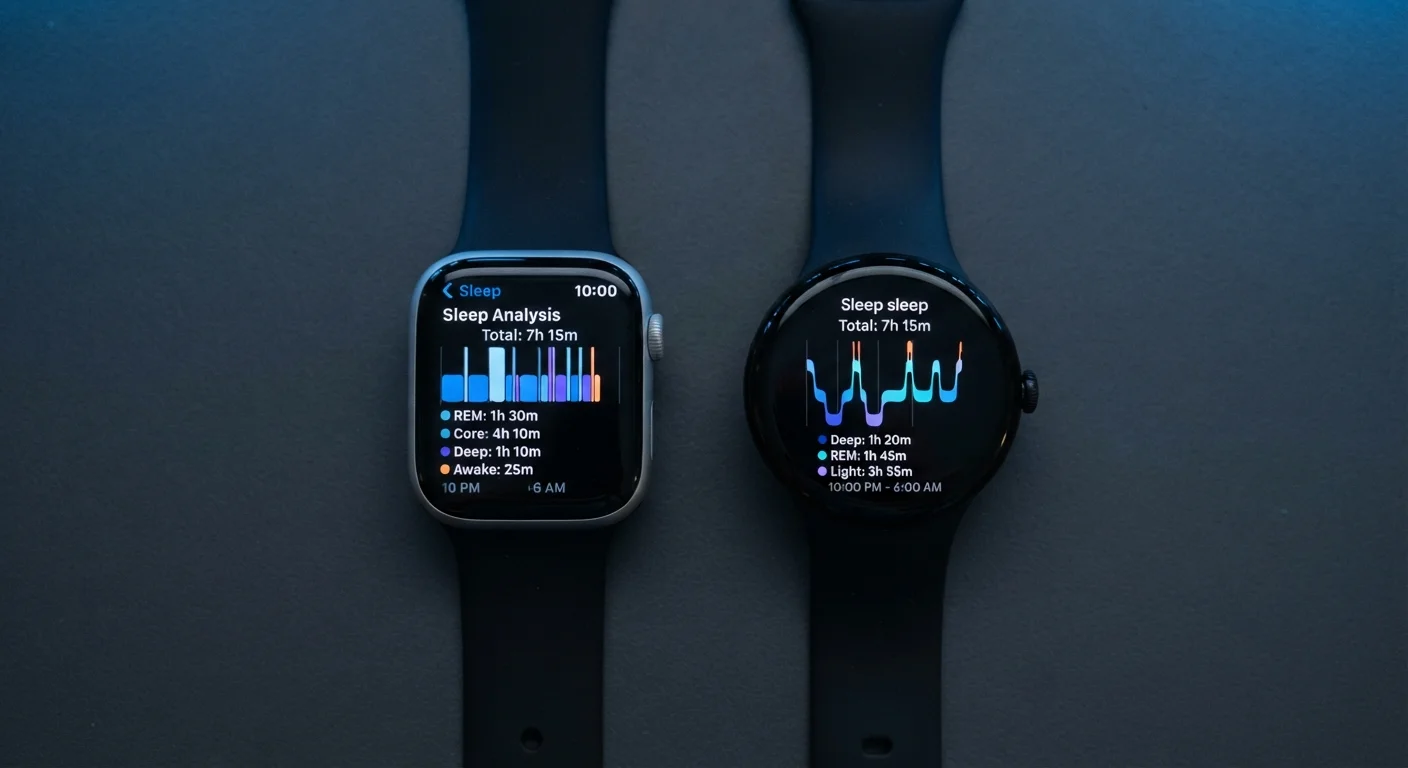
Photo credit: GadgetLite.net | All Things Tech
In this article
The same night's sleep can produce very different readings on different wearables. Here's why that happens and what it means for the data you see.
Key Takeaways
- No two wearables use the same algorithm to classify sleep stages, so disagreements between devices are normal.
- Hardware differences — particularly sensor quality and placement — directly affect the raw data each device collects.
- A wearable's sleep 'score' is a proprietary formula, not a universal medical standard.
- Tracking trends over time on a single device is more useful than comparing numbers between devices.
- Fit, skin contact, and body position during sleep can shift readings on any tracker.
The Core Problem: Estimation, Not Measurement
Your wearable can't read your brain waves. That's the fundamental issue behind all sleep tracking variability. Clinical sleep studies use electroencephalography (EEG) — electrodes on your scalp recording electrical brain activity — to precisely identify when you shift between light sleep, deep sleep, and REM (rapid eye movement) sleep. Your smartwatch has no such capability.
Instead, consumer devices rely on two main data sources: an optical heart-rate sensor (which shines light through your skin to detect blood flow changes) and an accelerometer (which measures movement). From those two inputs, each manufacturer's software team builds an algorithm that translates heart rate patterns and stillness into estimated sleep stages. The word estimated is doing a lot of work there.
Because the underlying data is indirect and the algorithms are proprietary, two devices measuring the same wrist on the same night can legitimately arrive at different conclusions. This isn't a defect — it's a design reality. See our guide to wearable sensors for a deeper look at how each component works and what it can realistically detect.
Sleep Stage Labels Are Approximations
When your app shows a bar labeled 'REM' or 'Deep Sleep,' it's displaying the device's best inference from indirect signals — not a direct observation of brain activity. Manufacturers generally acknowledge this in their documentation, though it's easy to overlook. Treat stage breakdowns as directional rather than precise.
What Makes Each Device's Reading Unique
Three layers of difference separate one device's sleep data from another's:
- Hardware quality: Higher-grade optical sensors sample heart rate more frequently and with less noise, giving the algorithm better raw material to work with. A cheaper sensor polling every few minutes will miss subtle heart rate shifts that help distinguish light from deep sleep.
- Algorithm design: This is the biggest variable. Each brand trains its models differently — some use larger datasets, some incorporate additional signals like skin temperature or blood oxygen, and some are simply more conservative about labeling a period as REM. There's no industry-wide standard for how these models must behave.
- Proprietary scoring: Many devices distill a night into a single 'sleep score.' That number is a weighted formula unique to each platform. A high score on one app and a mediocre score on another can describe the exact same night — because they're measuring by different rulers.
Research on wearable health tracking accuracy consistently finds that stage-level sleep classification is where consumer devices struggle most, while total sleep duration estimates tend to be closer to clinical benchmarks.
~78%
Accuracy estimating total sleep time
Studies published in sleep medicine journals suggest consumer wearables estimate total sleep duration with roughly 78% accuracy compared to polysomnography, though stage-level accuracy is lower.
~50%
Accuracy for deep sleep stage detection
Independent research has found consumer devices can misclassify deep (slow-wave) sleep stages as often as half the time when compared against clinical EEG recordings.
How to Use Sleep Data More Sensibly
The practical takeaway isn't to distrust your tracker entirely — it's to use it correctly. Here's how:
- Pick one device and stick with it. Trends on a single platform are meaningful even if the absolute numbers aren't perfect. If your deep sleep percentage drops every night you exercise late, that pattern is real and actionable regardless of whether the figure is exactly right.
- Don't compare scores across platforms. Swapping from one wearable ecosystem to another and expecting continuity in your data is a recipe for confusion. Treat each platform's history as its own baseline.
- Fix the physical variables you can control. Sensor contact and fit matter. Proper wearable fit and placement reduce motion artifacts that inflate wakefulness readings, giving the algorithm cleaner input to work from.
- Use sleep data for context, not diagnosis. Consistent patterns that concern you — chronic poor sleep quality, unusually high resting heart rate overnight — are worth discussing with a doctor. The wearable flags the conversation; it doesn't conduct the exam.
For more on reading your device's sleep reports effectively, see getting meaningful sleep insights from your wearable.
Focus on Your Own Baseline, Not Others'
Rather than comparing your sleep score to a friend's on a different device, focus on whether your own score trends up or down over weeks. Your personal baseline — established on your own device, worn consistently — is the most meaningful benchmark you have. Short-term nightly fluctuations matter less than the longer pattern.
Frequently Asked Questions

Author
Gadgets Editorial Team
Gadgets Editorial Team is the collective byline for our editorial team and contributor network. Articles published under this byline or an editorial pen name are researched, written, and reviewed according to our editorial standards for clarity, consistency, and independence before publication.
View all articles →