
Health Metric Claims on New Wearables: Separating Validated Features from Unproven Ones
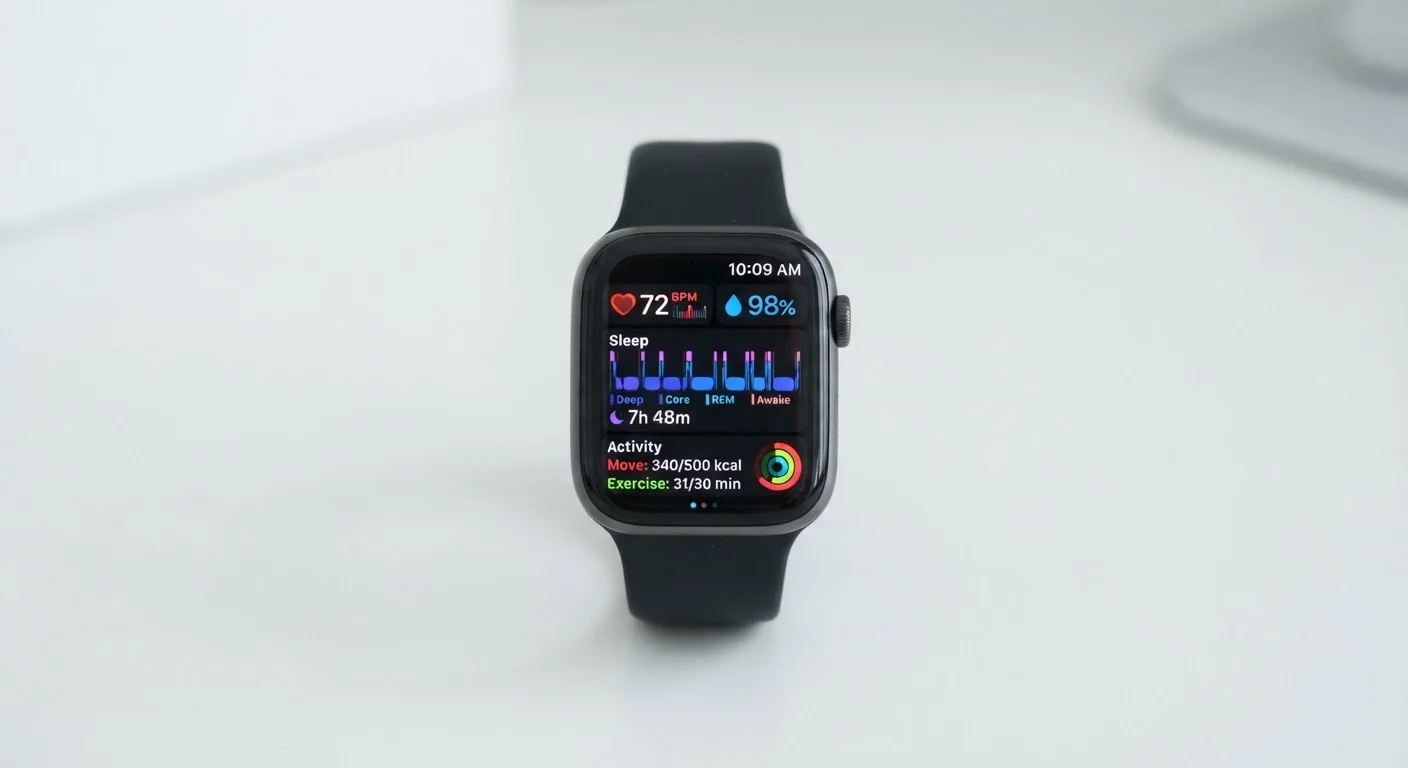
Photo credit: GadgetLite.net | All Things Tech
Not all health features on a new wearable are clinically validated. Learn which metrics have research behind them and which are still experimental.
Key Takeaways
- Optical heart rate monitoring on wearables is well-studied, though accuracy varies with movement and skin tone.
- FDA clearance and clinical validation are meaningfully different — marketing rarely distinguishes between the two.
- Stress scores, readiness metrics, and blood glucose estimates from most wearables lack robust clinical backing.
- SpO2 (blood oxygen) readings on consumer wearables are useful for trend tracking, not medical diagnosis.
Why This Distinction Actually Matters
Wearable device launches now routinely feature a wall of health metrics — ECG, blood oxygen saturation, skin temperature, stress levels, even blood pressure estimates. The challenge for everyday buyers is that all of these features get announced with the same confident language, whether they're backed by peer-reviewed research, cleared by the FDA, or essentially educated guesses dressed up in a compelling UI.
The stakes aren't abstract. If someone stops taking chest symptoms seriously because their wearable's ECG feature shows "normal," or adjusts their behavior based on a stress score that's more algorithm than science, real harm can follow. Understanding which features deserve trust — and how much — is a practical health literacy skill, not just a tech-enthusiast exercise.
For a broader view of what wearable sensors can and can't physically detect, see what health sensors can and cannot tell you.
Myth
If a wearable tracks a health metric, it must have been tested and approved for medical use.
Fact
Consumer wearables are typically regulated as general wellness devices, not medical devices, meaning most features are not individually reviewed for clinical accuracy.
The FDA distinguishes between general wellness products and medical devices. Most smartwatch health features — including sleep staging, stress scores, and readiness indexes — fall under the general wellness category, which requires far less regulatory scrutiny. Only specific features, like certain ECG applications and AFib (atrial fibrillation) detection tools, have obtained individual FDA clearance. A device being sold in a retail store tells you almost nothing about whether its health features have been clinically validated.
Myth
Wearable ECG features work the same as the ECG machines used by doctors.
Fact
Consumer wearable ECGs use a single lead and are cleared only for detecting signs of AFib — they cannot replicate the diagnostic scope of a clinical 12-lead ECG.
A clinical ECG uses 12 electrodes placed across the body to capture a detailed electrical picture of the heart from multiple angles. Wearable ECGs typically use one lead — a circuit between the wrist sensor and a finger pressing a button — which gives a much narrower view. FDA-cleared wearable ECG apps are approved specifically to look for irregular heart rhythms consistent with AFib, not to diagnose other cardiac conditions. Using a wearable ECG reading to rule out cardiac problems beyond AFib goes well beyond what the technology is designed or validated to do. Research on wearable accuracy reinforces how narrow these validated use cases actually are.
Myth
Stress and readiness scores on wearables are scientifically measured values.
Fact
These scores are proprietary algorithmic estimates, typically derived from heart rate variability data, and lack standardized clinical validation.
Heart rate variability (HRV) — tiny fluctuations in the time between heartbeats — is a legitimately studied physiological signal associated with autonomic nervous system activity. However, how each wearable brand translates raw HRV data into a "stress score" or "readiness score" is largely proprietary and varies significantly between devices. No universal clinical standard governs what these scores mean or how they should be used. They can offer rough directional signals, but treating them as precise physiological measurements overstates what the technology actually delivers.
Myth
Blood glucose monitoring features on the newest wearables provide readings as reliable as fingerstick tests.
Fact
As of current public knowledge, no non-invasive consumer wearable has received regulatory clearance for continuous blood glucose monitoring to clinical accuracy standards.
Non-invasive glucose monitoring — detecting blood sugar levels without breaking the skin — is one of the most actively pursued challenges in wearable health tech. Multiple companies have announced features in this space, and some devices offer glucose "trend" indicators. However, the gap between a trend estimate and an accurate, actionable blood glucose reading is significant. People managing conditions like diabetes require clinically accurate readings, and consumer wearable features marketed around glucose should be interpreted with caution until peer-reviewed validation and regulatory clearance are in place. See the sensor limitations guide for more context on what optical sensors can physically detect.
Myth
SpO2 (blood oxygen) readings from a smartwatch are accurate enough to monitor medical conditions.
Fact
Consumer wearable SpO2 sensors are generally designed for trend awareness, not clinical-grade measurement, and accuracy can vary based on skin tone and fit.
Pulse oximetry on medical-grade devices measures blood oxygen saturation with high precision. Consumer wearable versions use similar optical technology — shining light through the skin and measuring absorption — but at lower hardware fidelity and without the same calibration standards. The FDA has issued guidance highlighting that pulse oximeter accuracy varies across skin tones, a gap that has been documented in research studies. For healthy users tracking general wellness trends, wearable SpO2 can be informative. For people with respiratory or cardiovascular conditions who need precise readings, a cleared medical oximeter is a different category of device entirely.
Reading the Fine Print on Health Claims
There are a few practical frameworks that help cut through launch-day noise. First, look for explicit FDA clearance language — not just "FDA registered" or "works alongside" clinical tools, but actual 510(k) clearance for a specific intended use. A device can be FDA registered as a manufacturer without any of its features being individually reviewed for accuracy or safety.
Second, look for published validation studies. Reputable wearable features will have research linked from the company's health science pages or indexed in databases like PubMed. If a metric is only described in a press release, treat it as unproven.
~20%
Typical wearable heart rate error during high-intensity exercise
Multiple independent validation studies have found consumer optical heart rate monitors can deviate by roughly 20% or more during vigorous movement compared to chest strap ECG references.
2
FDA-cleared wearable ECG use cases (AFib detection and heart rate alerts)
Despite ECG being marketed broadly as a health feature, FDA clearances for consumer wearable ECGs are narrowly defined, covering specific arrhythmia detection scenarios only.
Third, pay attention to the population studied. A blood oxygen sensor validated primarily on lighter skin tones may perform inconsistently across diverse users — a known limitation that has prompted updated FDA guidance on pulse oximeter transparency. That's the kind of nuance that rarely appears in a product listing.
For a practical look at how reading accuracy ties back to everyday wear habits, fit and placement matter more than most users realize. And if you're still deciding whether a wearable makes sense for your routine at all, the pre-purchase self-assessment is a useful starting point.
Never Use Wearable Data to Replace Medical Advice
Health metrics from consumer wearables — regardless of how advanced or premium the device — are not substitutes for clinical diagnosis, professional medical evaluation, or prescribed monitoring tools. If you have a health condition that requires ongoing monitoring, consult a healthcare provider about appropriate clinical-grade devices. Acting on wearable data alone for a medical concern carries real risk.

Author
Releases Editorial Team
Releases Editorial Team is the collective byline for our editorial team and contributor network. Articles published under this byline or an editorial pen name are researched, written, and reviewed according to our editorial standards for clarity, consistency, and independence before publication.
View all articles →