
Smart Home Devices: Genuine Convenience or Creeping Complexity?
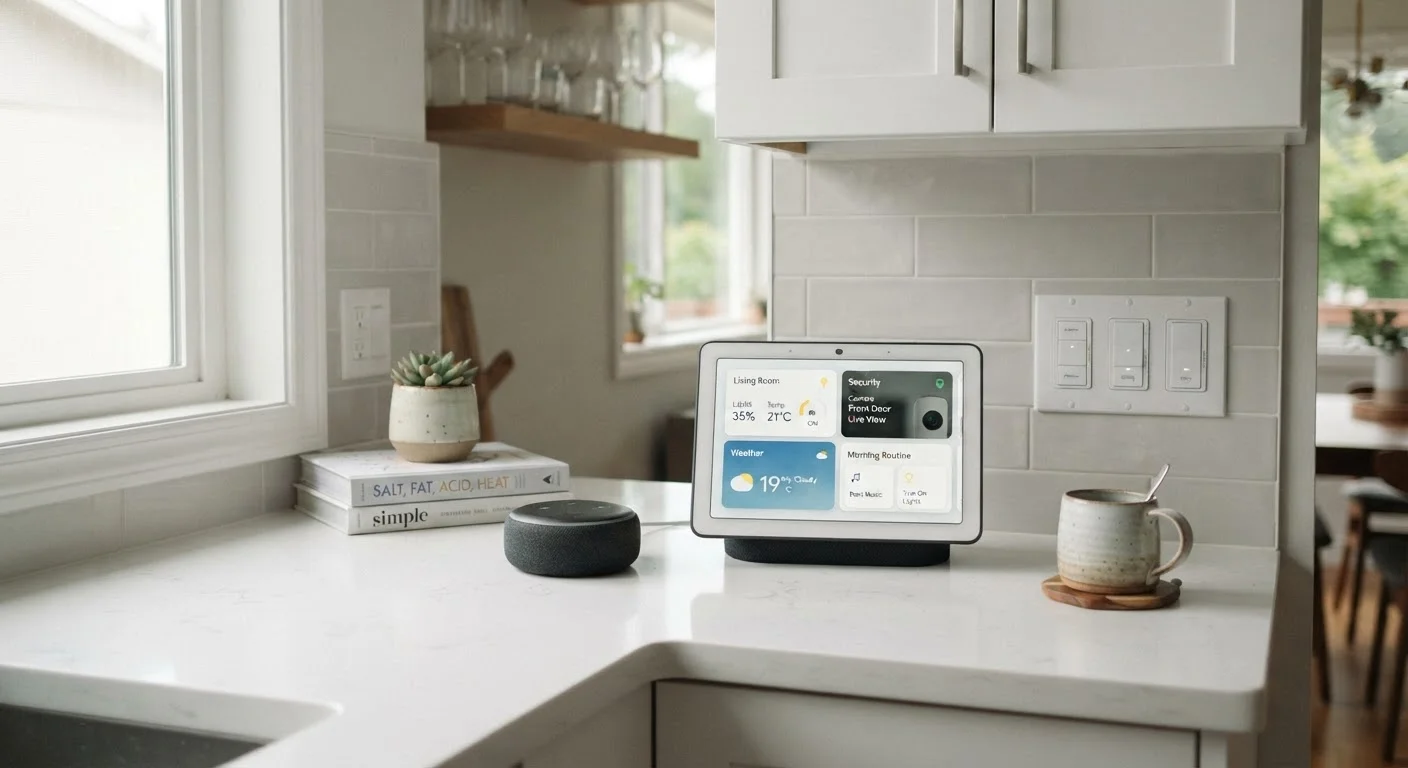
Photo credit: GadgetLite.net | All Things Tech
In this article
Smart speakers, connected displays, and automated appliances promise to simplify life. Here's a balanced look at where smart home tech delivers — and where it doesn't.
Key Takeaways
- Smart home devices can genuinely reduce friction in daily routines when set up thoughtfully.
- Privacy trade-offs are real: always-on microphones and cameras collect data you should understand.
- Ecosystem lock-in means devices from different brands may not work together without friction.
- Complexity often scales with the number of devices — more gadgets can mean more troubleshooting.
- Entry-level devices like smart plugs offer low-risk ways to test smart home convenience.
Hands-free control reduces daily friction
Voice commands handle tasks like setting timers, adjusting lights, or checking the weather without requiring physical interaction — useful when your hands are full.
Lighting and climate automation saves energy
Scheduled or sensor-triggered automations can reduce energy consumption by ensuring devices aren't running unnecessarily, particularly for lighting and heating.
Remote monitoring adds peace of mind
Smart security cameras and doorbells allow homeowners to check in on their property from anywhere, providing reassurance during travel or long work days.
Accessibility benefits for some users
Voice control and automation can meaningfully assist people with mobility limitations or disabilities, enabling greater independence in managing their home environment.
Scalable — start small and expand gradually
Unlike whole-home renovations, smart home setups can begin with a single device and grow incrementally, letting users test value before committing to a larger ecosystem.
Ecosystem lock-in limits device flexibility
Devices optimized for one platform — such as Amazon Alexa or Google Home — may offer reduced functionality or no compatibility when paired with a competing system.
Relies on internet connectivity to function
Most smart home devices require active Wi-Fi and cloud services to operate. An outage can render basic functions unavailable until the connection is restored.
Setup and maintenance demand ongoing effort
Initial configuration, app updates, firmware patches, and occasional troubleshooting add a maintenance overhead that grows with the number of devices in a home.
Privacy risks from always-on listening and cameras
Devices with continuous microphones or cameras collect data that is processed remotely, raising legitimate questions about who has access and how long recordings are stored.
Upfront cost can outweigh convenience gains
Smart devices typically carry a significant price premium over non-connected equivalents, and the convenience benefit may not justify that cost for infrequent or low-stakes tasks.
Software changes can degrade or break features
Manufacturers can alter functionality, discontinue cloud services, or remove features through updates — sometimes without notice — leaving hardware performing below expectations.
What Smart Home Devices Actually Promise
The pitch is straightforward: automate the mundane, control your environment with your voice, and let your devices anticipate your needs. Smart speakers answer questions and set timers hands-free. Smart thermostats adjust temperature based on your schedule. Connected lighting turns itself off when you leave a room. In theory, the friction of everyday life gets smoothed away.
In practice, the experience varies considerably. Some of these promises hold up well. Others depend heavily on how many devices you own, which platforms you've chosen, and how much time you're willing to invest in configuration. Understanding that gap is what separates a satisfying setup from a frustrating one. For a foundational overview, see what smart home devices actually do and how they connect.
Where Smart Home Tech Genuinely Delivers
The strongest use cases for smart home devices are the ones where automation replaces a repetitive, low-stakes task.
Hands-free control reduces daily friction
Voice commands handle tasks like setting timers, adjusting lights, or checking the weather without requiring physical interaction — useful when your hands are full.
Lighting and climate automation saves energy
Scheduled or sensor-triggered automations can reduce energy consumption by ensuring devices aren't running unnecessarily, particularly for lighting and heating.
Remote monitoring adds peace of mind
Smart security cameras and doorbells allow homeowners to check in on their property from anywhere, providing reassurance during travel or long work days.
Accessibility benefits for some users
Voice control and automation can meaningfully assist people with mobility limitations or disabilities, enabling greater independence in managing their home environment.
Scalable — start small and expand gradually
Unlike whole-home renovations, smart home setups can begin with a single device and grow incrementally, letting users test value before committing to a larger ecosystem.
Voice assistants handle quick informational requests — weather checks, unit conversions, timers — without requiring you to pick up a phone. Smart lighting schedules reduce energy waste without demanding behavior change. And for households with accessibility needs, voice control can meaningfully expand independence.
Curious how smart speakers and displays compare as daily-use devices? Smart displays vs. smart speakers breaks down which form factor fits different home setups.
Where Complexity and Frustration Creep In
The downsides of smart home tech aren't hypothetical — they show up reliably as households add more devices.
Ecosystem lock-in limits device flexibility
Devices optimized for one platform — such as Amazon Alexa or Google Home — may offer reduced functionality or no compatibility when paired with a competing system.
Relies on internet connectivity to function
Most smart home devices require active Wi-Fi and cloud services to operate. An outage can render basic functions unavailable until the connection is restored.
Setup and maintenance demand ongoing effort
Initial configuration, app updates, firmware patches, and occasional troubleshooting add a maintenance overhead that grows with the number of devices in a home.
Privacy risks from always-on listening and cameras
Devices with continuous microphones or cameras collect data that is processed remotely, raising legitimate questions about who has access and how long recordings are stored.
Upfront cost can outweigh convenience gains
Smart devices typically carry a significant price premium over non-connected equivalents, and the convenience benefit may not justify that cost for infrequent or low-stakes tasks.
Software changes can degrade or break features
Manufacturers can alter functionality, discontinue cloud services, or remove features through updates — sometimes without notice — leaving hardware performing below expectations.
Ecosystem fragmentation is one of the most common friction points. A smart bulb from one brand may not respond to a hub from another without workarounds. Smart home ecosystems explained covers how platforms communicate and why your choice of ecosystem matters before you start buying.
Connectivity dependencies are another underappreciated issue. Most smart devices require a stable Wi-Fi connection and, in many cases, a functioning cloud server. If either fails, even basic functions — like turning on a light — can become inaccessible. For a grounded look at network implications, the honest trade-offs of a smart home on a single network is worth reading.
When Cloud Services Shut Down
Several smart home device lines have been discontinued by their manufacturers, rendering hardware permanently non-functional when the supporting cloud infrastructure was decommissioned. This 'product death' scenario is a genuine risk when choosing less-established brands or niche platforms. Checking a manufacturer's track record and preferring devices with local control options can help reduce this exposure.
Privacy: The Trade-Off You Can't Ignore
Always-on microphones and cameras introduce a category of concern that's distinct from typical consumer electronics. Smart speakers listen for a wake word continuously, and some devices with cameras passively monitor your home environment. The data collected — voice clips, usage patterns, device logs — is processed by manufacturers and, in some cases, reviewed by human contractors to improve voice recognition accuracy.
69%
US adults with at least one smart home device
According to Statista survey data, a majority of US adults have adopted some form of smart home technology as of recent years.
3 in 10
Smart device owners concerned about data privacy
Pew Research Center has found that a significant share of connected device owners express concern about how their data is used by manufacturers.
This isn't a reason to avoid smart home tech entirely, but it is a reason to make deliberate decisions. Reviewing privacy settings, disabling features you don't use, and understanding what your devices store are practical steps that reduce exposure without eliminating the convenience. The real privacy trade-offs of always-on microphones and cameras covers this in depth.
Starting Smart: Low-Risk Entry Points
Not every smart home journey starts with a full ecosystem. Some devices offer a practical on-ramp with minimal commitment. Smart plugs are a straightforward example: they add scheduling and remote control to ordinary appliances without rewiring anything or requiring a hub.
Similarly, a single smart speaker gives you voice assistant access and a feel for how automation fits your routine — without locking you into a complex setup. From there, it becomes clearer which expansions are worth the added complexity and which aren't. For a room-by-room perspective on what actually works in practice, a room-by-room guide to useful home tech offers concrete guidance without assuming a fully automated home is the goal.

Author
Electronics Editorial Team
Electronics Editorial Team is the collective byline for our editorial team and contributor network. Articles published under this byline or an editorial pen name are researched, written, and reviewed according to our editorial standards for clarity, consistency, and independence before publication.
View all articles →