
Gaming Platforms Glossary: Terms Every New Player Should Know
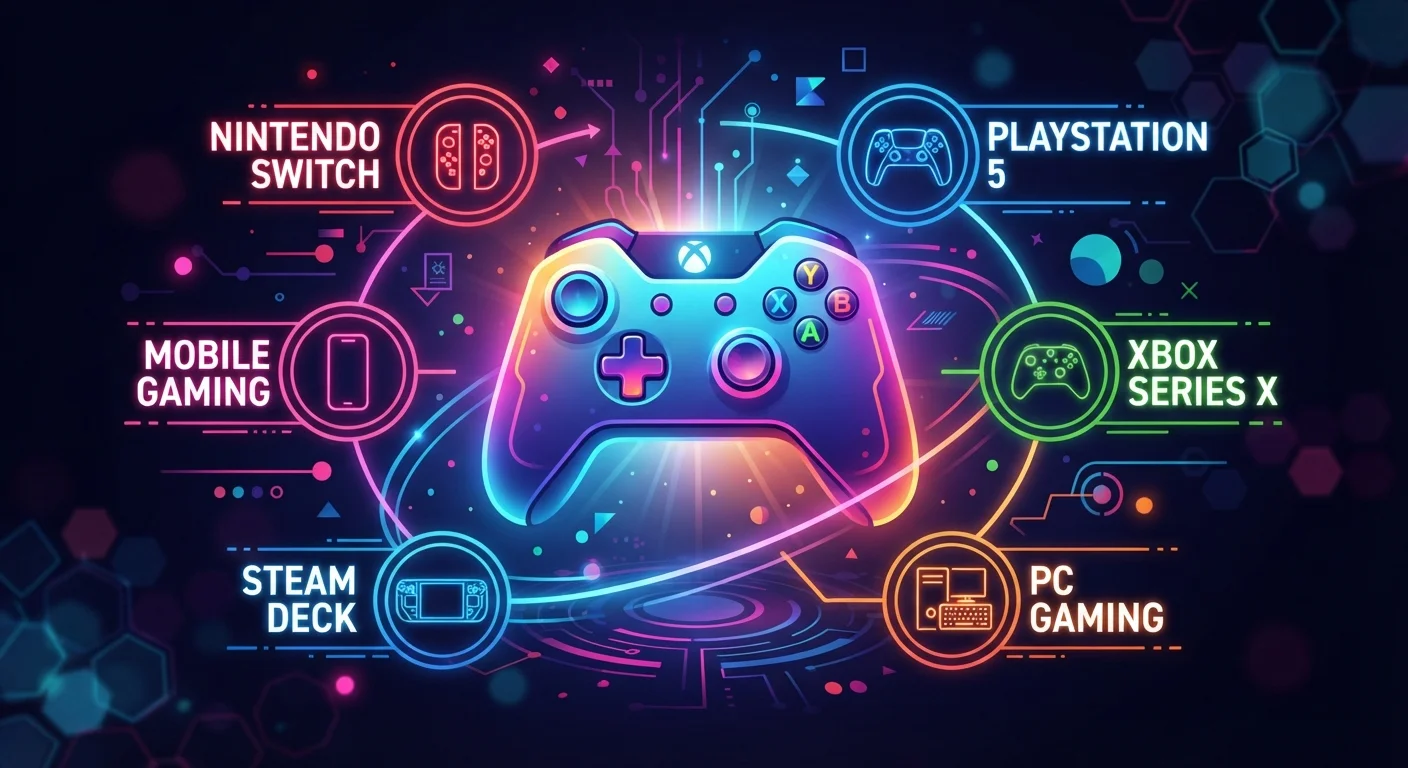
Photo credit: GadgetLite.net | All Things Tech
In this article
Frame rate, ecosystem, backward compatibility, cross-play — a plain-language reference for the technical terms you'll encounter across gaming platforms.
Why Platform Terminology Can Feel Like a Foreign Language
Walk into any gaming conversation and you'll hear terms like ecosystem, frame rate, and cross-play tossed around as if everyone already knows what they mean. For newcomers, that word soup can make gaming feel less like a hobby and more like homework. This glossary is your shortcut — plain definitions for the terms you'll actually encounter when exploring consoles, PC gaming, and beyond.
For even broader tech vocabulary, check out our consumer electronics glossary, which covers terms like latency and refresh rate that cross over into gaming hardware.
Platform
The hardware or software environment on which games are played — examples include home consoles, PCs, and mobile devices. Each platform has its own technical capabilities and game library.
Ecosystem
The broader network built around a platform, including its digital storefront, subscription services, online features, and community tools. Ecosystems are designed to keep players within one company's products.
Frame Rate (FPS)
The number of individual images (frames) displayed per second during gameplay. Higher frame rates generally produce smoother motion and faster visual feedback for the player.
Resolution
The number of pixels used to form the game's image on screen, expressed as dimensions such as 1080p or 4K. Higher resolutions produce sharper, more detailed visuals.
Latency
The delay between a player's input (like pressing a button) and the corresponding action appearing on screen. Lower latency feels more responsive, which matters especially in fast-paced games.
Cross-Play
A feature that allows players on different gaming platforms to play together in the same online session. It must be supported by both the game developer and each involved platform.
Cross-Progression
The ability to carry save data, purchased content, and achievements from one platform to another. It is a separate feature from cross-play and not always included even when cross-play is available.
Backward Compatibility
A console's ability to run games originally made for an older version of that same platform. The extent of backward compatibility varies by console generation and manufacturer.
Cloud Gaming
A model in which games run on remote servers and are streamed to a player's device over the internet, eliminating the need to download games or own dedicated high-performance hardware.
Digital Storefront
The online marketplace built into a gaming platform where players browse and purchase games, downloadable content, and subscriptions. Examples include platform-specific stores tied to major consoles and PC platforms.
Subscription Service
A recurring-payment plan that grants access to a rotating library of games or additional platform features. Different services offer different catalogs and tiers of access.
Exclusive
A game available on only one platform or within one ecosystem, at least for a defined period. Exclusives are often used by platform holders to attract players to their hardware.
Platform, Ecosystem, and How Games Reach You
Understanding how a game gets to your screen is the foundation of everything else. Here are the core concepts that explain the structure of the gaming world.
| Major Gaming Platform Categories | Home consoles, handheld consoles, PC, mobile, cloud |
| Common Console Frame Rate Targets | 30 FPS (baseline), 60 FPS (standard), 120 FPS (high-end) |
| Standard Resolutions in Gaming | 1080p, 1440p, 4K |
| Cross-Play Requirement | Must be enabled by both developer and platform holder |
| Cloud Gaming Requirement | Stable internet connection; no dedicated gaming hardware needed |
A platform is simply the hardware or software environment a game runs on — a game console, a PC, or a mobile device all count as platforms. An ecosystem goes one step further: it's the combination of a platform, its online store, subscription services, and social features that keeps players in one company's orbit. If you've ever heard someone say they're "in the PlayStation ecosystem" or "all-in on Xbox," they mean all those layers together.
Cloud gaming is a newer model where the game runs on a remote server and streams to your device — no disc, no download required. It's a genuinely different way to play; our cloud gaming explainer walks through exactly how the technology works and where its current limits lie.
Want to understand how platforms evolved from coin-op arcades to today's cloud services? This timeline tells the whole story.
Performance Terms: What Keeps Gameplay Smooth
You don't need an engineering degree to understand why a game feels smooth or stuttery. These terms explain what's happening under the hood.
60 FPS
Widely accepted smooth gameplay threshold
60 frames per second is broadly considered the standard target for responsive, fluid gameplay across modern platforms.
4K
Current high-end console resolution standard
Many modern home consoles and high-performance gaming PCs support output at 4K (3840×2160 pixels) resolution.
Frame rate — measured in frames per second (FPS) — refers to how many individual images your display shows each second. Higher frame rates generally feel smoother; 30 FPS is a common baseline for console games, while 60 FPS is widely considered the sweet spot for responsiveness. Some modern games target 120 FPS on high-end hardware.
Resolution describes how many pixels make up the image on screen. 1080p (Full HD), 1440p (Quad HD), and 4K (Ultra HD) are the most common standards today. A higher resolution means a sharper, more detailed image — provided your display supports it.
Latency (sometimes called input lag) is the delay between pressing a button and seeing the action happen on screen. In fast-paced games, even small amounts of latency are noticeable. For gaming peripherals that affect latency, the gaming peripheral glossary covers terms like polling rate that are directly related.
Multiplayer and Cross-Platform Concepts
Gaming is increasingly social, and a handful of terms define how players on different devices interact — or why they sometimes can't.
Cross-play (also called cross-platform play) lets players on different platforms — say, a PlayStation user and an Xbox user — play the same online game together. It sounds obvious, but it's not universal: game developers and platform holders must actively enable it, and many titles still don't support it. See which games and platforms actually support cross-play for a detailed breakdown.
Cross-progression is a related but separate feature: it means your save data, unlocked items, and achievements carry over when you switch platforms. A game can have cross-play without cross-progression, or vice versa.
Backward compatibility refers to a console's ability to run games designed for an older generation of that same platform. Not every console generation guarantees it — it's a feature worth checking before you assume your old library will work on new hardware.
Gaming communities have their own rich vocabulary beyond these technical terms. This guide to gaming slang covers the conversational shorthand you'll see in chats and streams.

Author
Gaming Editorial Team
Gaming Editorial Team is the collective byline for our editorial team and contributor network. Articles published under this byline or an editorial pen name are researched, written, and reviewed according to our editorial standards for clarity, consistency, and independence before publication.
View all articles →