
Wired vs. Wireless Gaming Headsets: What Changes Beyond the Cable
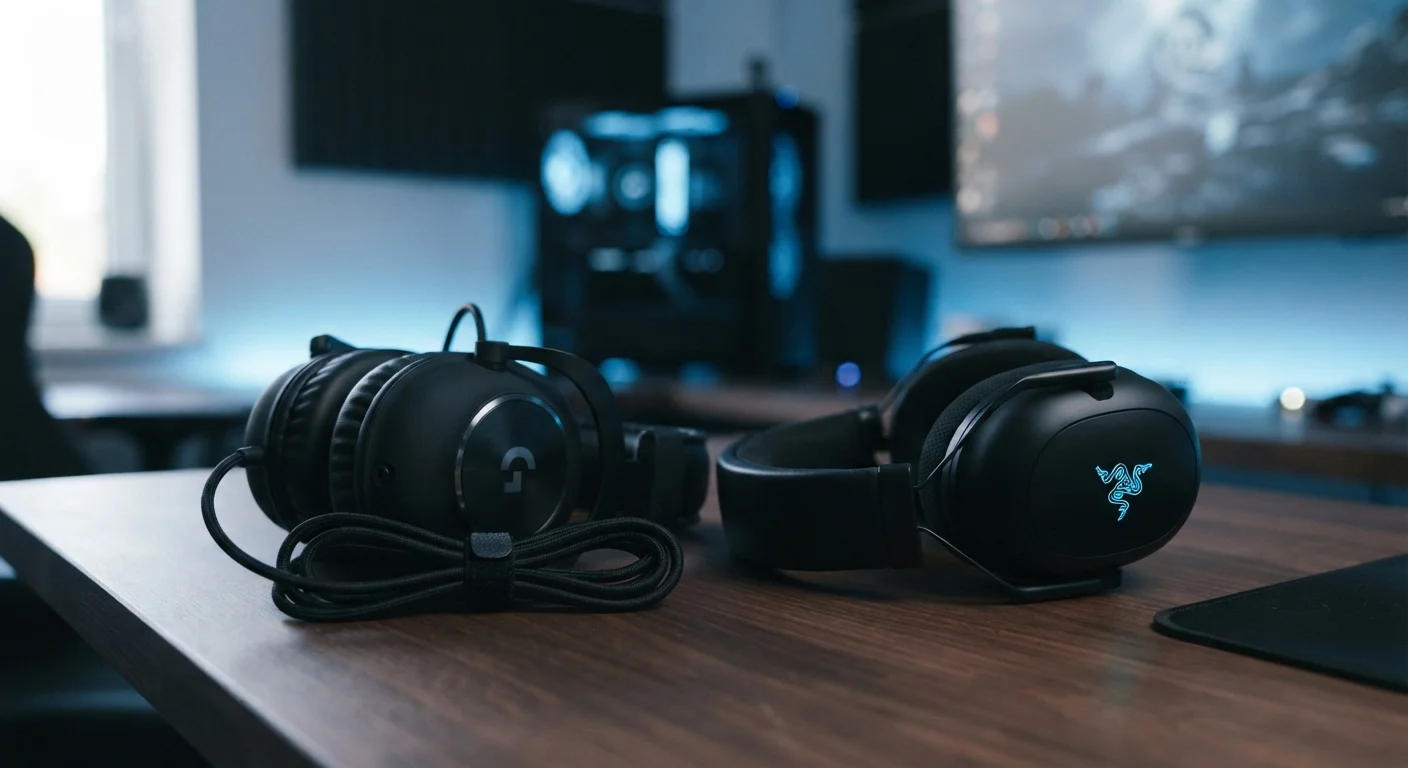
Photo credit: GadgetLite.net | All Things Tech
In this article
Latency, battery life, audio quality — here's how wired and wireless gaming headsets genuinely differ and who each suits best.
Key Takeaways
- Wired headsets deliver audio with no latency and require no charging — just plug in and play.
- Modern wireless headsets using 2.4 GHz dongles have latency low enough that most players won't notice it.
- Wireless headsets require regular charging, typically offering 15–30 hours of battery life per charge.
- Audio quality differences between wired and wireless are minimal at comparable price points today.
- Your gaming platform and setup habits matter more than the cable when choosing between the two.
The Real Differences Between Wired and Wireless
The cable is the most visible difference between a wired and wireless gaming headset, but it's far from the only one. Understanding what actually changes — latency, battery, audio signal, and usability — helps you choose based on your real gaming habits rather than marketing language.
Wired headsets connect via USB or a 3.5mm analog jack. That physical connection delivers audio as a direct electrical signal, which means latency (the tiny delay between sound being produced and you hearing it) is effectively zero. There's no wireless transmission involved, no signal compression, and no battery to deplete. For many players, especially those gaming at a fixed desk, these qualities make wired headsets straightforwardly reliable.
Wireless headsets come in two main flavors: Bluetooth and 2.4 GHz radio frequency (RF) via a USB dongle. Bluetooth is convenient and widely compatible, but it does introduce slightly more latency than a wired connection — typically in the range of 30–100ms depending on the codec. The 2.4 GHz dongle approach is what most dedicated gaming wireless headsets use, and it dramatically closes that gap. Latency on a 2.4 GHz wireless headset is often under 20ms — below the threshold most listeners can consciously detect.
| Criterion | Wired | Wireless |
|---|---|---|
| Latency | Effectively zero | Low (2.4 GHz) to moderate (Bluetooth) |
| Battery required | No | Yes, typically 15–30 hours |
| Connection type | USB or 3.5mm jack | 2.4 GHz dongle or Bluetooth |
| Movement freedom | Limited by cable length | Full freedom within range |
| Audio quality | Uncompressed signal | Compressed but near-identical to most ears |
| Multi-device compatibility | Very broad (3.5mm universal) | Varies by dongle/Bluetooth pairing |
| Setup complexity | Plug and play | Requires pairing or dongle setup |
For a broader look at how the wired-versus-wireless debate plays out across other devices, see our comparison of wired and wireless smart home devices. The underlying trade-offs are surprisingly similar.
Battery Life, Charging, and the Convenience Factor
Battery life is the most practical consideration wireless headset owners manage. Most dedicated wireless gaming headsets offer somewhere between 15 and 30 hours of use per charge, though real-world figures vary based on volume levels, RGB lighting (if any), and microphone use. Some models support fast charging, delivering several hours of play from a short top-up.
The inconvenience isn't the charging itself — it's the unpredictability. Forgetting to charge before a long session is a real scenario that wired users never face. If you're the type of player who picks up the headset at random times rather than following a routine, battery management adds a small but genuine cognitive overhead.
20ms
Typical 2.4 GHz wireless headset latency
Most dedicated gaming wireless headsets using a 2.4 GHz USB dongle achieve latency figures that fall below the generally cited human perception threshold of around 20–40ms.
15–30 hrs
Wireless headset battery range per charge
Battery life figures cited by manufacturers for wireless gaming headsets; actual results vary based on volume, microphone use, and lighting features.
Wired headsets sidestep this entirely. They draw power from the device they're connected to (in the case of USB) or require none at all (3.5mm). The flip side is that the cable can be a source of physical friction — snagging on armrests, restricting movement, or contributing to desk clutter. Neither format is objectively superior; the right choice depends on how and where you game.
If you're also weighing headset considerations beyond connection type, understanding sound modes like stereo, surround, and spatial audio is another factor worth exploring.
Audio Quality and Microphone Performance
A persistent myth is that wired headsets always sound better than wireless ones. At a comparable price point, modern wireless headsets have largely closed the audio quality gap. The digital signal processing used in 2.4 GHz wireless headsets is sophisticated enough that most listeners won't perceive a difference in everyday gaming.
Where wired headsets still hold a technical edge is in uncompressed audio transmission. Some audiophile-adjacent setups use high-impedance wired headsets paired with a dedicated amplifier or DAC (digital-to-analog converter) for a cleaner signal chain. That level of investment goes beyond casual gaming — but it's worth knowing the ceiling exists.
Microphone quality is a separate concern from connection type. Both wired and wireless gaming headsets span a wide range of mic quality, from basic boom mics to detachable cardioid condensers. Connection type doesn't determine mic performance — driver and capsule quality do. For a deeper dive on that topic, see our guide on headset microphone quality.
It's also worth noting that wireless headsets using Bluetooth may apply audio compression depending on the codec being used. For gaming specifically, low-latency codecs like aptX Low Latency help, but 2.4 GHz RF remains the more consistent option for in-game audio synchronization. See how similar trade-offs apply to earphones in our true wireless vs. wired earphones comparison.
Platform Compatibility Worth Checking
Not all wireless headsets work seamlessly across both PlayStation and Xbox consoles, or between consoles and PC. USB dongle headsets in particular are often designed for specific platforms. Before committing to a wireless model, verify it's compatible with every device you intend to use it with — this is less of a concern for wired headsets using standard 3.5mm connections.

Author
Gaming Editorial Team
Gaming Editorial Team is the collective byline for our editorial team and contributor network. Articles published under this byline or an editorial pen name are researched, written, and reviewed according to our editorial standards for clarity, consistency, and independence before publication.
View all articles →