
True Wireless vs Wired Earphones: What Changes in Real-World Use
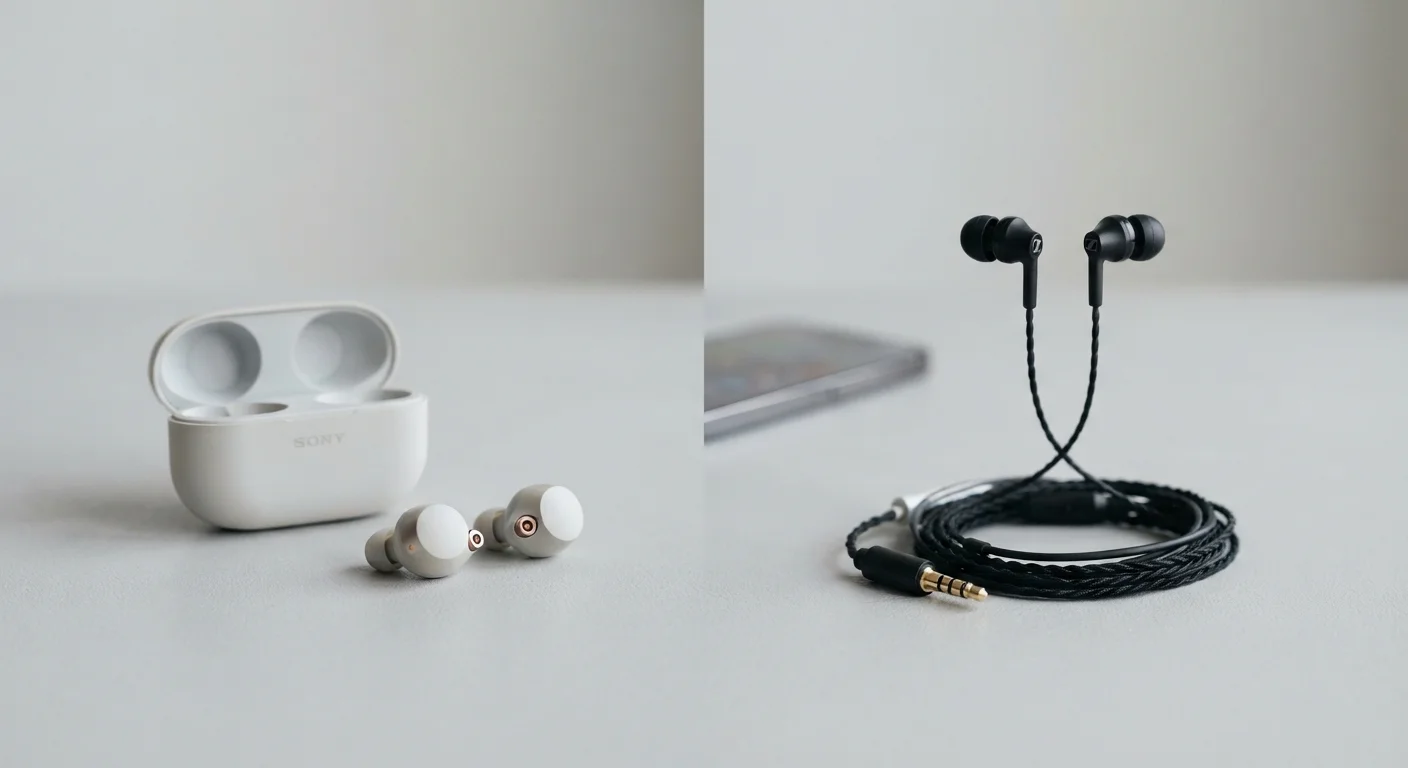
Photo credit: GadgetLite.net | All Things Tech
In this article
Going wireless changes more than just the cable. Here's an honest comparison of convenience, audio quality, and everyday trade-offs.
Key Takeaways
- True wireless earphones eliminate cable tangling but introduce battery management as a daily responsibility.
- Wired earphones deliver a consistent, latency-free connection without ever needing to charge.
- Audio quality differences are real but subtle — source files and fit matter as much as the cable.
- True wireless options add features like active noise cancellation and touch controls at higher price points.
- Wired earphones work instantly with any compatible device; true wireless requires Bluetooth pairing every time.
- Neither format is universally superior — the right choice depends heavily on how and where you listen.
The Everyday Reality of Going Cable-Free
Switching to true wireless earphones changes your daily routine in ways a spec sheet won't tell you. The most immediate shift is physical: there's nothing tethering the earbuds to your phone, your collar, or each other. That removes a real source of daily friction — no untangling, no snagged cables during a jacket removal, no cord swinging against your chest on a run.
But that freedom comes with a new habit: charging. True wireless earbuds live in a charging case, and forgetting to return them to it regularly means dead earphones when you need them. Most cases offer multiple full charges before they need a wall outlet, but the discipline of charging becomes part of ownership. Wired earphones, by contrast, are ready to use the moment you plug them in — no pairing, no battery check, no case to carry.
For context on how this cable-versus-wireless tension plays out across other everyday devices, see our breakdown of wired vs. wireless trade-offs across common gadgets.
| Criterion | True Wireless (TWS) | Wired Earphones |
|---|---|---|
| Cable management | None — fully cable-free | Cable required; tangling possible |
| Battery requirement | Yes — daily charging habit needed | None |
| Audio latency | Slight Bluetooth delay | Effectively zero latency |
| Audio quality ceiling | Codec-dependent compression | Direct analog signal, no compression |
| Active noise cancellation | Available on many models | Passive isolation only |
| Device compatibility | Bluetooth pairing required | Plug-and-play (3.5mm or USB-C) |
| Long-term durability | Battery degrades over time | No battery; cable is main failure point |
Audio Quality: What Actually Differs
The audio quality gap between wired and true wireless earphones is narrower than it once was, but it hasn't disappeared. Wired earphones transmit an analog signal directly — no compression, no wireless encoding step. That means the audio arriving at your ear is as close to the source file as the earphone's drivers can reproduce.
Bluetooth, which all true wireless earphones use, compresses audio before transmitting it. The degree of compression depends on the audio codec in use — AAC, aptX, and LC3 (used in Bluetooth LE Audio) each handle that compression differently, with newer codecs generally preserving more detail. For most streaming use cases with compressed audio files, the difference is subtle and often inaudible without careful side-by-side testing.
Where wired earphones consistently outperform is latency — the tiny delay between a sound event and when you hear it. Wired connections are effectively instantaneous. Bluetooth introduces a measurable delay that, while imperceptible during music playback, becomes noticeable during video watching or gaming. If that matters to you, our comparison of wired and wireless gaming headsets goes deeper on this trade-off.
~20ms
Typical Bluetooth audio latency
Modern aptX Low Latency and LC3 codecs can achieve around 20–40ms delay, compared to near-zero for wired connections.
300–500
Charge cycles before battery degrades
Lithium-ion cells in earbuds typically retain around 80% capacity after 300–500 full charge cycles, per general battery chemistry standards.
2–3 years
Typical TWS battery lifespan
With regular daily use, most true wireless earbuds show noticeable battery capacity reduction within two to three years.
Fit is often overlooked but has a larger impact on perceived sound quality than the cable question. A well-fitted ear tip creates the seal necessary for accurate bass response. Many users miss basic setup steps that would improve their experience significantly regardless of which format they choose.
Features, Durability, and What to Expect Over Time
True wireless earphones tend to pack in more features than their wired counterparts at comparable price points: active noise cancellation (ANC), transparency modes, touch controls, voice assistant access, and automatic pause when an earbud is removed. These are genuinely useful additions for everyday use, though they also introduce more components that can fail.
Wired earphones are mechanically simpler. The most common failure point is the cable itself — particularly near the plug or the junction with the earphone housing. A broken cable typically renders them unusable, but the simplicity of the design means fewer failure modes overall.
True wireless earphones carry a longer-term consideration: battery degradation. Lithium-ion cells lose capacity over charge cycles. After two to three years of regular use, earbud battery life will be noticeably shorter than when new — and unlike a smartphone, most earbuds don't support battery replacement. Wired earphones don't age in the same way; a pair in good physical condition performs the same in year five as year one.
The 3.5mm Jack Is Not Universal Anymore
Many current smartphones have removed the 3.5mm headphone jack, which affects wired earphone compatibility. USB-C wired earphones and Lightning-to-3.5mm adapters exist as workarounds, but add a step to the plug-and-play simplicity wired earphones are valued for. Before choosing wired, confirm what ports your primary device actually has.

Author
Gadgets Editorial Team
Gadgets Editorial Team is the collective byline for our editorial team and contributor network. Articles published under this byline or an editorial pen name are researched, written, and reviewed according to our editorial standards for clarity, consistency, and independence before publication.
View all articles →