
Smart Rings: A Genuine Alternative to the Wrist, or Still a Niche?
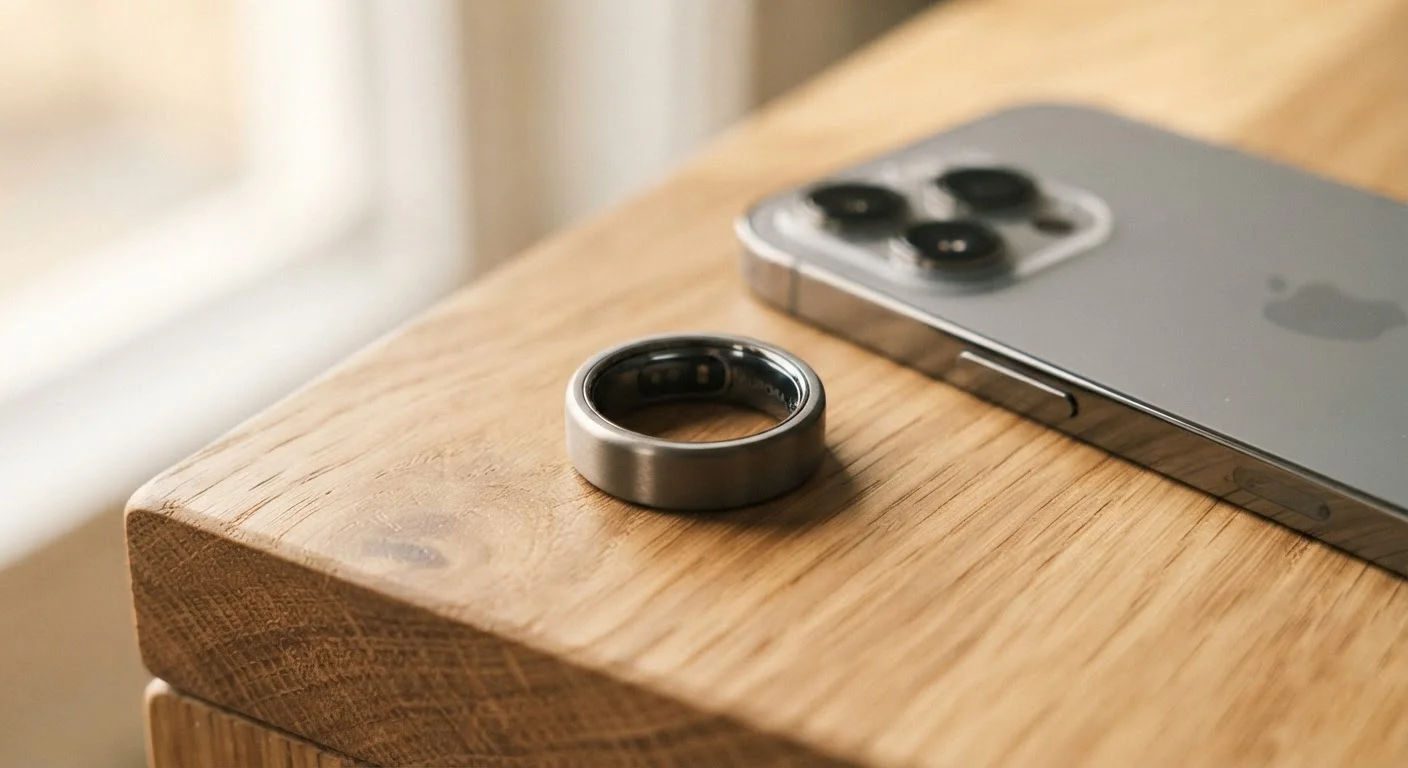
Photo credit: GadgetLite.net | All Things Tech
In this article
Smart rings are gaining traction as a screen-free health tracker. Here's an honest look at what the form factor does well—and where it falls short.
Key Takeaways
- Smart rings track sleep, heart rate, and activity with no screen or notifications to distract you.
- The form factor is genuinely discreet and comfortable for all-day, all-night wear.
- Most rings lack GPS, display, and third-party app support compared to smartwatches.
- Subscription fees and limited repairability add to long-term ownership costs.
- Smart rings suit passive health monitoring better than active, real-time workout tracking.
Lightweight and comfortable for 24/7 wear
Most smart rings weigh under 4 grams, making them easy to forget during sleep — which is when accurate biometric tracking matters most.
No screen means fewer distractions
Without notifications or a display to interact with, smart rings encourage passive data collection rather than adding another attention-pulling device to your day.
Strong sleep tracking from finger-based sensors
Finger arteries sit closer to the skin surface than wrist arteries, giving optical sensors a cleaner signal for heart rate and SpO2 during sleep.
Battery life of four to seven days per charge
Compared to smartwatches that typically need nightly charging, a multi-day battery means fewer gaps in overnight sleep data.
Discreet design fits professional and formal settings
The ring form factor blends into everyday jewelry, making it suitable for workplaces or occasions where a visible wearable would be inappropriate.
No display or real-time feedback
Users cannot check metrics, receive alerts, or interact with data without opening a smartphone app — a significant step back from smartwatch convenience.
No built-in GPS for outdoor activity tracking
Runners, cyclists, and hikers cannot get accurate route or pace data from a ring alone; it must piggyback on a paired phone's GPS, if supported at all.
Subscription fees add to total cost of ownership
Several leading ring platforms lock detailed health insights behind a paid subscription, meaning the purchase price is only the beginning of the expense.
Sizing complications unique to finger wear
Finger circumference changes with temperature and hydration; an ill-fitting ring affects sensor accuracy and comfort, with limited manufacturer support after initial exchange.
Limited third-party app and platform support
Most rings are tied to proprietary ecosystems, restricting data export and making integration with popular fitness platforms inconsistent or unavailable.
Difficult and costly to repair or upgrade
There are no modular components — a degraded battery or broken sensor typically requires purchasing an entirely new ring.
What Smart Rings Actually Do
A smart ring is a finger-worn device — typically titanium or similar hard material — packed with sensors to monitor your body around the clock. Current-generation rings track metrics including heart rate, blood oxygen saturation (SpO2), skin temperature, respiration rate, and movement. That data feeds into a companion app, which generates readiness, sleep, and activity scores.
What they deliberately skip is a display. There are no notifications, no touchscreen interactions, and no wrist-glancing moments. The ring records data silently and syncs when you open the app. For context on how this compares to wrist-based tracking, see our look at how accurate wrist-based health tracking really is.
The evolution from pedometers to smart rings spans decades, but the form factor has only become commercially viable in the past few years as sensor miniaturization caught up with user expectations.
The Real Advantages
Lightweight and comfortable for 24/7 wear
Most smart rings weigh under 4 grams, making them easy to forget during sleep — which is when accurate biometric tracking matters most.
No screen means fewer distractions
Without notifications or a display to interact with, smart rings encourage passive data collection rather than adding another attention-pulling device to your day.
Strong sleep tracking from finger-based sensors
Finger arteries sit closer to the skin surface than wrist arteries, giving optical sensors a cleaner signal for heart rate and SpO2 during sleep.
Battery life of four to seven days per charge
Compared to smartwatches that typically need nightly charging, a multi-day battery means fewer gaps in overnight sleep data.
Discreet design fits professional and formal settings
The ring form factor blends into everyday jewelry, making it suitable for workplaces or occasions where a visible wearable would be inappropriate.
The strongest case for a smart ring is comfort over time. Rings are small enough that most wearers forget they have one on, which directly improves sleep-tracking accuracy — a significant limitation of bulkier wrist devices. Finger-based optical sensors also sit closer to arterial blood flow than a wrist sensor, which researchers note can improve the signal quality for heart rate and SpO2 readings.
For anyone who works in environments where a prominent smartwatch feels out of place — medical settings, manual trades, or formal contexts — a ring is almost invisible. It also eliminates the temptation to check notifications mid-conversation, which is a friction point many users report with smartwatches. Explore how that plays out day-to-day in our piece on the honest trade-offs of living with a smartwatch.
Where Smart Rings Fall Short
No display or real-time feedback
Users cannot check metrics, receive alerts, or interact with data without opening a smartphone app — a significant step back from smartwatch convenience.
No built-in GPS for outdoor activity tracking
Runners, cyclists, and hikers cannot get accurate route or pace data from a ring alone; it must piggyback on a paired phone's GPS, if supported at all.
Subscription fees add to total cost of ownership
Several leading ring platforms lock detailed health insights behind a paid subscription, meaning the purchase price is only the beginning of the expense.
Sizing complications unique to finger wear
Finger circumference changes with temperature and hydration; an ill-fitting ring affects sensor accuracy and comfort, with limited manufacturer support after initial exchange.
Limited third-party app and platform support
Most rings are tied to proprietary ecosystems, restricting data export and making integration with popular fitness platforms inconsistent or unavailable.
Difficult and costly to repair or upgrade
There are no modular components — a degraded battery or broken sensor typically requires purchasing an entirely new ring.
The absence of a display is both the ring's strength and its clearest limitation. You cannot glance at a step count, receive a call alert, or start a timed workout from your finger. For active sport use, rings trail dedicated fitness wearables significantly — there is typically no built-in GPS, no workout mode with real-time pace data, and no compatibility with third-party fitness platforms beyond the manufacturer's own app. Our comparison of wearables in sport versus general wellness breaks down why that gap matters for athletes.
Cost and Long-Term Ownership
Smart rings carry a notable upfront cost — generally comparable to a mid-range smartwatch — but some manufacturers layer on a mandatory monthly or annual subscription to unlock full data insights. Without the subscription, you may receive only basic metrics, which undercuts the device's core value proposition.
Sizing Is More Complex Than It Looks
Smart ring sizing is not as simple as picking a ring size at a jewelry counter. Finger size fluctuates throughout the day due to temperature, hydration levels, and physical activity. Most manufacturers provide a plastic sizing kit before shipment, and policies typically allow one size exchange. If your ring no longer fits well after months of ownership, replacement options are limited and full-price.
Sizing is a practical complication unique to rings. Fingers change size with temperature, hydration, and weight fluctuation. Most manufacturers ship sizing kits and allow one exchange, but if your finger size shifts over months of ownership, you may be left with a poor fit and limited recourse short of buying a new ring.
Unlike a smartwatch, a smart ring is difficult to repair or upgrade. Worn sensors, a degraded battery, or a cracked band generally mean replacing the entire device. Battery life is a relative bright spot — most rings last four to seven days per charge — but that advantage narrows as the battery ages over years of use.
Who Should Actually Consider One
Smart rings sit in a specific lane within the broader wearable devices category. They are not trying to replace your phone or your smartwatch — and users who approach them that way will be disappointed. The right candidate is someone who wants continuous, passive health monitoring with minimal behavioral change: no charging every night, no screen to manage, no distraction loop.
If you already own a smartwatch and feel it falls short specifically for sleep or recovery tracking, a ring can complement rather than replace it. If you want notifications, navigation, or workout coaching on your wrist, a smartwatch remains the more capable tool — see our breakdown of when reaching for your wrist actually makes sense for that comparison. Smart rings occupy a genuine — if narrow — space in the wearables and accessories market, and for the right user, that space is exactly what they need.
4–7 days
Typical smart ring battery life per charge
Most current-generation smart rings outlast the average smartwatch battery by two to four days, based on manufacturer specifications across leading devices.
~4g
Average smart ring weight
Leading smart rings weigh roughly 4 grams, compared to 30–50 grams for a typical smartwatch, according to published product specifications.

Author
Releases Editorial Team
Releases Editorial Team is the collective byline for our editorial team and contributor network. Articles published under this byline or an editorial pen name are researched, written, and reviewed according to our editorial standards for clarity, consistency, and independence before publication.
View all articles →