
Folding Phones: The Engineering Trade-Offs Behind the Wow Factor
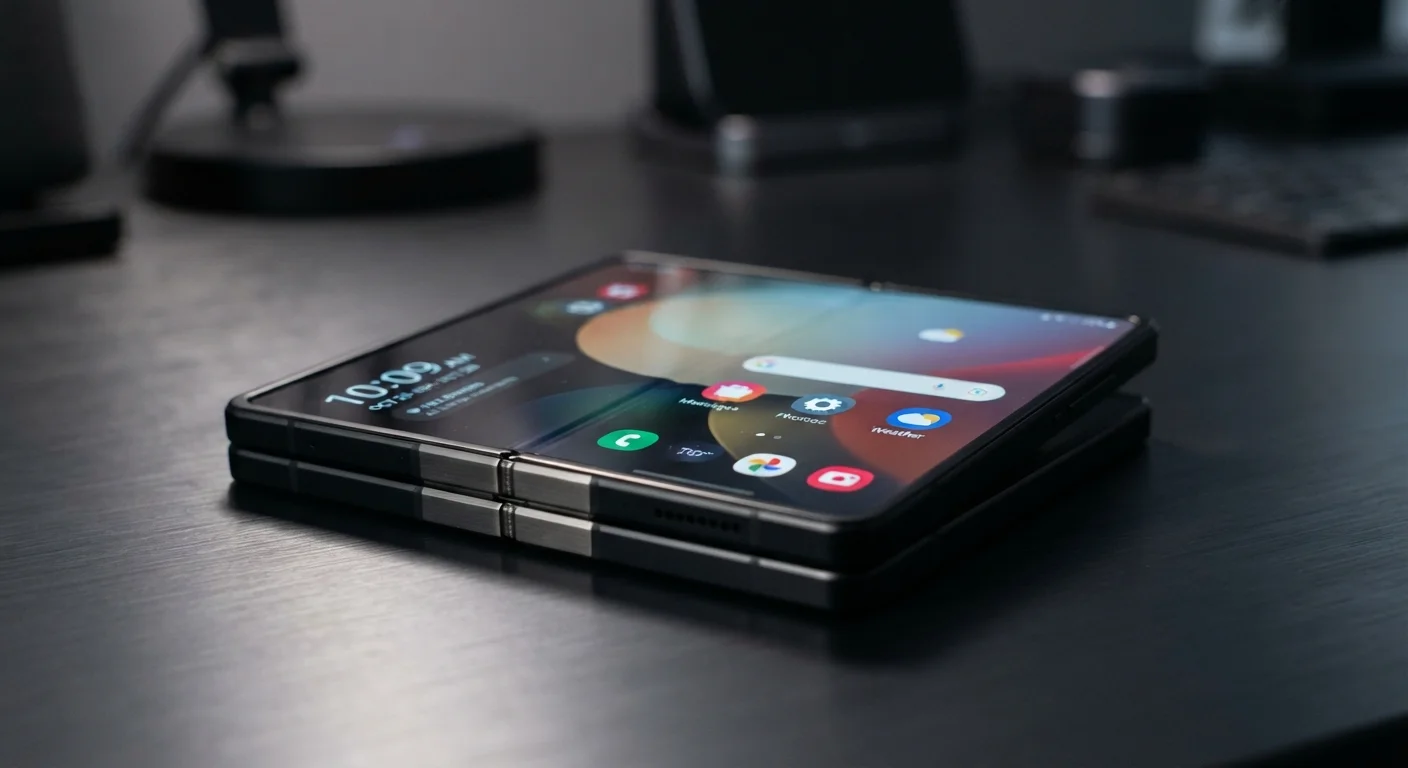
Photo credit: GadgetLite.net | All Things Tech
In this article
Foldable screens make for striking launch videos, but the compromises in durability, thickness, and price are worth understanding first.
Key Takeaways
- Foldable phones offer a larger usable screen in a pocket-sized form, but that flexibility costs more and adds fragility.
- The hinge mechanism and ultra-thin glass are the most common failure points in foldable devices.
- Most foldables carry a significant price premium over comparable traditional flagship phones.
- The crease on inner displays is visible in certain lighting and is a persistent engineering limitation.
- Foldables suit power users who genuinely need multitasking room — casual users may not benefit.
Tablet-sized screen fits in a jacket pocket
Book-style foldables open to roughly 7–8 inches, giving a usable multitasking surface that closes to smartphone dimensions — a genuinely useful size reduction versus carrying a separate tablet.
Legitimate multitasking on a mobile device
The larger inner display enables true side-by-side app use — running a browser alongside a document editor, for example — in a way that cramped smartphone screens cannot match.
Flip foldables offer improved portability
Clamshell-style foldables fold the display inward and close to roughly half their open height, making them genuinely more pocketable than a tall, flat flagship phone.
Outer cover screens add quick-glance utility
Most book-style foldables include a secondary exterior display that lets users check notifications, reply to messages, and control media without opening the device.
Engineering maturity improving each generation
Hinge durability ratings, display crease depth, and water resistance have improved consistently across hardware generations, reducing — though not eliminating — early reliability concerns.
Significantly higher price than traditional flagships
Most book-style foldables cost considerably more than comparable non-folding flagship phones. The premium reflects complex hinge engineering and lower production volumes, not added camera or processor capability.
Visible crease on the inner display
The fold point leaves a physical crease in the flexible panel that is visible in certain lighting conditions and tangible under the finger. This is an inherent property of the current display technology, not a defect.
Hinge and display are durable but vulnerable
Flexible displays are not as hard as the glass on conventional phones. Sand, grit, and sharp objects can damage the inner screen in ways that standard Gorilla Glass would resist.
Thicker and heavier than standard phones
When folded, book-style foldables are noticeably thicker than a comparable flat phone — the hinge mechanism and dual-panel construction add bulk that some users find uncomfortable in a front pocket.
Camera systems often lag non-folding rivals
At equivalent price points, dedicated non-folding flagships frequently offer larger sensors and more sophisticated camera hardware because the engineering budget isn't split with hinge and display complexity.
Repair costs are substantially higher
Replacing a flexible inner display typically costs significantly more than a conventional screen repair, and the hinge itself is a proprietary component that only manufacturer-authorised service centres can reliably fix.
What Foldable Phones Actually Do Differently
Foldable phones use a flexible OLED display bonded to an ultra-thin polymer or glass substrate, allowing the screen to bend repeatedly without shattering. In practice, this means a phone that fits in your pocket can open to tablet-sized proportions — typically 7 to 8 inches diagonally when unfolded.
There are two main form factors on the market. Book-style foldables open like a small paperback and deliver the most dramatic screen gain. Flip-style foldables fold in half to become more compact when pocketed, while opening to a standard-sized screen — think of them as the opposite trade-off. Both designs use a hinge mechanism that is the single most complex part of the device. See our plain-language tour of modern flagship phone hardware for context on how foldables compare to standard high-end devices.
The Genuine Advantages
The appeal is real, even if the marketing overstates it.
Tablet-sized screen fits in a jacket pocket
Book-style foldables open to roughly 7–8 inches, giving a usable multitasking surface that closes to smartphone dimensions — a genuinely useful size reduction versus carrying a separate tablet.
Legitimate multitasking on a mobile device
The larger inner display enables true side-by-side app use — running a browser alongside a document editor, for example — in a way that cramped smartphone screens cannot match.
Flip foldables offer improved portability
Clamshell-style foldables fold the display inward and close to roughly half their open height, making them genuinely more pocketable than a tall, flat flagship phone.
Outer cover screens add quick-glance utility
Most book-style foldables include a secondary exterior display that lets users check notifications, reply to messages, and control media without opening the device.
Engineering maturity improving each generation
Hinge durability ratings, display crease depth, and water resistance have improved consistently across hardware generations, reducing — though not eliminating — early reliability concerns.
For anyone who regularly juggles email, documents, and video calls on a small screen, the expanded display is a meaningful productivity upgrade rather than a novelty. Developers have also broadly improved multitasking interfaces to take advantage of the larger canvas, splitting apps side-by-side in ways that feel natural on a larger panel.
The Compromises Worth Knowing
No engineering breakthrough comes without costs, and foldables carry several that are worth examining honestly before spending the money.
Significantly higher price than traditional flagships
Most book-style foldables cost considerably more than comparable non-folding flagship phones. The premium reflects complex hinge engineering and lower production volumes, not added camera or processor capability.
Visible crease on the inner display
The fold point leaves a physical crease in the flexible panel that is visible in certain lighting conditions and tangible under the finger. This is an inherent property of the current display technology, not a defect.
Hinge and display are durable but vulnerable
Flexible displays are not as hard as the glass on conventional phones. Sand, grit, and sharp objects can damage the inner screen in ways that standard Gorilla Glass would resist.
Thicker and heavier than standard phones
When folded, book-style foldables are noticeably thicker than a comparable flat phone — the hinge mechanism and dual-panel construction add bulk that some users find uncomfortable in a front pocket.
Camera systems often lag non-folding rivals
At equivalent price points, dedicated non-folding flagships frequently offer larger sensors and more sophisticated camera hardware because the engineering budget isn't split with hinge and display complexity.
Repair costs are substantially higher
Replacing a flexible inner display typically costs significantly more than a conventional screen repair, and the hinge itself is a proprietary component that only manufacturer-authorised service centres can reliably fix.
$1,500–$1,800+
Typical US retail price for book-style foldables
Most book-style foldable phones from major manufacturers have launched in this price band, placing them well above conventional flagship pricing.
200,000+
Rated fold cycles on current hinge designs
Several manufacturers publicly rate their hinge mechanisms for over 200,000 open-close cycles, equivalent to roughly 100 folds per day for five years — though real-world durability depends heavily on usage conditions.
Battery capacity is often constrained by the need to fit cells around the hinge and dual-body architecture. Cameras are sometimes deprioritised relative to non-folding flagships at the same price point — manufacturers are fitting more engineering into the hinge and display than into the sensor stack. For a broader look at what spec sheets obscure, see what spec numbers actually mean for daily use.
How Foldables Fit Into the Wider Phone Market
Foldables occupy the top tier of the smartphone market, priced well above most flagship phones. The real differences between phone tiers are often more nuanced than price suggests — but foldables are a genuine exception, where the price premium reflects unique components and manufacturing complexity rather than marketing positioning.
Water Resistance Is Limited on Most Foldables
Many current foldable phones carry an IPX8 rating for water resistance, but the hinge opening means the protection is less comprehensive than on sealed flat phones with the same rating. Dust resistance ratings (the first digit in an IP rating) are often lower or absent on foldables. Check the specific rating of any device you're considering rather than assuming full waterproofing.
The parallel to thin-and-light laptops is instructive: both categories trade raw capability or robustness for a specific physical form. Thin-and-light laptops face similar engineering compromises for users who want portability over everything else. In both cases, knowing what you're giving up matters as much as knowing what you're gaining.
Finally, because foldables encourage more app usage and data-intensive multitasking, it's worth reviewing how expanded app use affects your data exposure. More screen often means more apps running simultaneously — and more data being exchanged in the background.

Author
Releases Editorial Team
Releases Editorial Team is the collective byline for our editorial team and contributor network. Articles published under this byline or an editorial pen name are researched, written, and reviewed according to our editorial standards for clarity, consistency, and independence before publication.
View all articles →