
Wearable Battery Life: What the Numbers on the Box Don't Tell You
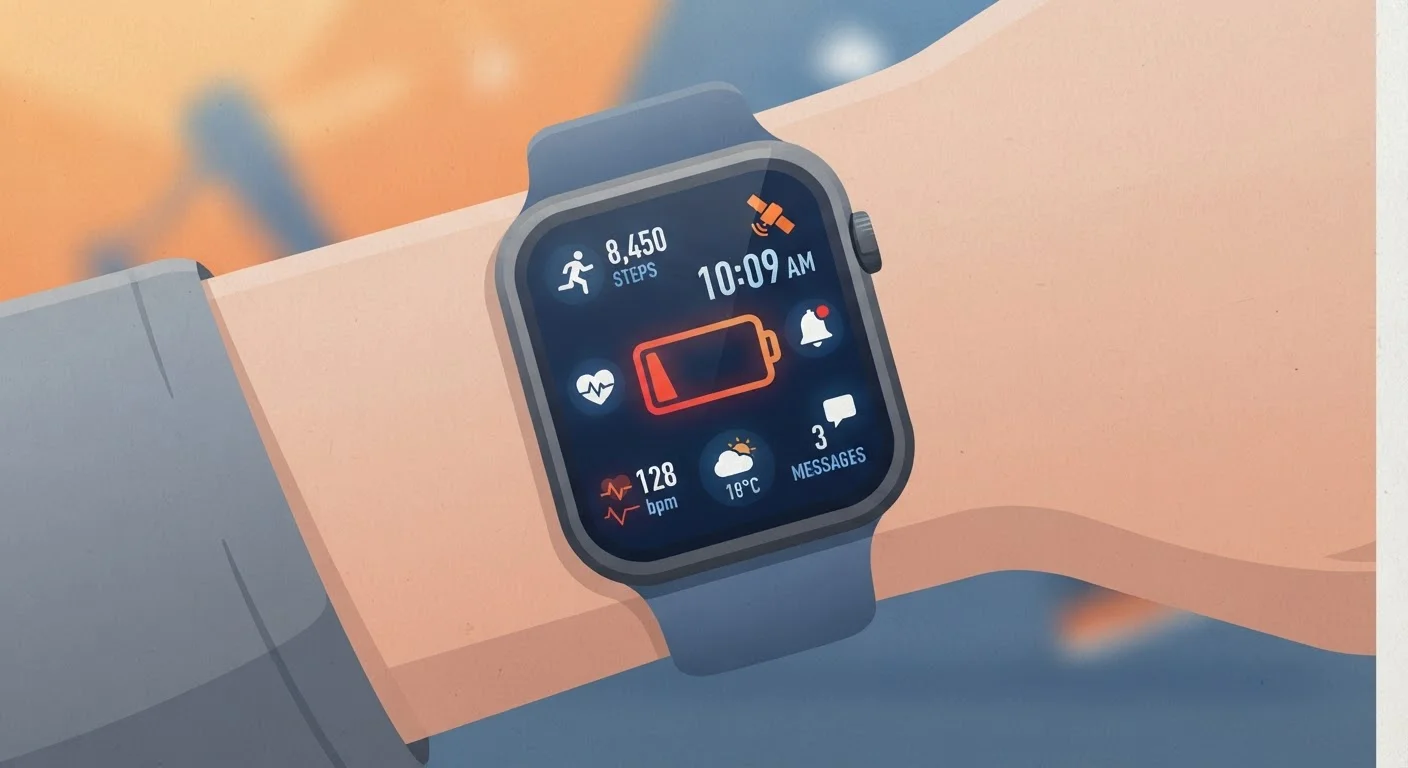
Photo credit: GadgetLite.net | All Things Tech
In this article
Quoted battery figures are measured in ideal conditions. Here's how real-world usage—always-on displays, GPS, notifications—shrinks those numbers.
Key Takeaways
- Advertised battery life is measured under ideal, low-activity conditions — not typical daily use.
- Always-on displays, continuous GPS, and heart-rate monitoring can cut rated battery life by 30–60%.
- Notification volume and cellular connectivity on LTE-capable wearables are major, often overlooked drains.
- A wearable rated for 7 days may realistically last 2–4 days depending on how you use it.
- Understanding which features you actually need helps you set realistic expectations before buying.
How Manufacturers Measure Battery Life
When a wearable brand quotes "up to 7 days" on the packaging, that number was produced in a controlled environment designed to show the device at its most efficient. Testing typically involves a fixed number of daily interactions — often a handful of notification checks, no continuous GPS, heart-rate monitoring set to periodic rather than continuous, and the display set to activate only on wrist raise. Cellular radio, if present, may be disabled entirely.
This isn't necessarily deceptive — manufacturers need a consistent benchmark to compare across product generations. But it does mean the number reflects a narrow scenario that most users will never replicate in daily life. The same gap exists with laptops, and for similar reasons: controlled tests optimize for longevity, not realism.
No Universal Testing Standard Exists
Unlike some electronics categories, there is no single regulatory or industry body that mandates how wearable manufacturers must measure and report battery life. Each brand uses its own methodology, which makes direct comparisons between, say, a 5-day claim from one brand and a 5-day claim from another essentially unreliable without independent verification.
The Features That Eat Your Battery
Several specific features have an outsized effect on how quickly your wearable's battery depletes. Knowing which ones matter most helps you calibrate expectations — or decide which features you can live without.
- Always-on display (AOD): Keeping the screen illuminated at all times is the single most common culprit behind premature battery death. It can reduce the rated life by 20–40%, depending on display technology.
- Continuous GPS: A device rated for a week in standard mode may survive only 10–15 hours with GPS running non-stop. This matters enormously for runners and cyclists who track long workouts.
- Continuous heart-rate monitoring: Polling the optical sensor every second rather than every few minutes adds up. Some health-focused users who want constant HRV or stress tracking find it chops days off their rated endurance.
- LTE cellular: Streaming music or answering calls directly from a smartwatch consumes far more power than Bluetooth-tethered operation. An LTE watch used independently from a phone can drop to under a day of use.
- Notification load: Every vibration alert wakes the processor and display. Heavy app notification users often see measurably shorter battery life than light users on identical hardware.
~40%
Battery life reduction from always-on display
Industry testing across multiple wearable categories consistently shows AOD reduces rated battery life by up to 40% compared to wake-on-raise mode.
10–15 hrs
Typical GPS-on battery life for a 7-day smartwatch
A wearable rated for 7 days in standard mode commonly delivers only 10–15 hours under continuous GPS, a typical real-world finding in independent reviews.
18–24 months
Timeframe for noticeable battery capacity degradation
Lithium-ion cells in wearables typically show measurable capacity loss within 18–24 months of regular daily charging, affecting real-world runtime.
For a deeper look at how to reclaim lost runtime once you own a wearable, see our guide on making your smartwatch battery last longer.
Putting the Numbers in Context
A useful mental model: treat the advertised figure as a best-case ceiling, then subtract for the features you plan to use. A 7-day rating with AOD and continuous heart-rate monitoring enabled realistically becomes 3–4 days. Add regular GPS workouts and you may be charging every other day.
This isn't a flaw unique to any single brand — it's a structural feature of how wearable hardware is tested and marketed. The wearable spec sheet guide explains how to cross-reference other figures, like GPS mode hours, which manufacturers often list separately and which are far more representative for active users.
“Marketing battery life as a single number is inherently misleading because usage patterns vary so widely. A figure without context — which features were active, at what polling rate — is almost meaningless for a real purchase decision.”
— Raymond Soneira, Display and technology testing researcher, DisplayMate Technologies
It's also worth noting that battery capacity degrades over time. A wearable that hits its rated life when new will deliver less after 18–24 months of regular charging cycles — a factor the box figure doesn't account for at all. For a broader look at how this applies across devices, the battery life myths article addresses common misunderstandings about capacity and health.
What to Look for Instead
Rather than anchoring on the headline number, focus on the specific sub-ratings manufacturers often publish in product documentation: GPS-active hours, LTE mode hours, and workout tracking duration. These figures are closer to what you'll experience during the use cases that matter most.
Independent reviewer data is even more useful — look for tests that mirror your typical day: notification-heavy commuting, a daily workout with GPS, and AOD enabled. These real-world tests consistently show figures well below marketing copy, but they give you an honest baseline for comparison.
Ask for the GPS and LTE sub-ratings
Before forming an expectation about how long a wearable will last, look up the manufacturer's separate GPS-active and LTE-mode battery figures, usually buried in the full spec sheet rather than on the product page. These numbers are much closer to real-world active use than the headline figure and make cross-device comparisons far more meaningful.
The principles here mirror what applies to smartphone battery ratings — the phone battery life explainer covers how screen-on time, connectivity, and background activity work against quoted figures on phones, using the same logic in a familiar context.
Bottom line: the number on the box tells you something, just not the most useful thing. Knowing which features you'll actually run — and cross-referencing with real-world testing — gives you a far more reliable picture of what to expect day to day.
Frequently Asked Questions

Author
Releases Editorial Team
Releases Editorial Team is the collective byline for our editorial team and contributor network. Articles published under this byline or an editorial pen name are researched, written, and reviewed according to our editorial standards for clarity, consistency, and independence before publication.
View all articles →