
Common Glossary of Smartphone Terms Every Buyer Encounters
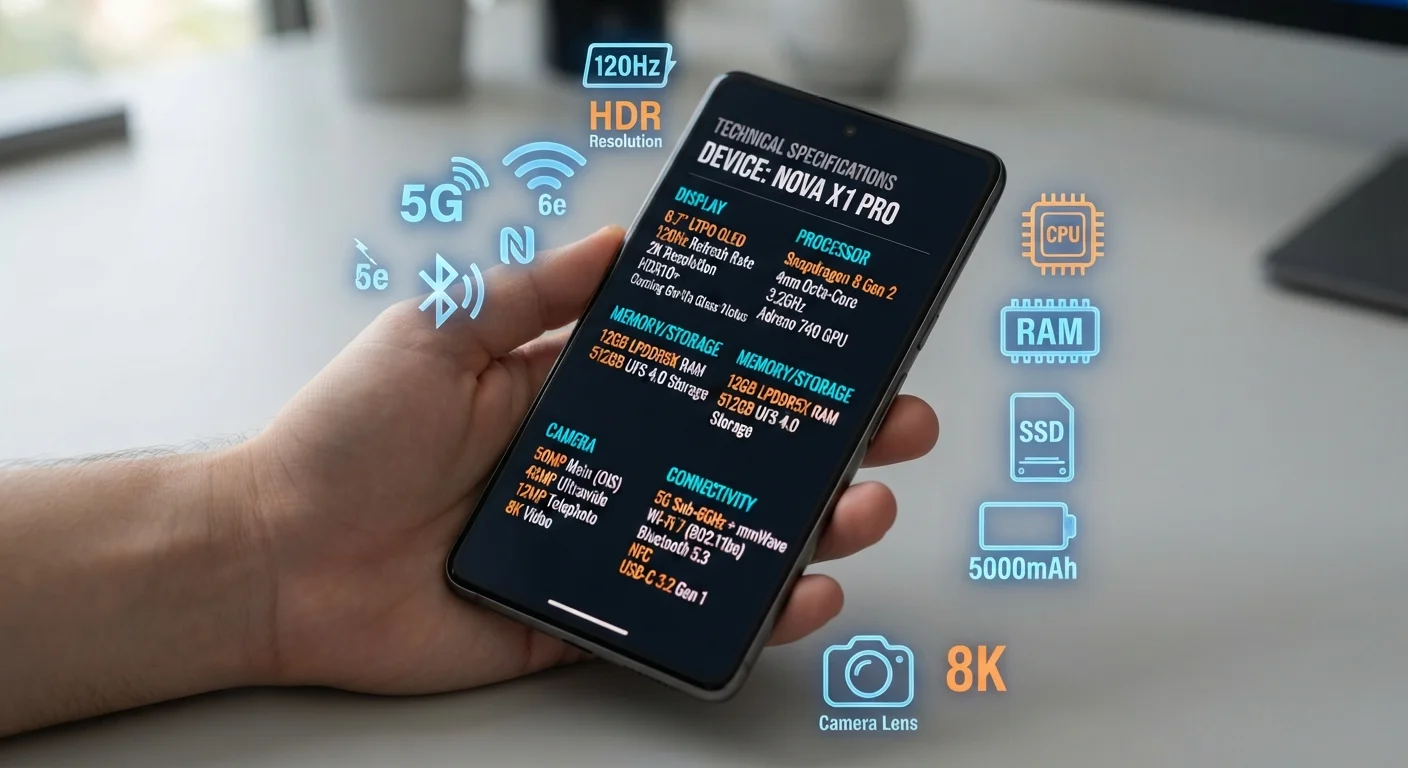
Photo credit: GadgetLite.net | All Things Tech
In this article
SoC, IP68, eSIM, HDR10+ — a plain-English reference for the technical shorthand that appears on every phone spec sheet.
Why Spec Sheet Jargon Matters
Every smartphone listing — whether on a carrier website, retailer page, or the box itself — is dense with abbreviations and technical shorthand. SoC, IP68, HDR10+, UFS, OIS: these aren't marketing flair, they're actual functional specs that affect how a phone performs in your hands. Understanding them helps you compare devices on real terms rather than guessing which number is bigger.
This glossary covers the terms you're most likely to encounter. For a broader look at electronics terminology, see the Consumer Electronics Glossary, and if you're also shopping for a smartwatch or fitness tracker, the Wearable Tech Glossary covers the equivalent spec language for those devices.
| Common SoC manufacturers | Qualcomm (Snapdragon), Apple (A-series), MediaTek (Dimensity), Samsung (Exynos) |
| Standard IP rating for flagship phones | IP68 (dust-tight, water-resistant up to specified depth) |
| Typical flagship refresh rates | 120Hz (standard flagship); some reach 144Hz or use adaptive rates |
| Common RAM range (mid-to-flagship) | 6GB–16GB |
| Typical flagship battery capacity | 4,000–5,000 mAh |
| NFC range | Up to ~4 cm (roughly 1.5 inches) |
The Full Glossary
Use the definitions below as a lookup reference whenever a term stops you mid-scroll. They're organized to cover the four main areas of a phone spec sheet: processing, display, camera, and connectivity.
For a deeper walk-through of how these features work together in practice, see Smartphones for Everyday Users. And if you're researching what's printed on actual packaging, Everything You're Looking at on a Smartphone Box — Decoded is a useful companion.
IP Ratings Apply to Fresh Water Only
Most IP68-certified phones are tested in fresh water, not saltwater, chlorinated pools, or other liquids. Manufacturers typically do not cover liquid damage under warranty even on water-resistant devices, so IP ratings describe lab-test conditions rather than guarantees for real-world accidents.
Specs Don't Tell the Whole Story
A higher number — more megapixels, more RAM, a bigger battery — doesn't automatically mean a better experience. Software optimization, thermal management, and display calibration all affect how a phone feels to use daily. Specs are a starting point, not a verdict.

Author
Gadgets Editorial Team
Gadgets Editorial Team is the collective byline for our editorial team and contributor network. Articles published under this byline or an editorial pen name are researched, written, and reviewed according to our editorial standards for clarity, consistency, and independence before publication.
View all articles →