
Why Your Fitness Tracker's Step Count Probably Isn't Right
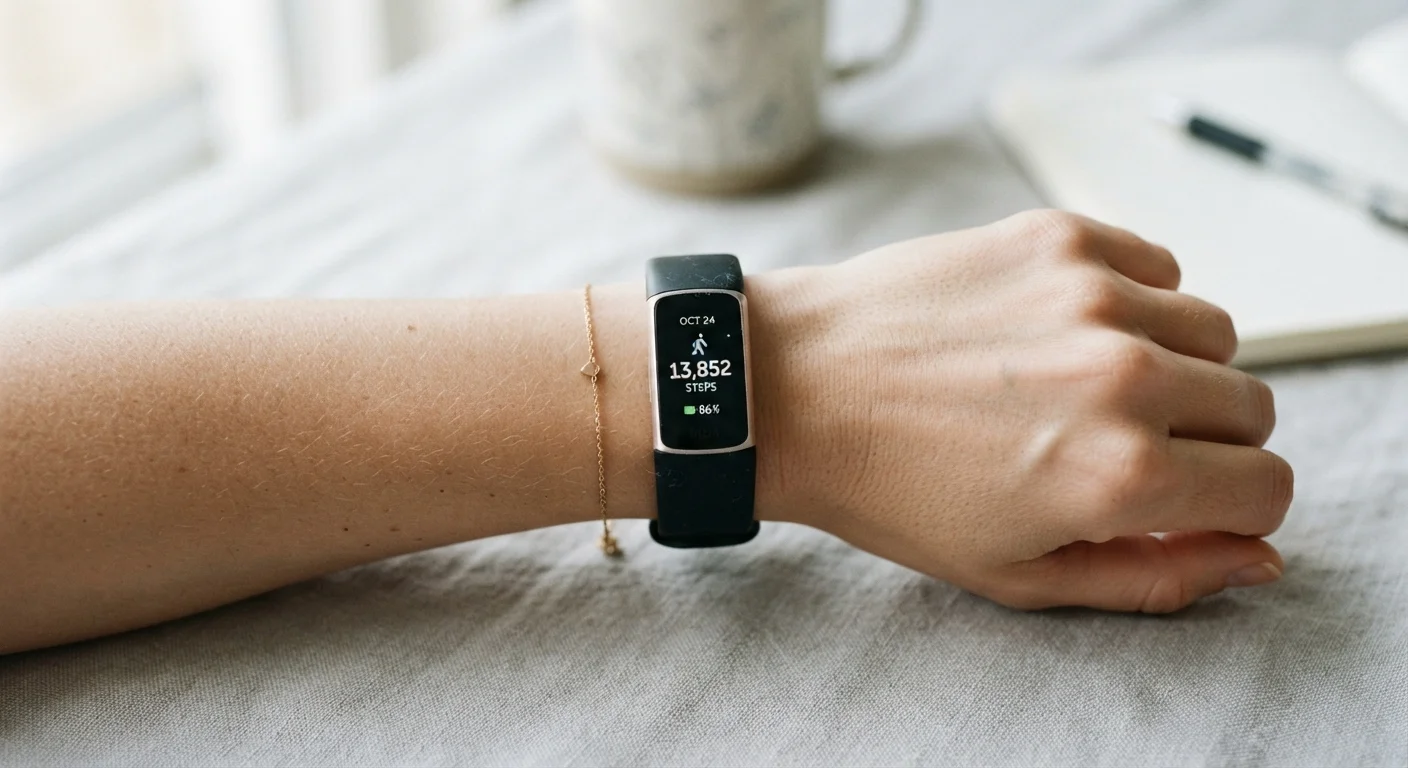
Photo credit: GadgetLite.net | All Things Tech
In this article
Step counters in wearables can drift surprisingly far from reality. Find out why errors happen and how to interpret your data more sensibly.
Key Takeaways
- Fitness trackers use motion sensors and algorithms to estimate steps, not count them directly.
- Wrist placement, device fit, and activity type all introduce measurable error into step totals.
- Step counts are most useful as relative trend data, not precise daily measurements.
- Calibrating your stride length and wearing the device correctly can meaningfully reduce inaccuracy.
How Fitness Trackers Actually Count Steps
Most people assume their tracker physically detects each footstep. In reality, the device contains an accelerometer — a motion sensor that measures changes in speed and direction across three axes. Software then interprets those motion patterns and decides whether a movement sequence qualifies as a step. The result is a computed estimate, shaped heavily by the algorithm a manufacturer chooses to deploy.
This distinction matters. Algorithm design involves trade-offs: a sensitive threshold catches more genuine steps but also picks up incidental arm movement; a conservative threshold misses fewer false positives but may undercount brisk or irregular gaits. Neither approach is universally correct, which is why accuracy varies meaningfully across devices even when conditions are identical.
Steps Are Estimates, Not Measurements
No consumer fitness tracker directly counts footfalls. Every device converts accelerometer signals into an estimated step total using proprietary algorithms. This means two trackers worn simultaneously by the same person during the same walk can produce noticeably different numbers — neither is necessarily the ground truth.
Common Mistakes That Skew Your Step Data
Understanding where errors creep in gives you a realistic view of what your tracker can and cannot tell you. The mistakes below are widespread — and most are easy to address once you know they exist.
Treating step counts as precise, scientific measurements rather than estimates.
Why it happens: Trackers display exact integers — "8,432 steps" feels authoritative — which leads users to trust the figure far more than its underlying accuracy warrants.
Wearing the tracker too loosely or inconsistently on the wrist.
Why it happens: Users prioritize comfort or forget to reposition the device after showering or sleeping, causing the band to sit lower on the wrist than intended.
Assuming all activities are counted with equal accuracy.
Why it happens: Users apply the same trust to step data whether they've been walking, pushing a shopping cart, or typing at a standing desk — situations that produce very different sensor signals.
Never calibrating the device's stride-length setting.
Why it happens: Most trackers ship with a population-average stride length, and few users ever visit the companion app's settings to personalize it.
Comparing step counts across different devices and apps as if they use the same methodology.
Why it happens: Syncing data from a tracker into a third-party health platform, then comparing it to a friend's readings from a different brand, implies a common standard that does not exist.
±10–20%
Typical wrist-based step count error range
Independent validation studies comparing consumer wrist trackers to research-grade pedometers have consistently found step count errors in this range across various walking speeds and conditions.
1 in 3
Users who calibrate stride length
Surveys of fitness tracker owners suggest a minority of users ever adjust the default stride-length setting in their companion app, leaving device-estimated distance and steps on factory defaults.
Using Your Step Data More Sensibly
The goal isn't to distrust your tracker entirely — it's to use it appropriately. Step counts shine as motivation tools and trend indicators. A consistent upward trend over several weeks is meaningful evidence of increased activity, even if any individual day's total carries a margin of error.
If you're deciding between a basic tracker and a feature-rich smartwatch, understanding these accuracy limitations is part of that choice. Comparing trackers and smartwatches on factors like sensor quality and software sophistication can be as important as price or design.
For users committed to long-term tracking, the honest trade-offs of extended wearable use — accuracy limitations included — are worth weighing before building daily habits around a single number. Use the data to inform your movement patterns, not to define your health precisely.

Author
Electronics Editorial Team
Electronics Editorial Team is the collective byline for our editorial team and contributor network. Articles published under this byline or an editorial pen name are researched, written, and reviewed according to our editorial standards for clarity, consistency, and independence before publication.
View all articles →