
Smart Lighting Terms Every New Buyer Encounters
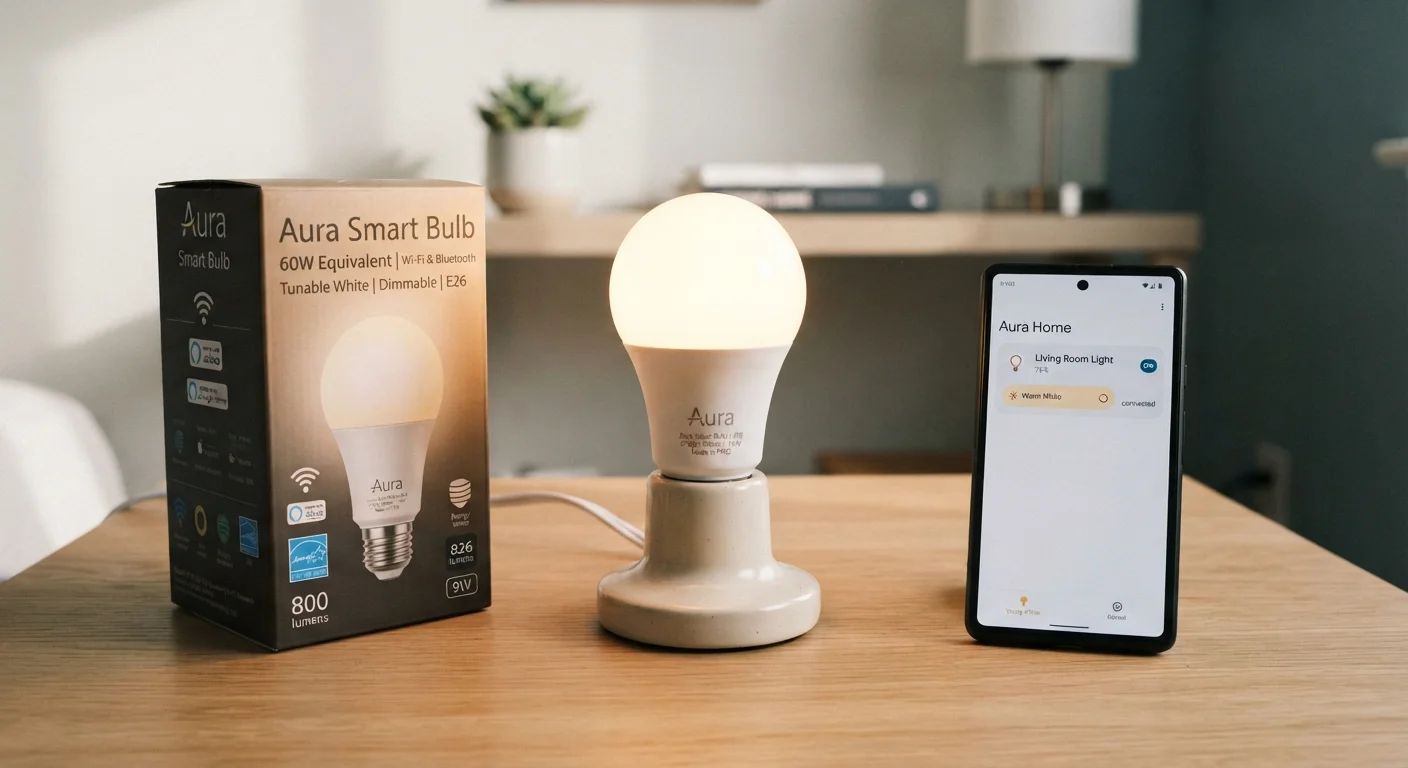
Photo credit: GadgetLite.net | All Things Tech
In this article
Lumens, colour temperature, Kelvin, dimmer compatibility — a quick reference glossary for the lighting terms you'll see on every smart bulb page.
Why Smart Bulb Packaging Looks So Complicated
Walk down any smart lighting aisle — physical or virtual — and the product pages pile on specifications: lumens, Kelvin, CRI, Zigbee, Matter, dimmer compatibility. For anyone new to smart home technology, this vocabulary can make a simple bulb purchase feel overwhelming.
The good news is that each term answers a specific practical question. Once you know what a spec actually measures, you can filter out what matters for your space and ignore what doesn't. This reference covers every major term you're likely to encounter, with plain-language definitions designed for quick lookup rather than deep reading.
If you're completely new to smart lighting and want a broader orientation before diving into specs, our first-timer's introduction to smart lighting is a good starting point. For other home tech terminology, the Home Tech Essentials hub collects guides across the category.
Lumens
A measure of the total amount of visible light a bulb emits. Higher lumens means a brighter bulb. A standard living room might need 1,500–3,000 lumens total, depending on room size.
Kelvin (K)
The unit used to describe colour temperature. Lower numbers (2,700K) produce warm, amber-toned light; higher numbers (5,000K–6,500K) produce cool, daylight-like white light.
Colour Temperature
Describes whether a light appears warm (yellowish), neutral (white), or cool (bluish-white). It is measured in Kelvin and is separate from how bright the bulb is.
CRI (Colour Rendering Index)
A scale from 0 to 100 that rates how accurately a light source shows the true colours of objects compared to natural sunlight. A CRI of 90 or above is considered excellent for home use.
Wattage Equivalent
Smart LED bulbs use far less electricity than older incandescent bulbs but are sold with an equivalent wattage for comparison. A 9W LED labelled '60W equivalent' produces similar brightness to a 60W incandescent.
Dimmer Compatibility
Not all smart bulbs work correctly with all dimmer switches. Incompatible pairings can cause flickering or buzzing. Always verify that a bulb is rated for use with your existing or planned dimmer hardware.
RGBW
Stands for Red, Green, Blue, and White. Smart bulbs with RGBW capability can produce millions of colour combinations as well as clean white light, unlike RGB-only bulbs which often produce a tinted white.
Zigbee / Z-Wave
Low-power wireless protocols used by many smart bulbs to communicate without relying solely on Wi-Fi. They typically require a separate hub device but are known for reliability and low network congestion.
Hub
A central device that connects and coordinates smart home products. Some smart lighting ecosystems require a hub; others connect directly to a home Wi-Fi network or use Bluetooth.
Scene
A saved lighting configuration — including brightness, colour temperature, and which bulbs are active — that can be recalled instantly via an app or voice command.
Tunable White
A feature that allows a bulb's colour temperature to be adjusted across a range (for example, 2,700K to 6,500K) without changing colour. Useful for matching light to the time of day.
Matter
An open smart home connectivity standard backed by major technology companies. Smart bulbs with Matter support can work across different ecosystems — such as Amazon Alexa, Google Home, and Apple HomeKit — without needing separate apps.
Specs That Affect How the Light Actually Looks
The most common point of confusion for new buyers is conflating brightness with colour. These are two entirely separate qualities, and smart bulbs let you control both independently — which is part of what makes them more versatile than traditional bulbs.
| Typical living room brightness | 1,500–3,000 lumens (General lighting design guidance) |
| Warm white colour temperature | 2,700K–3,000K (Industry standard lighting classification) |
| Daylight colour temperature | 5,000K–6,500K (Industry standard lighting classification) |
| Good CRI threshold for home use | 90+ (Lighting industry recommendation) |
| Common smart bulb protocols | Wi-Fi, Zigbee, Z-Wave, Bluetooth, Matter |
Lumens tell you how much light a bulb produces. More lumens means a brighter room. Kelvin tells you what colour that light appears — warmer and more amber at lower values, cooler and more blue-white at higher values. A bulb can be very bright (high lumens) but still cast a warm, cosy glow (low Kelvin).
CRI adds a third layer: how faithfully the light renders the actual colours of objects in the room. For tasks like reading or cooking where colour accuracy matters, a higher CRI is worth prioritising.
Lumens vs. Watts: Why Both Appear on Packaging
Older shoppers may be more familiar with watts as a measure of brightness — but watts actually measure energy consumption, not light output. Lumens is the correct measure of brightness. Packaging often shows both figures to help buyers make a direct comparison with the incandescent bulbs they are replacing.
Matter Is Still Rolling Out
While Matter aims to simplify cross-ecosystem compatibility, not all existing smart bulbs support it, and device support varies by platform. If cross-ecosystem flexibility is important to you, verify Matter certification on the product spec sheet rather than assuming newer bulbs include it.
Many smart bulbs also offer tunable white — the ability to shift colour temperature up and down throughout the day — and RGBW for full colour control. See the glossary above for definitions of both.
Connectivity, Compatibility, and Ecosystem Terms
Smart bulbs communicate with your phone, smart speaker, or home hub using wireless protocols. Understanding which protocol a bulb uses helps you predict how it will fit into your existing setup — and whether you'll need additional hardware.
Wi-Fi bulbs connect directly to your home network with no extra equipment. They're easy to start with, but a large number of Wi-Fi devices can slow down a home network. Zigbee and Z-Wave bulbs use a separate, dedicated wireless network and require a compatible hub, but tend to be more reliable in larger installations.
Matter is an emerging standard designed to make smart devices work across different brand ecosystems — reducing lock-in. It's worth checking for on newer hardware if cross-platform flexibility is a priority for you. For a wider look at home network terminology that underpins all of these protocols, see our home networking glossary.
Dimmer compatibility is a practical concern that catches many first-time buyers off guard. Even if a bulb is marketed as dimmable, it may not work with the specific dimmer switch already installed in your home. Check the bulb's compatibility list before purchasing, or plan to replace the switch alongside the bulb.
The same principle of knowing your terminology before buying applies across the smart home. If you're also considering a smart thermostat upgrade, our smart thermostat glossary covers that vocabulary in the same format. And for a broader electronics reference, The Consumer Electronics Glossary covers 50 terms across all categories.

Author
Electronics Editorial Team
Electronics Editorial Team is the collective byline for our editorial team and contributor network. Articles published under this byline or an editorial pen name are researched, written, and reviewed according to our editorial standards for clarity, consistency, and independence before publication.
View all articles →