
Home Tech That Actually Saves Energy (and What the Research Says)
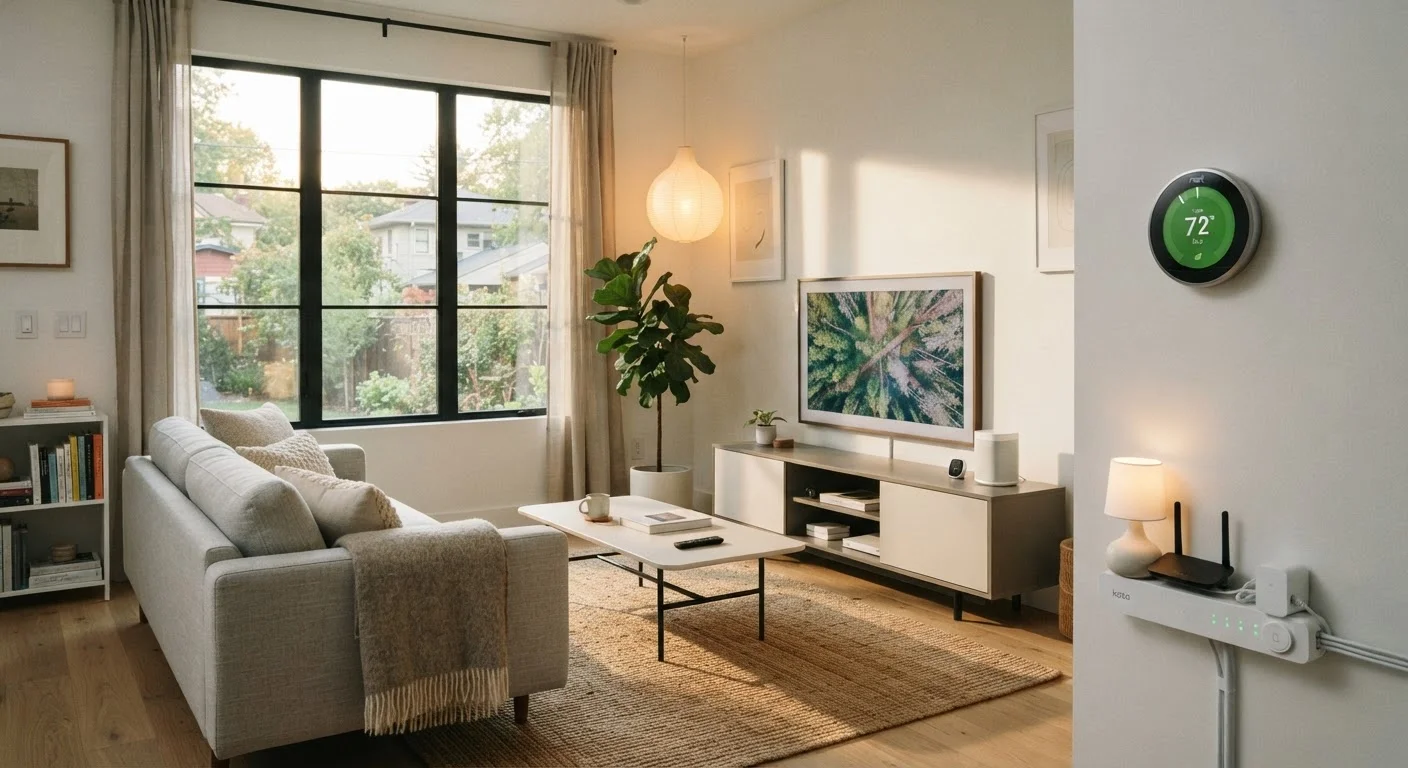
Photo credit: GadgetLite.net | All Things Tech
In this article
Smart thermostats, occupancy sensors, and smart power strips are marketed as energy savers. Here's what evidence suggests about their real impact.
Key Takeaways
- Smart thermostats show the strongest research-backed evidence for reducing household heating and cooling energy use.
- Occupancy sensors and smart lighting controls can meaningfully cut electricity waste in rooms that are frequently left lit.
- Standby power (sometimes called 'vampire draw') is real, and smart power strips address it — but savings vary by household.
- Energy monitoring devices don't save energy on their own; they only help if you act on what they reveal.
- Stacking multiple modest-impact devices often produces more noticeable savings than relying on any single solution.
Separating Hype From Evidence
Walk into any electronics retailer and you'll find shelves of devices promising to slash your energy bill. The marketing language is optimistic, sometimes dramatically so. But energy savings claims in consumer tech are rarely straightforward — results depend heavily on your existing habits, your home's layout, your climate, and how you actually use the device.
What follows isn't a shopping guide. It's a look at the categories of home technology where credible research and real-world usage data suggest a meaningful impact on household energy consumption — along with honest notes on where the evidence is thinner. If you're curious how these devices fit into a broader smart home setup, our explainer on smart home devices is a useful starting point.
Savings Vary Significantly by Household
Published figures for energy savings from smart home devices are typically averages drawn from studies across many homes and climates. Your actual results may be higher or lower depending on your home's insulation, your local utility rates, your climate zone, and how you configure each device. Treat any quoted percentage as directional rather than a personal guarantee.
Home Tech With Real Energy Impact
Smart Thermostats
Of all the energy-saving home tech categories, smart thermostats have the most robust body of supporting research. Studies published by utility companies and independent energy researchers have consistently found that learning thermostats and programmable smart models can reduce heating and cooling energy use — which typically accounts for the largest share of a home's energy consumption.
The mechanism is straightforward: these devices reduce conditioning when no one is home and restore comfort before occupants return. The key variable is how much your current manual thermostat habits differ from an optimized schedule. Households that already dial back the heat manually may see smaller gains than those who have historically left settings unchanged around the clock.
Heating and cooling represent the largest slice of home energy use — smart thermostats target it directly.
Occupancy Sensors and Smart Lighting Controls
Lights left on in empty rooms are a well-documented source of unnecessary electricity use. Occupancy sensors — whether standalone or built into smart light switches — automatically turn off lighting when a room has been unoccupied for a set period. In high-traffic areas like hallways, bathrooms, and home offices, this can eliminate a significant portion of wasted lighting hours.
The impact scales with household size and habits. Families with children, or homes where lights are frequently left on overnight, tend to see more noticeable reductions than households that are already diligent about switching lights off manually. Pairing sensors with LED bulbs amplifies efficiency further, since LEDs use a fraction of the wattage of older incandescent bulbs.
Occupancy sensors are most effective in homes where lights are habitually left on in empty rooms.
Smart Power Strips
Standby power — the electricity drawn by devices that are plugged in but not actively in use — is estimated by the U.S. Department of Energy to account for roughly 5 to 10 percent of residential electricity use in a typical American home. Smart power strips address this by cutting power to peripheral outlets when a primary device (such as a TV or desktop computer) is switched off.
The savings per strip are modest in isolation, but they add up across multiple entertainment centers or workstation setups. The critical factor is placement: a smart strip protecting a home theater with several always-on peripherals will outperform one used with devices that draw minimal standby power. Smart plugs serve a related function for individual appliances and are worth understanding alongside power strips.
Standby power from idle electronics is a real drain — smart strips cut it automatically without changing your routine.
Home Energy Monitors
Whole-home energy monitors — devices that clip onto your electrical panel and track real-time consumption — don't save energy directly. What they do is give you visibility into where power is actually going, which research in behavioral economics suggests can meaningfully influence how people use electricity.
Studies on real-time energy feedback have found that households with access to granular usage data tend to reduce consumption compared to those without it, though the magnitude varies. The effect is strongest when the data is easy to interpret and actionable. If you install a monitor and never check the app, the hardware accomplishes nothing. Used consistently, however, it can surface surprising findings — such as an old refrigerator or pool pump accounting for an outsized share of your bill.
Visibility changes behavior — energy monitors only save power if you actually use the data they surface.
Smart Water Heater Controllers
Water heating typically ranks second only to space conditioning in household energy consumption. Smart controllers for traditional tank water heaters allow scheduling — so the heater works harder during off-peak hours and reduces activity when hot water demand is low, such as overnight or during regular working hours.
Some utility companies have actively promoted these devices through demand-response programs, offering rebates to customers who allow the utility to adjust water heater temperatures during grid stress events. For households with predictable hot water schedules, the potential for savings is real, though it requires accurate scheduling setup to realize. As with thermostats, the gap between your current habits and optimized operation determines how much room there is to improve.
Water heating is a major energy cost — smart scheduling can shift usage to lower-demand periods efficiently.
Start With the Biggest Energy Users
Before purchasing any new device, consider which systems in your home consume the most power. Heating, cooling, and water heating almost always dwarf lighting and electronics in total energy draw. Prioritizing smart controls for those systems first tends to produce more meaningful savings than starting with smaller peripherals. Your utility provider's website often has free tools to help you estimate where your home's energy goes.
Getting the Most From What You Already Have
The devices listed above work best when they're configured thoughtfully rather than installed and forgotten. A smart thermostat with default settings may save very little; one programmed around your actual schedule can perform substantially better. Similarly, energy monitors deliver value only when you review the data and adjust behavior accordingly.
It's also worth remembering that no single device transforms a home's energy profile overnight. The households that see the most meaningful reductions typically combine several modest-impact changes — smarter heating controls, reduced standby loads, and better lighting habits — rather than betting everything on one product. For a room-by-room look at where specific devices tend to pay off most, see our room-by-room home tech guide. And if you're weighing whether smart plugs are worth it for your specific situation, that's a good place to dig deeper before buying.

Author
Electronics Editorial Team
Electronics Editorial Team is the collective byline for our editorial team and contributor network. Articles published under this byline or an editorial pen name are researched, written, and reviewed according to our editorial standards for clarity, consistency, and independence before publication.
View all articles →