
Spear Phishing vs Bulk Phishing: Targeted Attacks and Mass Attempts Compared
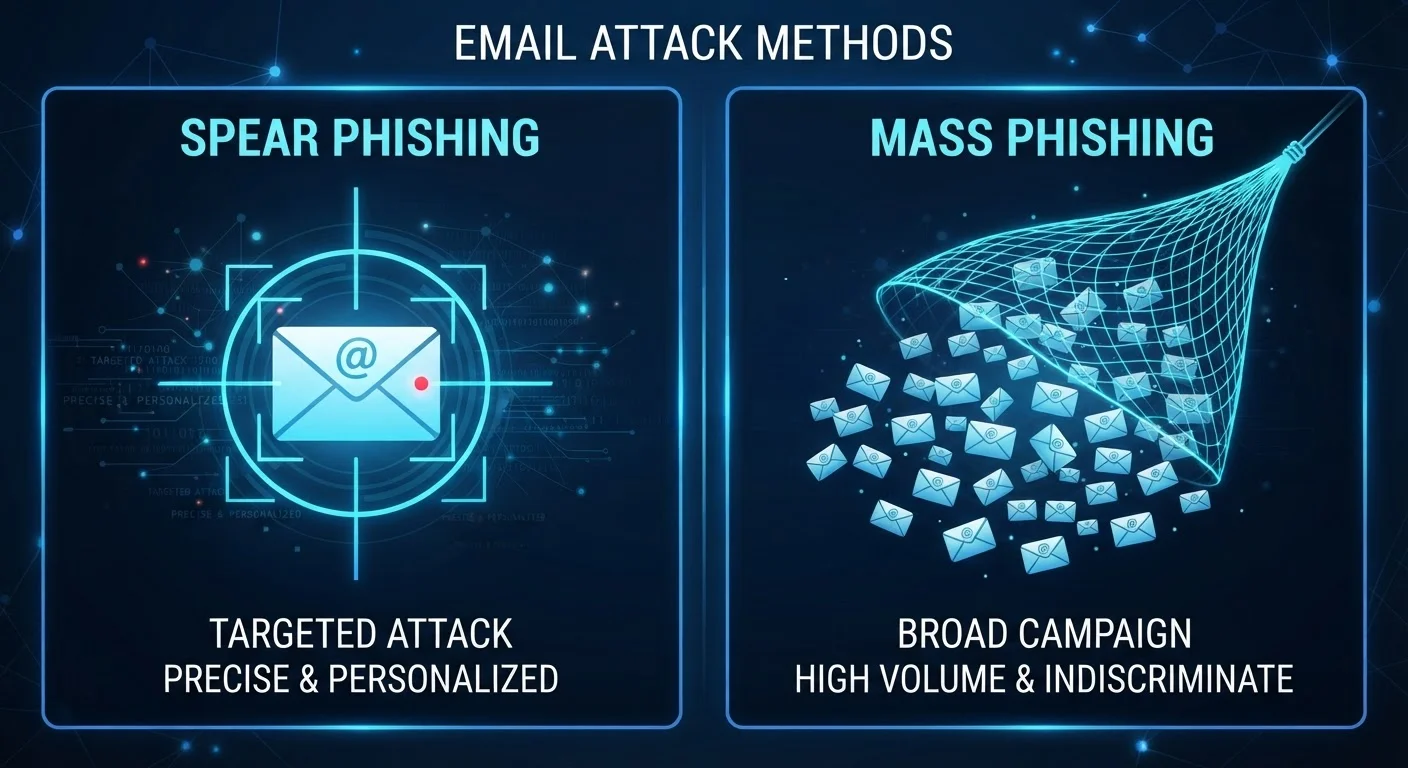
Photo credit: GadgetLite.net | All Things Tech
In this article
Not all phishing attacks work the same way. Understand the difference between highly targeted fraud and broad-net campaigns.
Key Takeaways
- Spear phishing uses personal details to craft convincing, individualized attacks against specific targets.
- Bulk phishing casts a wide net with generic messages, relying on volume to find victims.
- Spear phishing is harder to detect because it often looks like legitimate communication from someone you know.
- Both attack types share common red flags: urgency, unusual requests, and suspicious links.
- Simple daily habits — like verifying sender identity — protect against both forms of phishing.
What Sets These Two Attacks Apart
Phishing is a form of digital deception where attackers impersonate trusted sources to steal credentials, financial information, or access to accounts. But not all phishing works the same way. The two most common forms — bulk phishing and spear phishing — differ dramatically in scope, effort, and danger.
Bulk phishing (sometimes called mass phishing) works like junk mail: attackers send identical or near-identical messages to thousands or millions of addresses at once. The goal is simple math — if even a fraction of recipients click, the campaign succeeds. These messages typically impersonate widely recognized institutions like banks, delivery companies, or popular tech platforms.
Spear phishing is the opposite of a wide net. Attackers research a specific target — gathering details from social media, company websites, data breaches, or public records — then craft a message that feels personally relevant. The email might reference your employer by name, mention a recent project, or appear to come from a colleague. That personalization is what makes it so dangerous.
See our overview of what happens when you click a phishing link to understand what attackers actually do once they've hooked a victim.
| Bulk Phishing | Spear Phishing | |
|---|---|---|
| Target scope | Thousands to millions of random recipients | One specific individual or small group |
| Message personalization | Generic, one-size-fits-all content | Tailored with personal or professional details |
| Attacker effort required | Low — automated, template-driven | High — requires prior research on the target |
| Success rate per message | Low — relies on sheer volume | High — personalization boosts credibility |
| Ease of detection | Easier — generic red flags are visible | Harder — closely mimics legitimate communication |
| Common delivery method | Email, SMS, social media broadly | Email, business messaging platforms |
| Typical targets | General public, any email holder | Executives, finance staff, public figures |
Red Flags Specific to Each Attack Type
Recognizing bulk phishing is often more straightforward. Look for:
- Generic greetings like "Dear Customer" instead of your actual name
- Mismatched sender addresses — the display name says "PayPal" but the email domain is something unrelated
- Urgent, threatening language demanding you act within 24 hours or face account suspension
- Suspicious links that don't match the company's real domain when you hover over them
Spear phishing red flags are subtler and easier to miss:
- An email that correctly names your employer, manager, or a recent event — but arrives unexpectedly
- A request from a known contact that feels slightly off in tone or asks for something unusual
- Messages that reference personal details you didn't directly share with the sender
- Requests to verify credentials, transfer funds, or bypass normal approval processes
Always Verify Through a Separate Channel
If an email — even from a known contact — asks you to share credentials, transfer money, or bypass a normal process, don't reply to that email. Call the person directly using a number you already have on file, or reach out through a different platform. This one habit stops both spear phishing and bulk phishing cold.
When in doubt about any message, contact the supposed sender through a separate, verified channel — a phone number you already know, not one listed in the suspicious email.
Who Is Most at Risk and Why
Bulk phishing targets everyone indiscriminately. If you have an email address, you are a potential target. Older adults, people unfamiliar with how phishing works, and anyone distracted or time-pressed are statistically more likely to fall for mass campaigns.
Spear phishing tends to focus on higher-value targets: corporate executives, finance employees who control wire transfers, IT administrators with system access, and anyone with a visible public profile. Researchers, journalists, activists, and government workers are also frequently targeted. However, ordinary individuals can be spear-phished too — particularly in romance scams or fraud schemes where attackers invest time building fake trust before striking.
~90%
Of data breaches involving phishing
According to Verizon's Data Breach Investigations Report, phishing is consistently implicated in the vast majority of social-engineering-related breaches.
3x
Higher open rate for targeted vs. bulk phishing emails
Security awareness research has consistently found that personalized phishing emails achieve significantly higher engagement than generic mass-sent messages.
The uncomfortable reality is that spear phishing requires more attacker effort but delivers a much higher success rate per message sent. A well-crafted spear phishing email can be nearly indistinguishable from a legitimate one, even to security-aware readers.
For a broader look at how different phishing delivery methods compare, see how SMS phishing differs from email phishing.
Practical Steps to Protect Yourself From Both
The good news is that many of the same behaviors defend against both attack types. Consistency matters more than any single tool or setting.
- Pause before acting. Phishing messages — bulk or targeted — almost always manufacture urgency. Slowing down is one of the most effective defenses available.
- Verify sender identity independently. If an email requests sensitive action, confirm the request via a separate communication channel before complying.
- Enable multi-factor authentication (MFA) on all important accounts. MFA adds a second verification step — such as a code sent to your phone — so that stolen passwords alone aren't enough for attackers to gain access.
- Limit your public digital footprint. The less personal detail available on LinkedIn, social media, and public directories, the harder it is for spear phishers to craft convincing messages.
- Keep software updated. Phishing links often exploit outdated browser or operating system vulnerabilities. Regular updates close these gaps.
Building these habits into your daily routine is the most durable protection available. Our guide on everyday habits that reduce phishing risk walks through each step in detail.

Author
Cyber Security Editorial Team
Cyber Security Editorial Team is the collective byline for our editorial team and contributor network. Articles published under this byline or an editorial pen name are researched, written, and reviewed according to our editorial standards for clarity, consistency, and independence before publication.
View all articles →