
Small Tablet or Large Phone: Making Sense of the Screen Size Overlap
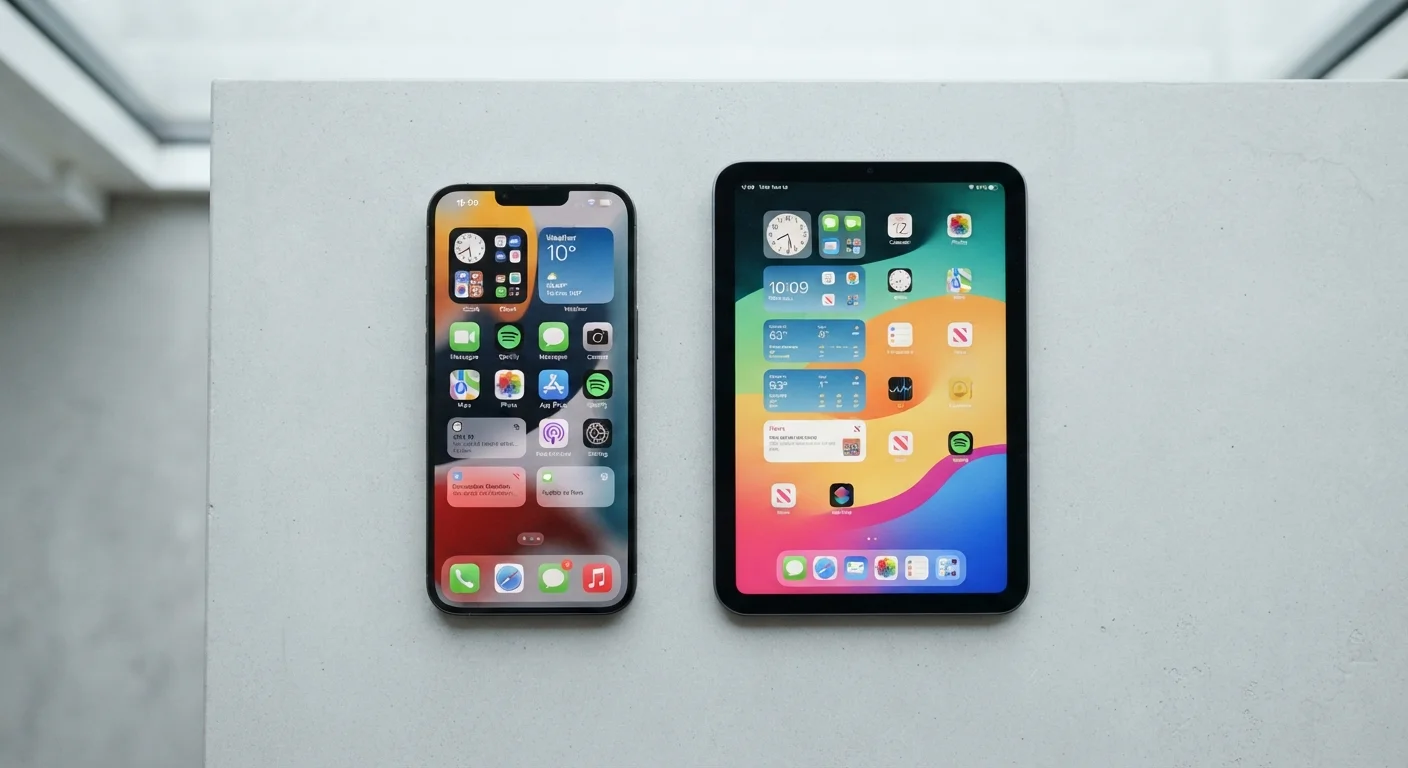
Photo credit: GadgetLite.net | All Things Tech
In this article
As phone screens have grown and tablets have shrunk, the line between them has blurred. Here's how to work out which form factor fits you.
Key Takeaways
- Large phones and small tablets now overlap heavily at the 7-inch screen size mark.
- Portability and connectivity differ: phones fit in pockets and include cellular by default; small tablets often don't.
- Tablets generally offer better reading and media comfort; phones win for single-device convenience.
- Software ecosystems are increasingly similar, but phone apps are better optimized for smaller, taller screens.
- Your daily habits — not screen inches — should drive the decision between the two.
Where the Overlap Actually Starts
For most of the smartphone era, the category boundaries were clear: phones were 4–5 inches, tablets were 9–10. That's no longer true. Flagship phones now routinely ship with 6.7–6.9-inch screens, while a wave of compact tablets — particularly in the 8-inch range — has filled the space from the other direction. The result is a genuine no-man's-land where a consumer shopping at 7 inches could reasonably be looking at either category.
The confusion isn't just about diagonal measurement. Aspect ratio matters too. Phones use tall, narrow proportions (roughly 20:9) optimized for one-handed scrolling. Small tablets use wider ratios (closer to 16:10 or 4:3) that suit reading and video. Two devices with the same listed screen size can feel dramatically different to use because of this shape difference alone.
See our guide to choosing between a smartphone and tablet for a broader look at how daily habits should shape this decision.
| Criterion | Large Smartphone (6.5"–7") | Small Tablet (7"–9") |
|---|---|---|
| Typical screen shape | Tall and narrow (20:9) | Wider ratio (16:10 or 4:3) |
| Cellular connectivity | Included by default | Usually Wi-Fi only; cellular costs extra |
| Pocketable | Yes, in most pockets | No — requires a bag |
| Call and messaging use | Full native support | Limited; often app-dependent |
| App optimization | Nearly universal support | Improving but still inconsistent |
| Reading and video comfort | Adequate for short sessions | Noticeably more comfortable |
| Best suited as | Primary, only device | Secondary or home-use device |
The Practical Differences That Still Separate Them
Despite overlapping dimensions, large phones and small tablets diverge in a few consistent ways that matter in everyday use.
Connectivity and Portability
Phones include cellular radios by default. Most small tablets ship as Wi-Fi-only devices, with cellular as an optional (and more expensive) add-on. If you need a device that's reliably online while you're out and about — on a commute, in a store, traveling — that's a meaningful structural difference, not just a spec-sheet detail.
Pocketability is the other side of the same coin. Even a 6.9-inch phone fits in most trouser pockets. A compact 8-inch tablet does not. Carrying the tablet means carrying a bag, which changes when and where you'll actually use it.
Software and App Optimization
Android and iOS both run on phones and tablets, but apps are still predominantly designed around phone proportions. On a wider tablet screen, some apps letterbox (add margins), display stretched layouts, or behave differently than intended. This gap has narrowed as developers release tablet-optimized builds, but it hasn't closed entirely. Tablets tend to shine with productivity apps, e-readers, and streaming services — categories whose developers have invested in wider-screen layouts.
6.7"
Average flagship phone screen size
Industry tracking data shows the average display size of flagship Android smartphones has grown steadily, with many 2023–2024 models shipping at 6.7 to 6.9 inches.
~40%
Tablet owners who also use a smartphone daily
Consumer research consistently shows the large majority of tablet users also carry a smartphone, treating the tablet as a secondary rather than primary device.
For readers thinking about whether a tablet could replace a laptop for certain tasks, our tablet vs. laptop comparison works through that question in more detail.
Making the Call for Your Situation
The honest answer is that the right choice depends on how many devices you want to carry and what you're primarily using the screen for.
If you want one device that handles calls, navigation, payments, social media, and media — and that disappears into your pocket — a large smartphone is the practical default. The screen is big enough for most tasks even if it's not ideal for every one of them.
If you already have a phone and you're considering a second screen for reading, video, or light productivity use at home or in your bag, a small tablet adds genuine value without much redundancy. The wider canvas is a real comfort upgrade for anything you do for more than 15 minutes at a stretch.
What doesn't make much sense is buying a small tablet to replace a phone entirely. Unless you're in a specific situation where a cellular tablet on a standalone plan makes logistical sense, you'll quickly feel the absence of the phone's integration — especially for authentication apps, mobile payments, and the kind of instant, one-hand access that phones are built around.
Our breakdown of phone price tiers is worth reading if screen size is one factor in a broader device decision that also involves budget.
Foldable Phones Complicate This Further
Large foldable phones — those that unfold to roughly 7.5–8 inches — blur the boundary even more. When folded they function as a phone; unfolded they approach small-tablet territory. They're worth considering if you want both form factors in one device, though they carry a significant price premium and involve trade-offs in thickness and durability. For most users, they're not yet the practical middle ground they're marketed as.

Author
Releases Editorial Team
Releases Editorial Team is the collective byline for our editorial team and contributor network. Articles published under this byline or an editorial pen name are researched, written, and reviewed according to our editorial standards for clarity, consistency, and independence before publication.
View all articles →