
Home Console Gaming: The Real Trade-Offs Nobody Talks About
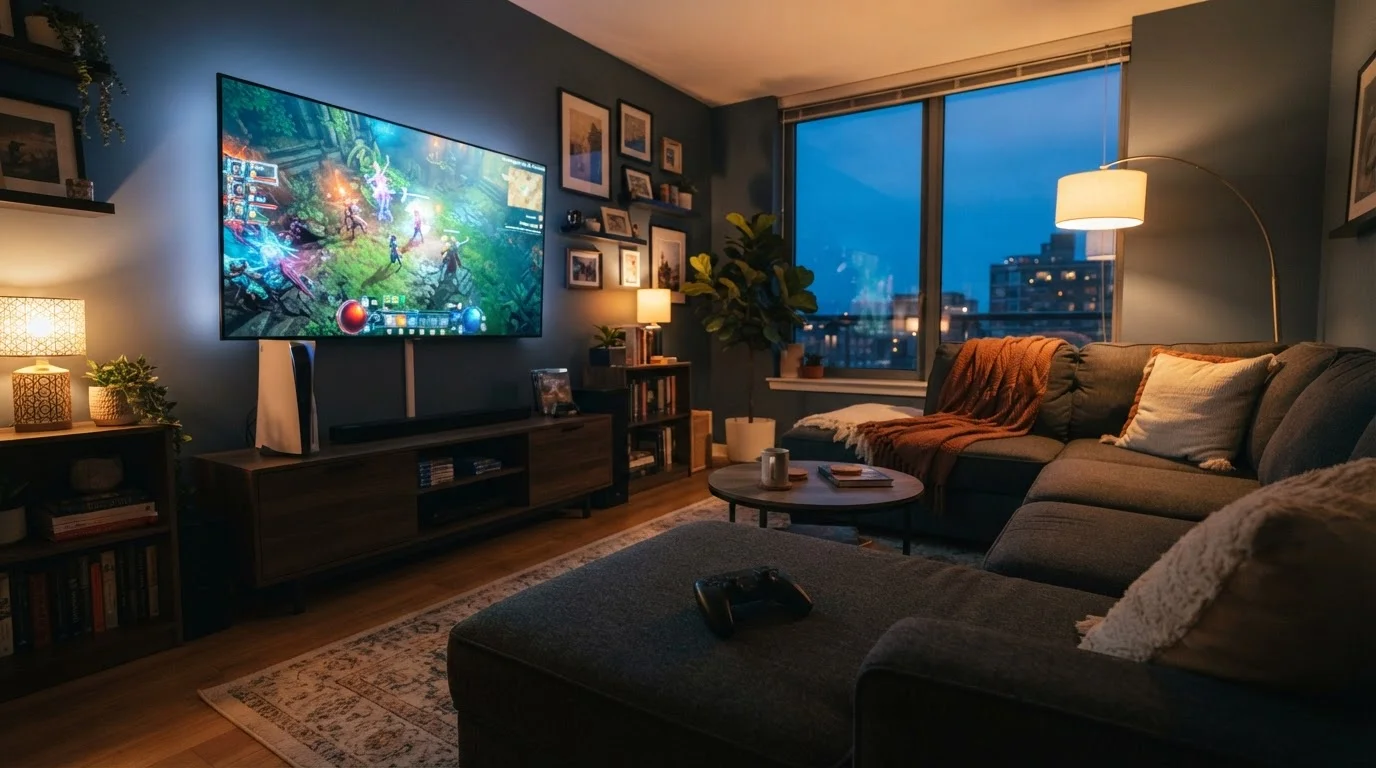
Photo credit: GadgetLite.net | All Things Tech
In this article
Consoles promise simplicity, but they come with real limitations too. A balanced look at what you gain and give up with a dedicated console.
Key Takeaways
- Consoles offer a streamlined, plug-and-play setup that requires minimal technical knowledge.
- Exclusive titles are a genuine advantage, but they can also lock you into one ecosystem.
- Ongoing subscription costs and limited hardware upgradability are real financial trade-offs.
- Console gaming is optimized for the TV-and-couch experience, which suits some players and not others.
- Understanding these trade-offs helps you choose the platform that actually fits your life.
Simple plug-and-play setup with no technical knowledge needed
Consoles are designed for accessibility — connect to a TV, sign in, and start playing. There's no need to configure drivers, manage system specs, or troubleshoot compatibility.
Optimized game performance on consistent hardware
Because every unit shares the same specs, developers can fine-tune games specifically for that hardware, resulting in stable frame rates and fewer technical issues than variable PC configurations.
Access to platform-exclusive game franchises
Some of gaming's most celebrated series are only available on specific consoles, giving each platform a library that you simply can't replicate elsewhere.
Built for the living room, couch co-op experience
The controller-and-TV setup is ergonomically designed for extended, relaxed sessions — and local multiplayer with people in the same room remains one of gaming's most social pleasures.
Regular software updates keep the system current
Console manufacturers push system updates automatically, meaning security patches and new features arrive without requiring the user to manage anything manually.
Online play usually requires a paid subscription
On major current-generation platforms, accessing online multiplayer typically means signing up for a recurring subscription service, adding an ongoing cost that's easy to underestimate at purchase.
Hardware cannot be upgraded between generations
Unlike a PC where you can swap in a better graphics card or add RAM, a console's internals are fixed. When the hardware feels dated, the only option is buying the next-generation system.
Closed ecosystem limits game availability and modding
Platform holders control what appears on their store and what modifications are permitted. Games exclusive to rival consoles or PC remain inaccessible, and community mods are rarely supported.
Accessories and extras add up quickly
A second controller, a quality headset, and expanded storage can collectively cost as much as the console itself — costs that aren't obvious from the base price alone.
Not portable — tied to a TV and fixed location
Home consoles are stationary by design. If your lifestyle involves travel or playing in different rooms, a home console alone won't cover those scenarios.
What Consoles Actually Promise — and Deliver
The core appeal of a home console is simplicity. You connect it to your TV, insert a game or download one, and you're playing within minutes. There's no driver installation, no compatibility checks, and no need to understand what a GPU is. For anyone who just wants to play games without a technical detour, that frictionless experience is genuinely valuable.
Consoles are also built around a single, stable hardware target. Developers design games knowing exactly what specs they're working with, which typically means well-optimized performance and fewer crashes or technical oddities. For a broader look at how this compares to other platforms, see our breakdown of console, PC, and mobile gaming.
Simple plug-and-play setup with no technical knowledge needed
Consoles are designed for accessibility — connect to a TV, sign in, and start playing. There's no need to configure drivers, manage system specs, or troubleshoot compatibility.
Optimized game performance on consistent hardware
Because every unit shares the same specs, developers can fine-tune games specifically for that hardware, resulting in stable frame rates and fewer technical issues than variable PC configurations.
Access to platform-exclusive game franchises
Some of gaming's most celebrated series are only available on specific consoles, giving each platform a library that you simply can't replicate elsewhere.
Built for the living room, couch co-op experience
The controller-and-TV setup is ergonomically designed for extended, relaxed sessions — and local multiplayer with people in the same room remains one of gaming's most social pleasures.
Regular software updates keep the system current
Console manufacturers push system updates automatically, meaning security patches and new features arrive without requiring the user to manage anything manually.
The Trade-Offs That Don't Make the Box
Consoles look like a one-time purchase, but they rarely stay that way. Online multiplayer — a core feature for many players — typically requires a paid subscription on major platforms. Storage upgrades, extra controllers, and headsets add up fast. These aren't hidden costs exactly, but they're easy to overlook at the start. Our guide on mistakes first-time console buyers make covers this in detail.
Then there's the closed ecosystem problem. Console manufacturers control which games appear on their platform, how mods work (or don't), and when older titles get support. Unlike a PC — explored more fully in our piece on PC gaming's power and trade-offs — you can't swap in better components when the hardware starts to feel dated.
Online play usually requires a paid subscription
On major current-generation platforms, accessing online multiplayer typically means signing up for a recurring subscription service, adding an ongoing cost that's easy to underestimate at purchase.
Hardware cannot be upgraded between generations
Unlike a PC where you can swap in a better graphics card or add RAM, a console's internals are fixed. When the hardware feels dated, the only option is buying the next-generation system.
Closed ecosystem limits game availability and modding
Platform holders control what appears on their store and what modifications are permitted. Games exclusive to rival consoles or PC remain inaccessible, and community mods are rarely supported.
Accessories and extras add up quickly
A second controller, a quality headset, and expanded storage can collectively cost as much as the console itself — costs that aren't obvious from the base price alone.
Not portable — tied to a TV and fixed location
Home consoles are stationary by design. If your lifestyle involves travel or playing in different rooms, a home console alone won't cover those scenarios.
Exclusives: A Perk With Strings Attached
Platform-exclusive games are one of the strongest arguments for choosing a specific console. Certain beloved franchises are genuinely unavailable anywhere else, and for fans of those series, that can be reason enough to commit. The flip side is that exclusivity is a business strategy as much as it is a creative one — it's designed to lock you into an ecosystem.
If a game you love launches on a competing platform, you can't simply play it on your current console. That's a real limitation worth weighing honestly, especially if your friends play on a different platform than the one you're considering. For a direct side-by-side of how consoles and PCs handle game libraries and more, our console vs. PC comparison is worth a read.
3–5 years
Typical console generation lifespan
Major console generations have historically spanned roughly five to seven years, though active support for older hardware often phases out sooner.
~70%
Console games sold digitally
Industry tracking has shown digital game sales consistently accounting for the majority of console game purchases in recent console generations.
Who Console Gaming Actually Suits
Home consoles shine brightest in a specific context: relaxed, TV-based play sessions, whether solo or with people in the same room. The couch-and-controller setup is genuinely comfortable for long sessions, and the standardized interface makes it easy for casual players to jump in without a learning curve.
If portability matters to you, the picture changes. A home console stays home. Our article on how handheld and home consoles differ digs into why the experience doesn't simply transfer between form factors. And if you're building out your setup beyond the console itself, the Gaming Gear hub covers controllers, headsets, and accessories worth knowing about.
Ecosystem Lock-In Is a Real Consideration
Choosing a console means investing in that platform's ecosystem — your purchases, save data, and friends list often don't transfer if you switch platforms later. This isn't unique to gaming; many technology products work the same way. For a broader look at how convenience and ecosystem trade-offs play out in tech, our piece on app convenience trade-offs draws some useful parallels. It's worth factoring in before committing rather than after.

Author
Gaming Editorial Team
Gaming Editorial Team is the collective byline for our editorial team and contributor network. Articles published under this byline or an editorial pen name are researched, written, and reviewed according to our editorial standards for clarity, consistency, and independence before publication.
View all articles →