
PC Gaming Unpacked: Power and Flexibility at a Price
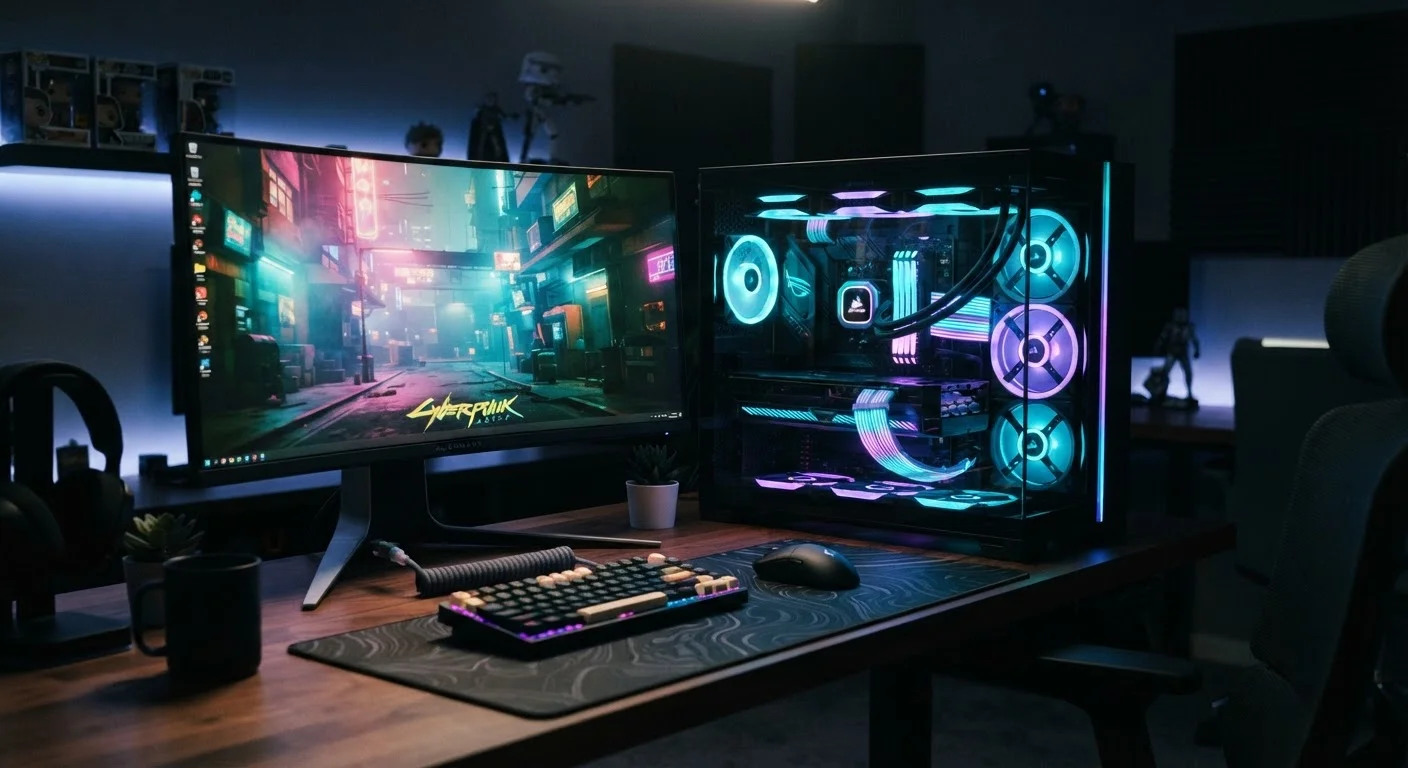
Photo credit: GadgetLite.net | All Things Tech
In this article
PC gaming offers unmatched customisation and performance, but it demands more time, knowledge, and upfront investment. Here's the full picture.
Key Takeaways
- PC gaming offers the highest potential performance ceiling of any gaming platform available today.
- Upfront costs are typically higher than consoles, though long-term game prices are often lower.
- Customisation is a major strength — from hardware upgrades to graphics settings and mods.
- Troubleshooting and setup require more technical involvement than plug-and-play platforms.
- PC doubles as a general-purpose machine, making it a multi-use investment beyond gaming.
Highest performance ceiling of any gaming platform
PC hardware can be upgraded incrementally, meaning you're never locked into a fixed performance level. High-end components enable resolutions and frame rates that console hardware currently cannot match.
Enormous and diverse game library
PC storefronts carry tens of thousands of titles across every genre, including many indie games and older classics that never appear on consoles. Backward compatibility is rarely an issue.
Deep customisation — hardware and software
From swapping out components to modifying game files, PC gaming gives players more control over their experience than any other platform. Mods in particular can extend a game's life by years.
Doubles as a general-purpose computer
A gaming PC handles productivity, creative work, and communication alongside gaming, making it a multi-purpose investment rather than a single-use device.
Lower long-term game costs
PC game storefronts are well known for frequent discounts and sales, and a large number of titles are available free-to-play or at reduced prices compared to their console equivalents.
Higher upfront hardware investment
A capable gaming PC typically costs more to buy or build than a current console. Entry-level machines can run games, but performance gains require meaningful spending on components.
Setup and troubleshooting require technical knowledge
Unlike consoles that are ready to use out of the box, PCs may require driver updates, compatibility checks, and occasional problem-solving. This learning curve discourages some newcomers.
No guaranteed compatibility across all titles
While the library is vast, not every game runs perfectly on every hardware configuration. Some titles have specific system requirements or known issues on certain setups.
Ongoing maintenance adds to ownership demands
Keeping drivers updated, managing storage, and monitoring hardware health are responsibilities that console owners don't generally face in the same way.
Living-room couch gaming is less natural
While streaming a PC to a TV is possible, it's not as seamless as a console plugged directly into your television. Keyboard and mouse setups also feel awkward away from a desk.
What Makes PC Gaming Different
Unlike consoles, which are purpose-built gaming machines with fixed hardware, a gaming PC is a general-purpose computer optimised for games. That distinction shapes almost everything about the experience. You're working with an open platform — meaning any manufacturer can build components, any developer can publish software, and you decide how powerful your machine is and what it runs.
That openness is both the biggest appeal and the biggest challenge. If you want to understand how PCs fit alongside consoles and mobile, see how all three platforms compare in terms of hardware, cost, and experience.
Highest performance ceiling of any gaming platform
PC hardware can be upgraded incrementally, meaning you're never locked into a fixed performance level. High-end components enable resolutions and frame rates that console hardware currently cannot match.
Enormous and diverse game library
PC storefronts carry tens of thousands of titles across every genre, including many indie games and older classics that never appear on consoles. Backward compatibility is rarely an issue.
Deep customisation — hardware and software
From swapping out components to modifying game files, PC gaming gives players more control over their experience than any other platform. Mods in particular can extend a game's life by years.
Doubles as a general-purpose computer
A gaming PC handles productivity, creative work, and communication alongside gaming, making it a multi-purpose investment rather than a single-use device.
Lower long-term game costs
PC game storefronts are well known for frequent discounts and sales, and a large number of titles are available free-to-play or at reduced prices compared to their console equivalents.
The Real Costs Involved
Entry price is where PC gaming earns its reputation for being expensive — and that reputation isn't entirely unfair. Building or buying a capable gaming PC typically costs more upfront than a current-generation console. However, the picture shifts over time: PC game storefronts frequently run deep sales, and many titles cost less at launch or go free-to-play compared to console versions.
There's also the dual-purpose factor. If you already need a computer for work, school, or creative projects, a gaming-capable machine consolidates two purchases into one. That reframes the cost considerably. For a myth-busting look at whether PC gaming is always expensive, common gaming platform myths are worth reading before making assumptions.
3x+
More titles available on PC vs. any single console
PC storefronts collectively host dramatically larger libraries than any individual console platform, particularly when including older and independent titles.
240Hz
Maximum refresh rate achievable on high-end PC monitors
Current-generation consoles are largely capped at 120Hz; high-end PC monitors and GPUs can push significantly beyond that for competitive play.
Flexibility, Mods, and the Open Ecosystem
One of the most compelling draws of PC gaming is the sheer volume of ways you can shape your experience. Want to play a game released in 2004? Chances are it runs on a modern PC with minimal fuss. Interested in community-made modifications — called mods — that add new content, overhaul graphics, or even transform a game into something entirely different? PC is where that culture lives and thrives.
Performance settings are also yours to control. On PC you can dial in resolution, frame rate targets, and visual quality to match your hardware, rather than accepting whatever a console manufacturer decided was the standard. For players who enjoy tinkering, this level of control is genuinely exciting. Explore gaming gear essentials to understand what peripherals pair well with a PC setup.
Higher upfront hardware investment
A capable gaming PC typically costs more to buy or build than a current console. Entry-level machines can run games, but performance gains require meaningful spending on components.
Setup and troubleshooting require technical knowledge
Unlike consoles that are ready to use out of the box, PCs may require driver updates, compatibility checks, and occasional problem-solving. This learning curve discourages some newcomers.
No guaranteed compatibility across all titles
While the library is vast, not every game runs perfectly on every hardware configuration. Some titles have specific system requirements or known issues on certain setups.
Ongoing maintenance adds to ownership demands
Keeping drivers updated, managing storage, and monitoring hardware health are responsibilities that console owners don't generally face in the same way.
Living-room couch gaming is less natural
While streaming a PC to a TV is possible, it's not as seamless as a console plugged directly into your television. Keyboard and mouse setups also feel awkward away from a desk.
Who Should Consider PC Gaming
PC gaming makes the most sense if you already spend significant time at a desk, have an interest in a genre that suits keyboard-and-mouse input (strategy games, simulation titles, and competitive shooters all have deep roots on PC), or genuinely enjoy understanding how your hardware works. It also suits players who want access to the largest possible game library, including indie titles that sometimes skip consoles entirely.
If you're weighing PC against a dedicated console, the decision often comes down to how much friction you're willing to accept in exchange for flexibility. A direct console vs. PC comparison breaks that trade-off down clearly. And if you're brand new to gaming entirely, a beginner's platform guide can help you match a platform to your actual lifestyle before committing.
Pre-Built vs. Custom Build: A Quick Note
You don't have to build a PC from scratch to get into PC gaming. Pre-built gaming desktops and gaming laptops offer a more plug-and-play experience closer to a console, though typically at a slight cost premium over equivalent self-built machines. If the idea of assembling components feels daunting, pre-built is a perfectly valid starting point. Laptop and PC releases can help you understand what current hardware options actually mean for real-world gaming use.

Author
Gaming Editorial Team
Gaming Editorial Team is the collective byline for our editorial team and contributor network. Articles published under this byline or an editorial pen name are researched, written, and reviewed according to our editorial standards for clarity, consistency, and independence before publication.
View all articles →