
Matter Protocol: The Universal Language Your Smart Home Devices Now Speak
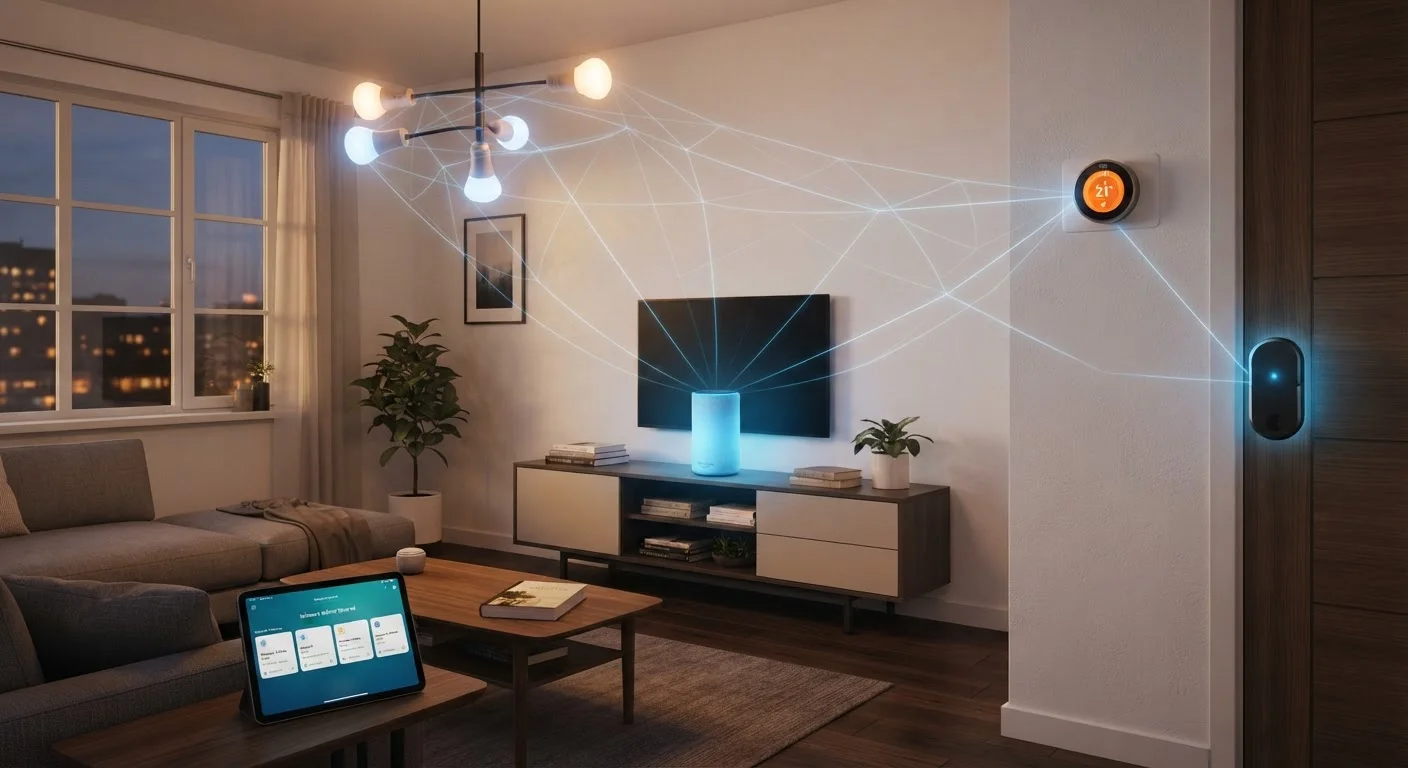
Photo credit: GadgetLite.net | All Things Tech
In this article
Matter is the connectivity standard designed to make smart home devices work across any platform. Here's what it means for everyday users.
Key Takeaways
- Matter is an open standard that lets smart home devices from different brands work together natively.
- Major platforms — including Apple Home, Google Home, and Amazon Alexa — support Matter-certified devices.
- A single Matter device can be added to multiple ecosystems simultaneously without extra hardware.
- Matter runs over Wi-Fi and Thread, with Thread offering a more reliable low-power mesh network.
- Older devices cannot be upgraded to Matter unless the manufacturer releases a firmware update enabling it.
Why Smart Homes Needed a Common Language
Before Matter, setting up a smart home often meant committing to a single ecosystem. A device built for Amazon's Alexa might not talk to Apple HomeKit, and a Google Home user could find entire product categories off-limits. Consumers faced a fragmented landscape where buying the wrong brand locked them out of seamless automation.
The underlying problem was that each platform used its own proprietary communication rules. Manufacturers had to pick a side — or engineer multiple versions of the same product. That raised costs, limited choices, and frustrated everyday users who simply wanted their lights and locks to work together.
Matter was developed specifically to solve this. Managed by the Connectivity Standards Alliance, it represents a rare moment of industry-wide cooperation: competing tech giants agreeing on a shared foundation so that their customers benefit, regardless of which platform they prefer. For a broader look at how these ecosystems differ, see how Google, Amazon, and Apple organise your devices.
Matter Is Still Expanding Its Device Categories
The initial Matter specification covered lights, plugs, locks, thermostats, and basic sensors. Subsequent updates have added categories like cameras, robot vacuums, and energy management devices. If a specific device type you're interested in isn't yet Matter-certified, it may be on the roadmap for a future specification revision rather than permanently excluded.
What Matter Actually Does — and Doesn't Do
Matter standardises how devices identify themselves, receive commands, and report their status over a home network. When you add a Matter-certified smart plug to your setup, your phone or hub understands exactly what capabilities it has and how to control it — without needing a brand-specific app or cloud bridge.
Critically, Matter supports multi-admin. This means you can add one device to multiple platforms at the same time. Your smart thermostat can appear in both Google Home and Apple Home, responding to voice commands on either, with no conflict.
What Matter does not do is replace wireless protocols. It is an application-layer standard — a rulebook for what devices say to each other, not how the radio signal travels. Matter devices communicate over either Wi-Fi or Thread. Thread is a low-power mesh networking protocol favoured for battery-operated devices like sensors and locks. Understanding that distinction matters when planning your setup. Our guide to smart home wireless protocols explains each transport layer in plain terms.
Over 1,000
Matter-certified products available
The Connectivity Standards Alliance reported surpassing 1,000 Matter-certified devices across multiple product categories within the standard's first two years.
2022
Year Matter 1.0 launched
Matter version 1.0 was officially released by the Connectivity Standards Alliance in October 2022 after several years of development and industry collaboration.
4+
Major platforms with native Matter support
Apple Home, Google Home, Amazon Alexa, and Samsung SmartThings all added native Matter controller support at or shortly after the standard's launch.
Setting Up a Matter Device: What to Expect
Adding a Matter device is designed to be straightforward. Most certified products use a QR code or numeric pairing code printed on the device or included in the box. You scan or enter that code in your chosen platform's app — Apple Home, Google Home, Amazon Alexa, or Samsung SmartThings — and the device is added in seconds.
Because the standard is shared, the pairing process looks nearly identical across platforms. There's no need to download a manufacturer's dedicated app just to get the device online, though manufacturers may still offer optional apps for advanced settings.
Check for a Thread Border Router First
If you plan to use Thread-based Matter devices — such as battery-powered sensors or smart locks — confirm that at least one hub in your home acts as a Thread border router. Many current-generation smart speakers and displays from major platforms include this capability, but it's worth verifying your specific model before purchasing Thread devices.
For anyone new to the connected home world, it helps to first understand what these devices are actually doing on your network. Smart home devices explained is a solid starting point before diving into Matter specifics.
The Practical Impact for Everyday Users
Matter's real value shows up at the point of purchase. Shoppers who see the Matter logo on a product's box can be confident it will work with their existing setup — whether that's an Echo, a HomePod mini, or a Nest Hub. Brand loyalty becomes optional rather than mandatory.
For households that have already invested in smart home gear, the transition is gradual. Some existing devices have received Matter firmware updates, bringing them under the new standard. Others will remain on their original protocols. Mixing Matter and legacy devices in one home is entirely workable; most hubs handle both transparently.
The longer-term promise is a more competitive market. When interoperability is guaranteed, manufacturers compete on quality, design, and features rather than ecosystem lock-in — a dynamic that generally benefits consumers. Thread-based Matter devices also tend to be more responsive and reliable than those relying solely on cloud-dependent Wi-Fi connections, making everyday automations feel snappier. For a deeper comparison of the underlying wireless technologies, Thread vs. Zigbee vs. Z-Wave breaks down the differences clearly.
Frequently Asked Questions

Author
Electronics Editorial Team
Electronics Editorial Team is the collective byline for our editorial team and contributor network. Articles published under this byline or an editorial pen name are researched, written, and reviewed according to our editorial standards for clarity, consistency, and independence before publication.
View all articles →