
OLED, QLED, and LCD: What the TV Panel Wars Actually Mean for Your Eyes
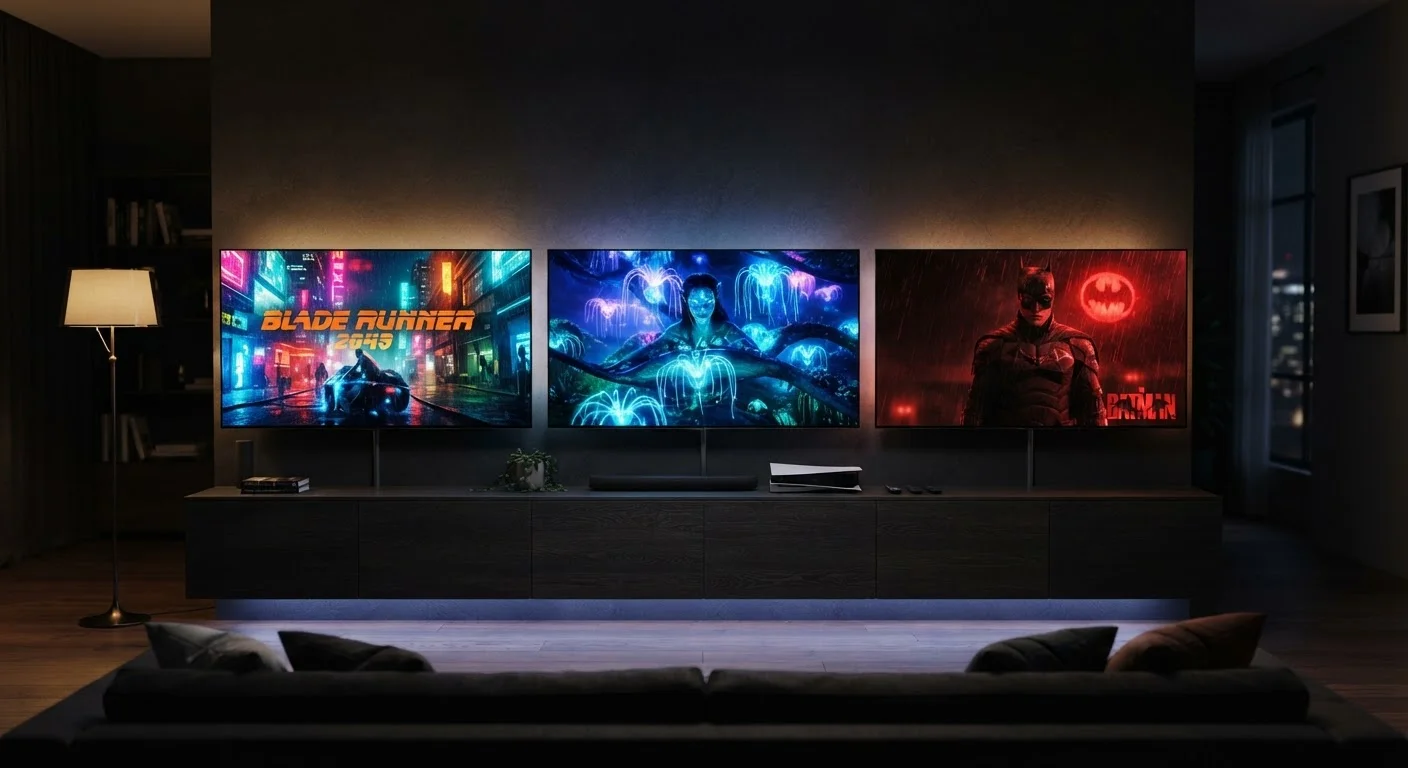
Photo credit: GadgetLite.net | All Things Tech
In this article
TV display technology has more acronyms than ever. Break down what OLED, QLED, and LCD each do differently — and which conditions each suits best.
Key Takeaways
- OLED panels produce true blacks by turning off individual pixels, delivering exceptional contrast in dark rooms.
- QLED uses quantum dot technology to boost LCD brightness and color range, excelling in bright, sunlit spaces.
- Traditional LCD remains the most widely available and affordable panel type, with respectable performance for general use.
- No single panel type is universally superior — your room lighting and viewing habits matter most.
- Burn-in risk is real on OLED but has become less common with modern panel management features.
Why Panel Type Matters More Than You Might Think
When shopping for a new TV, it's easy to get lost in a sea of acronyms — OLED, QLED, LED, LCD — without understanding what any of them actually mean for the picture you'll watch every day. These terms don't just describe how a TV is built; they describe how light and color reach your eyes, which has real consequences for image quality, viewing comfort, and which environment the set is suited for.
Understanding the core differences won't just help you decode a spec sheet — it'll help you match a TV to the room you actually live in. For a broader look at how display specs fit into the bigger picture, see our full electronics spec explainer.
| LCD | QLED | OLED | |
|---|---|---|---|
| Black levels | Limited (backlight bleed) | Moderate (zone dimming) | True black (pixel off) |
| Peak brightness | Moderate | Very high | Moderate to high |
| Color range | Standard | Wide (quantum dots) | Wide (organic emitters) |
| Burn-in risk | None | None | Low with modern features |
| Best room lighting | Mixed | Bright rooms | Dark or dim rooms |
| Typical price range | Most affordable | Mid to premium | Premium |
| Viewing angles | Varies by subtype | Good | Excellent |
LCD: The Foundation Everything Else Builds On
LCD (Liquid Crystal Display) is the baseline technology behind most modern flat-screen TVs. An LCD panel works by shining a backlight — usually LED — through a layer of liquid crystals that open or close to let light pass. Color filters then tint each tiny pixel into red, green, or blue.
The limitation is that the backlight is always on, even when the screen should display pure black. That means LCD panels can't produce truly deep blacks — there's always some light leakage. However, LCD has significant strengths: it's bright, durable, widely available, and spans a huge price range. It performs well in rooms with lots of natural light.
Modern LCD sets often use local dimming — dividing the backlight into zones that can be dimmed independently — to improve contrast. The number and precision of those zones vary widely between models and price points.
Check Local Dimming Zone Count
When comparing LCD-based TVs, ask how many local dimming zones the backlight uses. More zones generally means better contrast control — a TV with hundreds of full-array local dimming zones will outperform one with edge-lit dimming in dark scenes. This single spec can make a significant difference in picture quality without stepping up to OLED.
QLED: Quantum Dots Meet the LCD Backbone
QLED (Quantum Light-Emitting Diode) is essentially an enhanced form of LCD. A layer of quantum dots — microscopic semiconductor particles — is added between the LED backlight and the liquid crystal layer. When light hits these dots, they emit highly precise wavelengths of red, green, and blue, producing a wider and more accurate color range than standard LCD.
The practical result is a TV that gets very bright with vivid, saturated colors. QLED panels typically achieve higher peak brightness than OLED, which makes them well-suited for rooms that get a lot of sunlight. Because they still rely on a backlight, they share some of LCD's contrast limitations — blacks aren't as deep as on OLED — but local dimming implementations have improved substantially.
1,000+ nits
Typical QLED peak brightness
Many QLED displays achieve over 1,000 nits of peak brightness, compared to typical LCD panels that often stay below 500 nits.
1,000,000:1
OLED contrast ratio
OLED panels are commonly rated at contrast ratios exceeding 1,000,000:1, reflecting their ability to turn individual pixels fully off.
~60%
Global TV panel market share held by LCD-based displays
According to display industry research, LCD and LED-backlit variants continue to account for the majority of television panels sold worldwide.
OLED: When Every Pixel Is Its Own Light Source
OLED (Organic Light-Emitting Diode) takes a fundamentally different approach. Instead of a backlight illuminating a separate crystal layer, each pixel in an OLED panel generates its own light. When a pixel needs to display black, it simply turns off completely — producing what display engineers call true black.
This gives OLED its signature characteristic: near-infinite contrast ratios. Dark scenes in movies look genuinely dark; bright highlights pop against them with striking realism. OLED panels also tend to have wide viewing angles, meaning color and contrast hold up even when you're watching from the side of the room.
The trade-off is that OLED panels are dimmer at their peak brightness compared to the brightest QLED sets, which can be a disadvantage in very bright rooms. There is also the well-documented risk of burn-in — permanent image retention caused by displaying the same static content (like a news ticker or game HUD) for extended periods. Modern OLED TVs include pixel-refresh and screen-shift features that meaningfully reduce this risk for typical viewing habits.
For more on how display panel types intersect with other screen specs, our display specs breakdown covers the full picture.
Matching the Right Panel to Your Room and Habits
The best panel type isn't the most expensive one — it's the one that fits how and where you watch. A few honest questions help narrow it down:
- Is your room bright or dark? A south-facing living room flooded with afternoon sun favors the high brightness of QLED. A dedicated media room with blackout curtains is where OLED's contrast shines brightest.
- What do you watch most? Cinematic films, dark-themed series, and HDR gaming all benefit from OLED's contrast. Sports, daytime news, and brightly lit content tend to look great on QLED or a well-implemented LCD.
- How long do you watch, and what's on screen? Varied streaming content poses minimal burn-in risk on OLED. Extended gaming sessions with static UI elements warrant slightly more caution.
Once you've picked a panel type, the rest of your home setup matters too — see how your display connects with the rest of your gear in our living room tech system guide.

Author
Electronics Editorial Team
Electronics Editorial Team is the collective byline for our editorial team and contributor network. Articles published under this byline or an editorial pen name are researched, written, and reviewed according to our editorial standards for clarity, consistency, and independence before publication.
View all articles →