7 telltale signs of a charity scam
Everything Else

7 telltale signs of a charity scam

One of the perks of social media and technology is that they help people stay connected with the world. While that is an advantage, one of the many disadvantages of easy information sharing is an increase in scam schemes, especially charity scams. Scammers capitalize on a donor’s goodwill and try to line their pockets with the donated money. Here are some of the telltale signs of a charity scam that should not be missed. 1. Giving insufficient charity details Every charity organization has its purpose and mission statement ready. These are some basic details an organization is always prepared with. Donors usually look at these mission statements and purposes to determine if there is an alignment in their thoughts and mission. If a charity cannot provide these details, it could be a sign that they are not a legitimate charity. Some of the questions to ask them are mentioned below: Where does the charity work, and where is the headquarters located? How is the donation money used? What is the organization’s tax-exempt number? Does all the money go directly to the program or only some percentage? 2. Pretending to be an employee of a known organization Some scammers will call to thank a donor for a gift they received for a cause of the donor’s choice.
Read More

12 common mistakes that can damage one’s smartphone

12 common mistakes that can damage one’s smartphone

In today’s fast-paced world, smartphones have become indispensable. These devices are one’s communication hub, entertainment source, and personal assistant. With an increasing dependence on these devices, it becomes crucial to use them correctly for prolonged longevity. However, many people inadvertently make common mistakes while handling smartphones that can affect their health and performance. So, here are some mistakes that can harm one’s smartphone and tips on how to avoid them. Not unplugging the phone When a smartphone stays plugged in even after the charging is complete, it experiences a continuous flow of electricity to maintain that charge, resulting in added strain on the battery. This can lead to excess heat, which ultimately contributes to potential damage. To preserve the battery’s health and longevity, it’s advisable to unplug the phone as soon as it reaches its charging potential rather than letting it remain plugged in unnecessarily. Charging the smartphone overnight Leaving a smartphone plugged in overnight might seem convenient, but it’s a mistake that strains the phone’s battery. This continuous charging, often called “trickle charging,” can lead to the battery slowly losing its capacity over time. It eventually leads to an overall diminished battery life and reduced performance. Letting the battery drain fully Many smartphone users may have the habit of using their device until the battery drains completely to 0%.
Read More
10 mistakes to evade when charging a smartphone

10 mistakes to evade when charging a smartphone

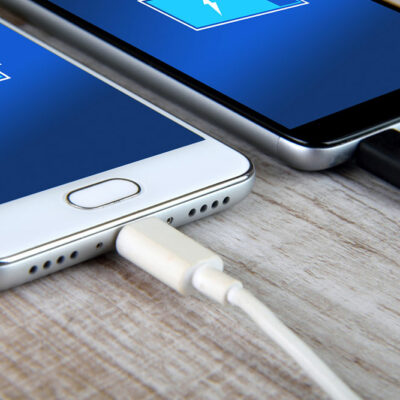
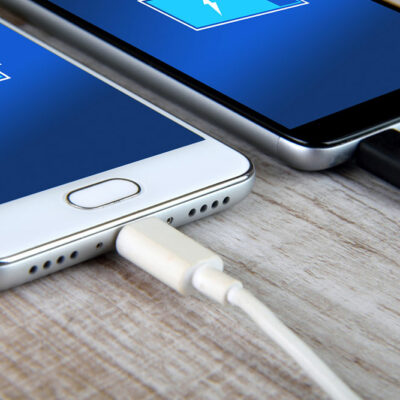
Smartphones have become an inseparable part of most people’s lives. Owing to the constant reliance on them, individuals are always concerned about their phone’s battery percentage and keeping it charged throughout the day. However, in doing so, they often make inevitable mistakes that could prove costly, severely damaging the phone’s functioning and battery life. To ensure smartphones’ longevity and optimal performance, avoiding common charging mistakes, such as the following, is crucial. Charging the phone to 100% It is a common misconception that charging the phone 100% is the most effective way to use it. However, this practice can cause harm to one’s device in the long run. Smartphones, like many other electronic devices, have limited charge cycles. If one constantly charges the phone to full capacity, one will quickly use up all of these cycles. Once the charge cycles are depleted, the phone’s battery capacity will decrease, negatively impacting its overall functionality. To avoid this, it is recommended that one charges the smartphone only once a month and, at other times, only up to 80% for optimal battery lifespan. By following these guidelines, one can extend the phone’s battery’s life and ensure it continues functioning properly over time. Letting the phone discharge completely Letting a smartphone discharge completely, as in, letting the battery reach 0% and shut down, is an equally detrimental practice.
Read More